
A camera backpack has one job that a travel backpack does not: it has to let you reach a body and lens in under five seconds without putting the bag on the ground. Everything else- capacity, laptop sleeves, weather resistance- is shared with ordinary luggage. Access is the thing that separates a camera bag from a padded backpack.
The second question, which most Indian buyers reach after the first purchase, is whether the protection should live inside the bag permanently or come out as a module. That single choice determines whether you own one bag or three.
Fixed Dividers or a Modular Cube
A traditional camera backpack has padded dividers sewn into the main compartment. It protects well and it is always a camera bag, including on the days you are not shooting.
A modular system puts the padding inside a removable cube. Pull the cube out and the backpack becomes ordinary luggage. Carry the cube alone and it becomes a compact camera bag. You buy one shell and change what it is.
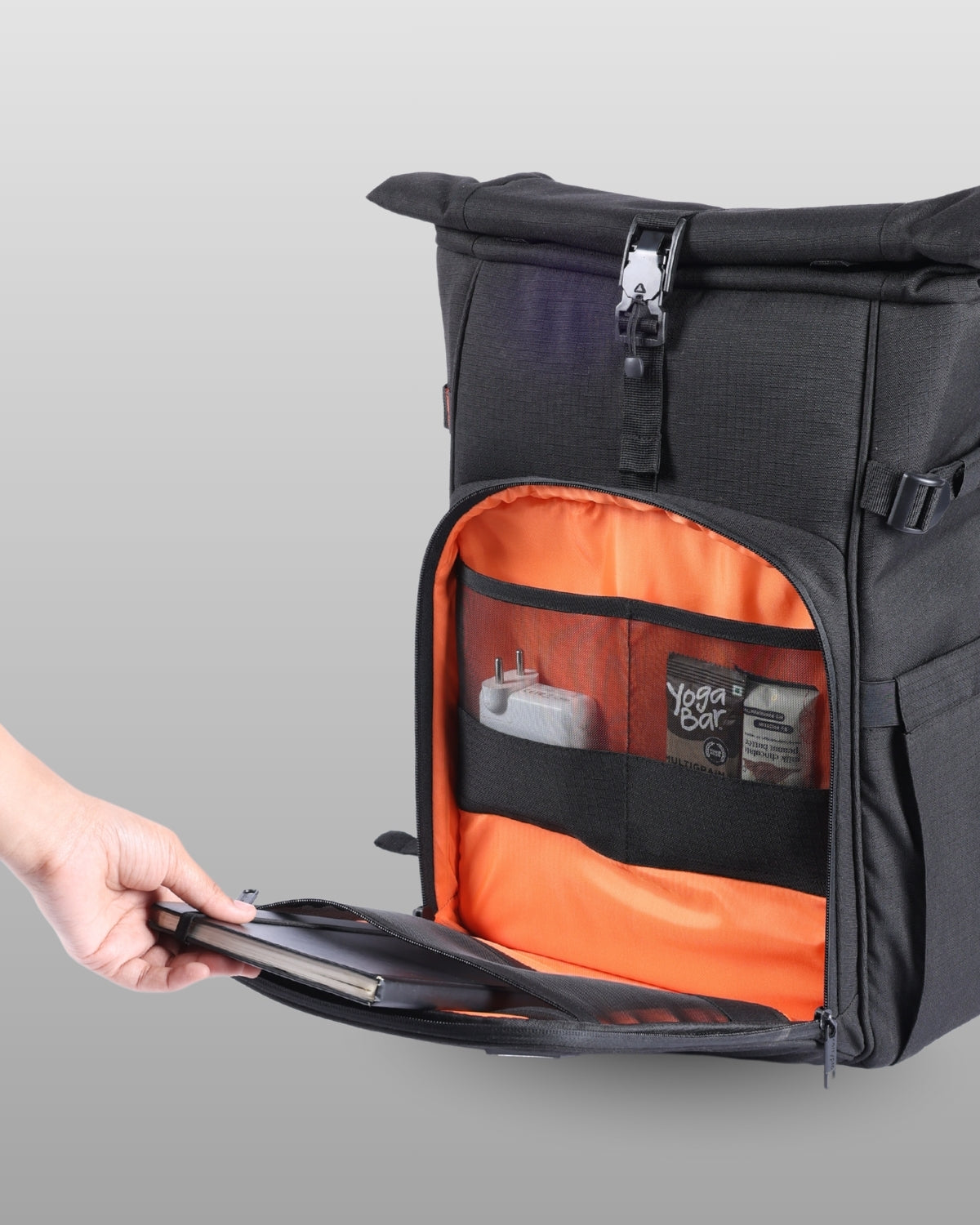
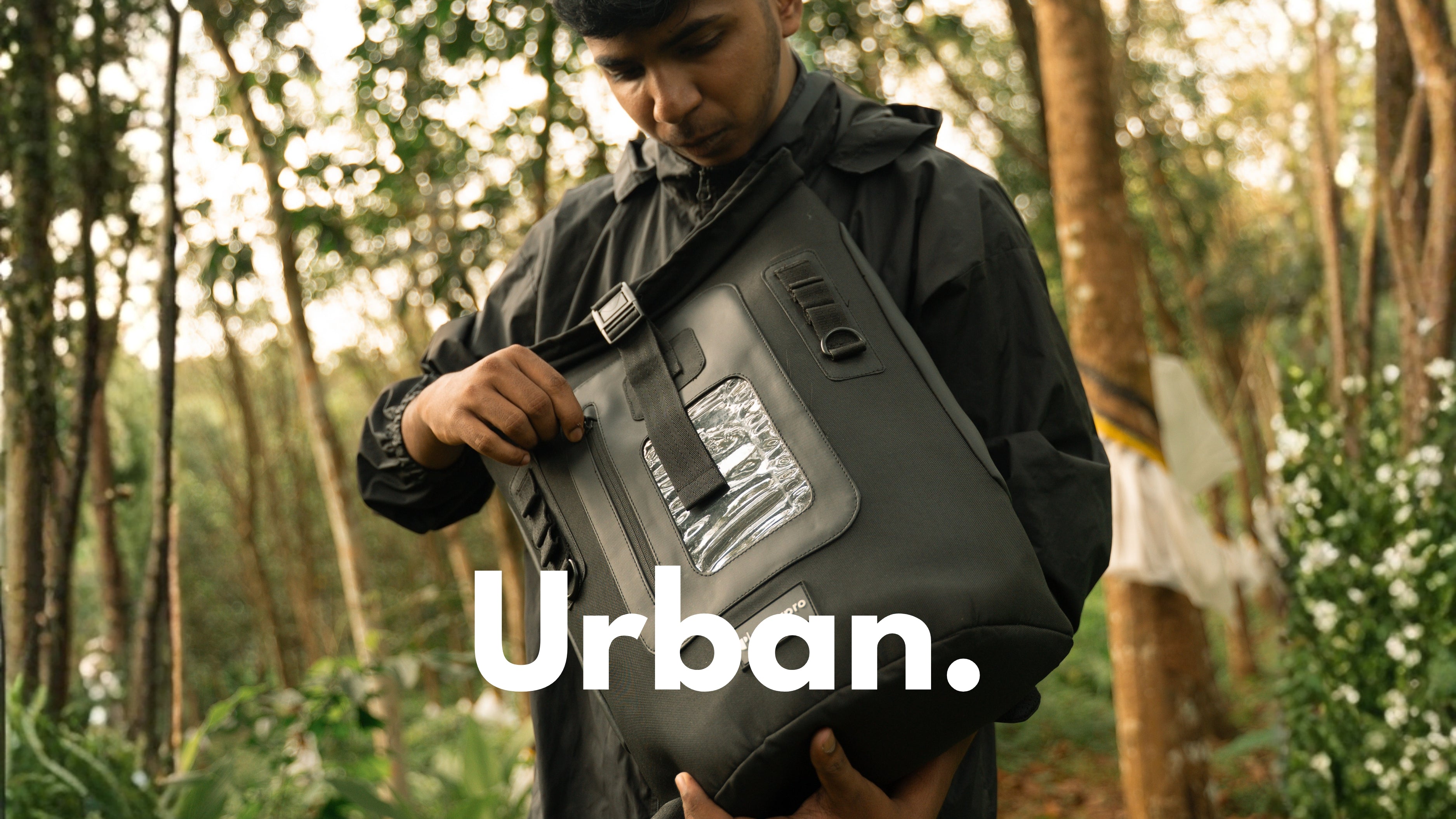
The Pango V3.0 at ₹8,999 takes the modular route. Its detachable camera cube holds 10 litres across 29 × 28 × 15 cm and stores bodies, lenses, drones and accessories with adjustable organisation. The shell itself is 30 litres with a further 10 litres of rolltop expansion, built from water-resistant polyester with YKK zippers, and it carries dedicated laptop compartments and quick-access side openings.
Its measured height is 46 cm with the rolltop down, at 28 cm wide and 17 cm deep. That sums to 91 cm, comfortably inside IndiGo's 115 cm cabin ceiling and under the 55 × 35 × 25 cm limits on every side. Rolled up to 69 cm it becomes checked baggage, so fly with it rolled down.
Matching the Bag to the Kit
A Mirrorless Body and Two Lenses
This is the most common Indian setup and the one most over-served by large bags. A mirrorless body, a zoom and a prime occupy well under 10 litres. The PRO Camera Cube V3.0 at ₹3,999 holds exactly that across seven adjustable dividers in ripstop polyester, and its included sling belt means it works as a standalone bag for a photo walk. Drop it into a backpack you already own and the system is complete.
A DSLR With a Long Lens
A full-frame body with a 70-200 attached needs depth that a cube does not always give. The Pango V3.0's 17 cm depth and expandable cube handle it, and the side access opening means the body comes out without laying the bag down on a wet street.
A Street Kit You Carry All Day
A backpack is the wrong shape for street work because reaching the camera means taking it off. The Pro Camera Sling Bag 10L at ₹3,499 measures 32 × 22 × 5 cm and weighs 0.65 kg. It swings to the front, opens against your body, and its waterproof fabric and customisable padded compartment cover a body with one lens attached and a spare.
Camera Gear and Indian Weather
Two conditions define camera carry in India, and both are seasonal.
Between June and September, water is the risk, and it arrives sideways. Water-resistant fabric handles drizzle but not a Mumbai downpour, so a fitted rain cover is not optional for outdoor shooting. Between March and June, heat and dust are the problem. A sealed cube protects sensors from dust ingress during lens changes far better than an open main compartment does.
The practical rule is that your camera should live inside a closed padded module inside the bag, not loose in a padded compartment. Dust does not care how good your fabric is.
Building a System Rather Than Buying a Bag
The best camera backpack in India is usually not one bag. It is a shell that travels, a cube that protects, and a sling for the days you want to move light.
Bought as a system, the Pango V3.0 and a spare cube cover a flight, a trek and a street walk without owning three separate bags. Compare the full range in camera backpacks and camera accessories and inserts, or read how to choose a camera backpack that actually protects your gear.
Frequently Asked Questions
What size camera backpack do I need?
For a mirrorless body and two lenses, 10 litres of padded space is sufficient. For a DSLR with a long lens, a laptop and travel clothing, 30 litres with a 10 litre camera module is the working figure.
Can I take a camera backpack as cabin baggage in India?
Yes, if it measures within 55 × 35 × 25 cm and sums under 115 cm. The Pango V3.0 at 46 × 28 × 17 cm with the rolltop down sums to 91 cm and passes. Extended to 69 cm it does not.
Is a camera cube better than a dedicated camera bag?
A cube gives you flexibility, since the shell becomes ordinary luggage when the cube comes out. A dedicated bag gives slightly better space efficiency. If you shoot occasionally rather than daily, the cube is the better buy.
Camera sling or camera backpack for street photography?
A sling. Reaching a camera in a backpack means taking the bag off, which costs you the shot. A 10L sling swings to the front and opens against your body while you are still walking.
How do I protect a camera in monsoon in India?
Use a fitted rain cover over the bag, keep the body inside a closed padded cube rather than loose in the main compartment, and change lenses under cover. Water-resistant fabric alone will not survive sustained rain.
Can a camera backpack carry a laptop too?
Yes. The Pango V3.0 has dedicated laptop compartments separate from the camera cube, so the machine sits away from your gear. See camera bags that fit a laptop too.