
You've spent lakhs on your camera body, lenses, and accessories. The bag you carry them in shouldn't be an afterthought. Most photographers end up making one of two mistakes. They stuff their gear into a regular backpack with zero protection, or they buy a camera backpack based on brand name alone without thinking about how they actually shoot.
Our guide covers what to look for, what to avoid, and how to pick the right camera backpack based on your actual workflow.
What Should a Camera Backpack Actually Do?
A camera backpack solves five problems that regular bags can't.
Protect gear from impact and weather
Camera bodies and lenses are precision instruments. A bump that wouldn't register on a laptop can knock a lens out of alignment. Your bag needs thick, adjustable padded dividers that hold each piece snugly in place.
It also needs water-resistant fabric and, ideally, a bundled rain cover. In India, where monsoon season turns a clear morning into a downpour within minutes, a rain cover isn't optional.
Give you fast access to your camera
If you have to set the bag down, unzip the top, and dig through layers to reach your camera, you'll miss the shot. Side access (a zipper on the side of the bag) lets you swing the pack on one shoulder and pull your camera out in seconds. This is non-negotiable for street, wildlife, or event work.
Carry weight comfortably over distance
A body with a 70-200mm lens, a prime, batteries, and cards can hit 4 to 5 kilos before the bag itself. Padded contoured shoulder straps, a sternum strap, and a breathable back panel are what keep your shoulders and back from giving up after the first hour.
Keep camera gear separated from personal items
Your camera section needs its own padded zone. Your laptop, water bottle, jacket, and phone should live in separate compartments. A bag that mixes everything into one space defeats the purpose.
How Do You Know What Size Camera Backpack You Need?
One body, one to two lenses: 15 to 20 litres
Standard kit for street photography, travel content, or casual shooting. Light, nimble, doesn't scream "expensive gear inside."
One body, three to four lenses, a flash, and a laptop: 25 to 35 litres
The sweet spot for most working photographers and content creators. Look for a dedicated laptop compartment separate from the camera zone. This is where most Indian photographers shooting travel, street, and content work will land.
Two bodies, five or more lenses, lighting, and a tripod: 40+ litres
Professional event or commercial work. At this weight, a proper hip belt is essential to transfer load off your shoulders.
What Protection Features Actually Matter in a Camera Backpack?
Divider quality
Cheap bags use thin dividers that compress and let gear shift. Good dividers are 8 to 10mm thick, rigid, and covered in soft material that won't scratch lens coatings. They should be fully adjustable so you can reconfigure the layout as your kit changes.
Detachable camera cube
The best system is a padded insert with its own dividers that sits inside the main compartment. Drop the cube in for shoots. Remove it, and the bag becomes a regular travel backpack. One bag, two modes.
Rain cover
Water-resistant fabric handles drizzle, but zippers and seams still let moisture through in heavy rain. A bundled rain cover tells you the manufacturer has thought about real conditions.
Why Does a Laptop Compartment Matter in a Camera Backpack?
If you edit on location, your laptop travels with you. It needs its own padded section, completely isolated from the camera compartment. One bumpy auto ride with a shared wall between your laptop and camera body is all it takes.
Look for a flat-opening design that gives you full clamshell access to your tech. Check the internal depth of the compartment, not just the screen size rating. A 15.6-inch gaming laptop is much thicker than a MacBook Air of the same screen size.
What Small Features Make a Big Difference Day to Day?
These details cost almost nothing but transform the experience of using the bag.
Power bank pocket with cable pass-through
Keep your charger accessible without opening the main compartment.
Hidden back-panel pocket
A zippered pocket pressed against your body is the safest place for a passport, cash, or cards while travelling.
Trolley pass-through
A strap on the back that slides over a suitcase handle. Once you've used it at an airport, you'll never buy a camera backpack without one.
Tripod and bottle pockets
External attachment for a tripod saves interior space. A side bottle pocket means you actually stay hydrated on long shoots.

How to Choose a Camera Backpack Based on What You Shoot
Street and travel photography
Speed and discretion. A compact bag with side access, clean exterior, space for one body and two to three lenses. For even lighter city walks, a camera sling bag carries one body and a lens with the fastest access possible.
Wedding and event photography
Capacity and dual side access for grabbing gear in crowded venues. A trolley belt helps when you're moving between locations with a suitcase of lighting gear.
Landscape and outdoor photography
Comfort over distance. Breathable back panel, hip belt, sternum strap, and a rain cover are all mandatory.
Content creation and hybrid shooting
Camera, laptop, gimbal, maybe a drone, plus personal items. A detachable camera cube and a flat-opening tech compartment let you access everything without disturbing the camera section.
The Bag We Built for This
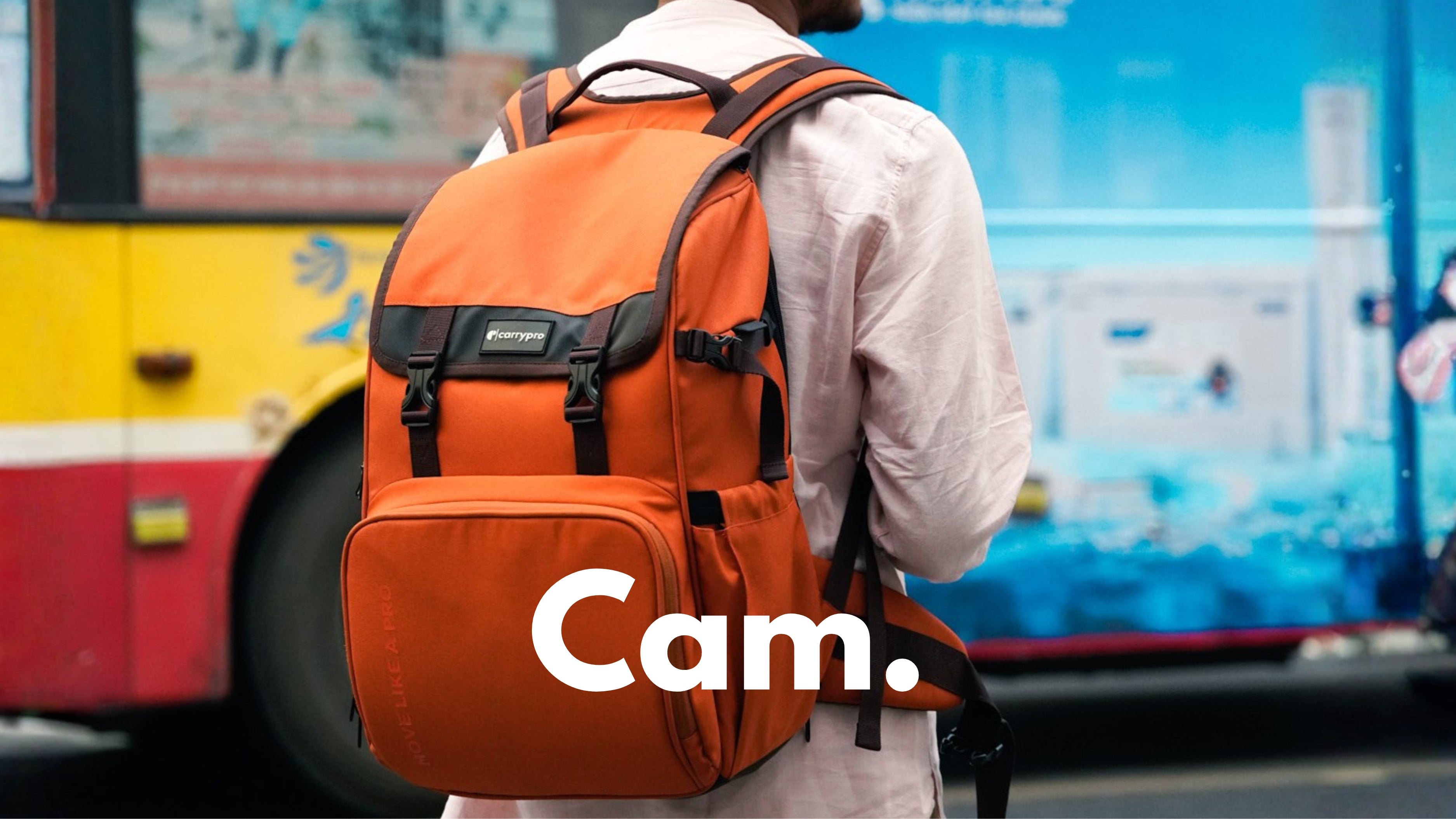
The CarryPro Pango V2.0 was designed around every requirement covered in this guide.

Camera protection that adapts
Detachable camera cube with 5 padded dividers and its own removable sling belt. Works as a standalone camera carrier or slots into the main bag. Remove it, and the Pango becomes a full-capacity travel backpack.
Speed when it counts
Side-access zipper for quick camera pulls. The outer flap has an inner net pocket for batteries and SD cards, right where you reach for the camera.
Tech, isolated and accessible
Dedicated compartment that opens flat, fits a 15.6" laptop alongside an 11" iPad Pro, with separate space for cables and chargers.
Everything else
Premium water-resistant fabric, zippers, and fittings. Bundled rain cover. Hidden passport pocket. Power bank pocket with cable pass-through. Key hook. Bottle pocket. Trolley belt for airports. Padded shoulder straps for all-day carry.
48 x 32 x 19 cm. 2 kg. Cabin-friendly on domestic airlines. Three colourways: Black, Rust Orange, Olive Green. 2-year warranty. Made in India.
Rs. 5,999. See the full details and camera cube arrangements here.
For lighter days with just one body and a lens, the Pro Camera Sling Bag at 10L pairs perfectly. And if you switch between camera gear and everyday carry throughout the week, the HOBO25 rolltop backpack with its removable hardshell camera box gives you both modes in a single bag.
Browse all camera backpacks or explore the full CarryPro range.
FAQs
What is the best size for a camera backpack?
For most photographers carrying one body, two to three lenses, and a laptop, 25 to 35 litres is the sweet spot. One-body-one-lens shooters can go 15 to 20L. Full professional kits need 40L or a roller bag.
Can I use a regular backpack for my camera?
You can, but it offers no padded dividers, no side access, and no impact protection. At minimum, add a padded camera insert to protect your gear.
Should I buy a camera backpack or a camera sling bag?
A sling bag like the Pro Camera Sling is ideal for one body and one to two lenses with the fastest access. A backpack like the Pango V2.0 is better for more gear, a laptop, and longer carry distances.
Is the Pango V2.0 cabin-friendly?
Yes. At 48 x 32 x 19 cm, it fits within cabin limits of most domestic Indian airlines. The trolley belt lets you attach it to a rolling suitcase for hands-free airport movement.
Can I use the Pango without camera gear?
Yes. The camera cube is fully detachable. Remove it and you have a spacious travel or everyday backpack with a dedicated laptop compartment and all the same pockets.