
Buying a 65 litre backpack is a different decision from buying a 40. At 40 litres you are optimising for the cabin. At 65 you have already accepted that the bag goes in the hold, and the questions change completely. How does it carry loaded? Does the harness fit your back or an average back? And what do you carry onto the aircraft instead?
That last question is the one most 65L buyers get wrong, and it costs them either comfort or money at the gate.
Why 65L Is Always Checked Baggage
Indian carriers allow a cabin bag of 55 × 35 × 25 cm at 7 kg, with the three dimensions summing to no more than 115 cm. A 65 litre pack cannot meet that. The NOMAD 65L+ measures 64 × 32 × 21.5 cm compressed, which sums to 117.5 cm and breaks the 55 cm long-side rule outright.
This is not a flaw. It is the category. Every 65L pack on the market is checked baggage on an Indian domestic flight, and any guide that implies otherwise is setting you up for excess charges of roughly ₹600 to ₹700 per kilo at the counter.
The practical consequence is that your 65L purchase should be judged on two things at once: how it carries on the ground, and what you carry onto the plane.
How to Choose a 65 Litre Pack
The Frame Decides Everything
A loaded 65L pack sits at 14 to 18 kg. Without an internal frame, that mass hangs off your shoulders and pulls backwards. With one, it transfers down to your hip bones, where your skeleton is built to carry it.
The NOMAD uses a dual metal rod frame paired with anti-gravity shoulder suspension and air-channelled back panels. On a long day the ventilation matters as much as the load transfer, because a wet back panel on a Himalayan descent is a cold problem, not just an uncomfortable one.
Torso Length, Not Height
Two people of the same height can have torsos that differ by several centimeters, and the harness has to sit on the right one. The NOMAD uses an adjustable torso-length system so the hip belt lands on your hips rather than your waist or your ribs. A pack sized to an average back will always transfer load badly, whatever the frame does.
Front Access Over Top Loading
Traditional rucksacks load from the top, which means unstacking everything to reach a jacket at the bottom. The NOMAD opens from the front like a suitcase, so the bag can be packed in layers and searched in seconds. A 20L rolltop extension adds height when you need it.
The Detachable Daypack Is the Real Feature
The NOMAD ships with a 15L daypack that detaches. It measures 38.5 × 26 × 13 cm and weighs 0.43 kg, which sums to 77.5 cm and sits far under the 3 kg personal-item allowance.
That makes the correct flying setup obvious. Main bag checked, daypack carried on as your free personal item, laptop and valuables inside it. You are not choosing between a big pack and cabin convenience, and you are not buying a second bag for day trips once you arrive. Combined with the rolltop extension, total system capacity reaches 100 litres at ₹6,999.
Who Should Not Buy 65 Litres
Capacity is not free. A large bag gets filled, and a filled 65L pack is a genuinely heavy object to move through a railway station or a hostel stairwell.
If your longest trip is a week, the HOBO40 V2.0 at ₹4,499 does the job at 1.6 kg and stays in the cabin. If you are day hiking rather than expedition trekking, the Trail Hiking Bag 15L at ₹2,999 is the right tool. Sixty-five litres earns its place on trips of ten days or more, multi-day treks, and travel where you are carrying your own shelter or cold-weather layers.
Packing for Distance, Not for Storage
The best 65L backpack is the one that disappears when it is loaded. That comes down to the frame, the fit and the honesty of the harness, not the number on the label.
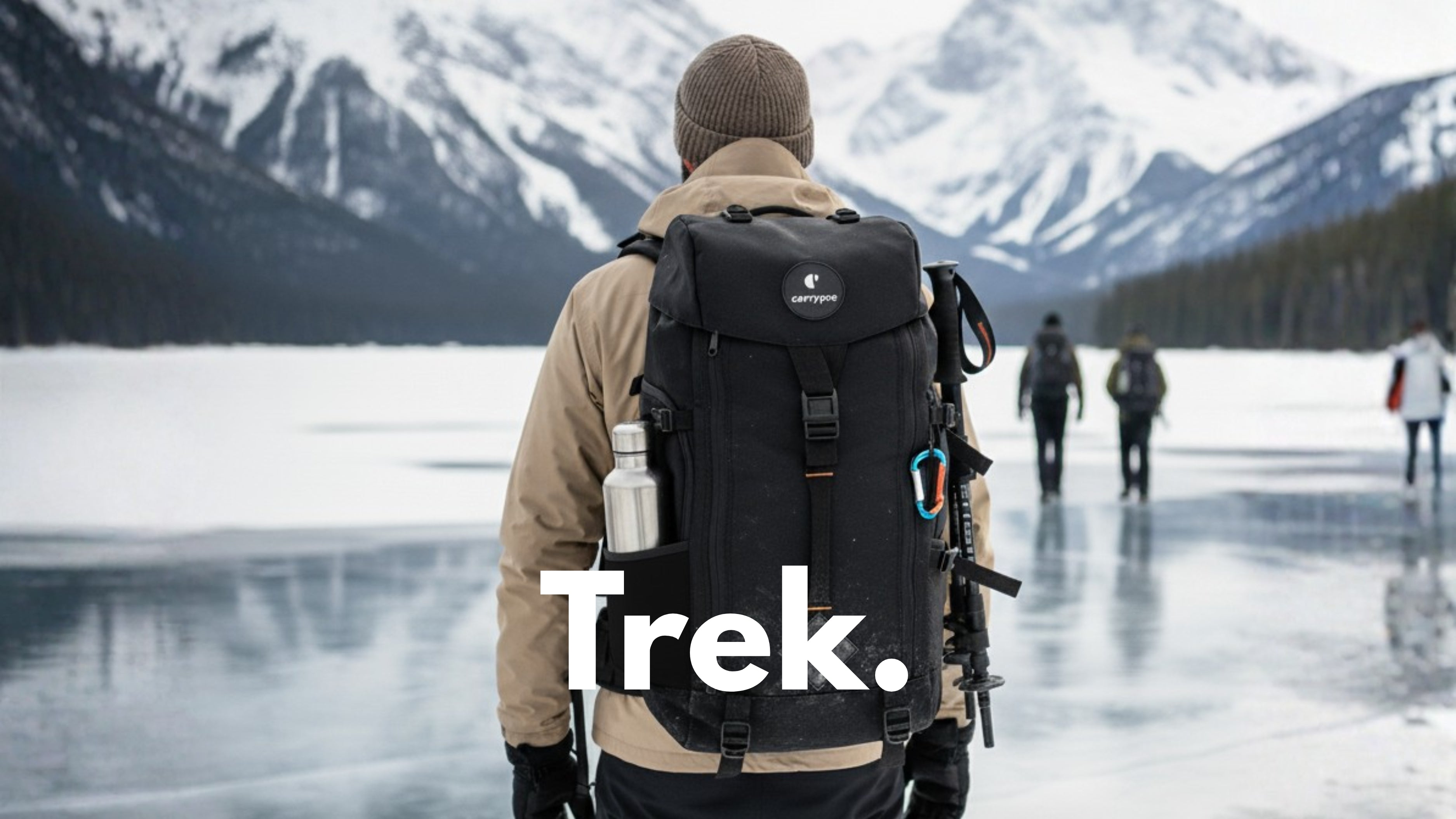
Every CarryPro pack is handcrafted in India and tested on real trips before it ships. Compare the range in trekking backpacks, or read the trekking backpack size guide to see what 20L, 40L and 65L actually hold.
Frequently Asked Questions
Is a 65L backpack too big for travel?
For flights and city travel, usually yes. Sixty-five litres is checked baggage on every Indian carrier and heavy when full. It earns its place on trips of ten days or more, treks, and travel where you carry your own cold-weather gear.
Can I take a 65L backpack as hand luggage in India?
No. Cabin limits are 55 × 35 × 25 cm with a 115 cm total, and a 65L pack exceeds both. Check it in and carry the detachable daypack, if the pack has one, as your free 3 kg personal item.
How much does a full 65L backpack weigh?
Typically 14 to 18 kg depending on what you pack. The empty NOMAD 65L+ is 1.7 kg for the main bag plus 0.43 kg for the daypack, so most of that weight is contents rather than the pack itself.
What is the difference between 65L and 40L backpacks?
Forty litres is a cabin-legal one-bag setup for up to a week. Sixty-five litres is checked baggage built around a load-bearing frame and hip belt for ten days or more, or for treks where you carry shelter and layers.
Do I need a rain cover for a 65L rucksack?
Yes, particularly between June and September. Water-resistant fabric handles drizzle, but sustained monsoon rain will find the seams and zips. A fitted cover is the difference between damp and soaked.
What size backpack is best for a Himalayan trek?
Sixty-five litres for multi-day treks where you carry your own sleeping bag and layers, and 15 to 20 litres for day hikes from a base. Torso-adjustable fit matters more than capacity on steep terrain.