
Picking a trekking backpack starts with one number: litres. Too small and your sleeping bag ends up lashed to the outside. Too big and you carry dead weight up every climb.
The trouble is that litres mean nothing until you see what fits inside. A 20L pack and a 65L pack are built for completely different treks. The trekking backpack size guide below breaks down each capacity by what it actually holds, so you match the bag to your trip instead of guessing.
What size trekking backpack do you need?
The right trekking backpack size follows your trip length. Day hikes need 15 to 25 litres, weekend treks need 30 to 45, and multi-day treks need 50 to 65. Match the litres to the nights on trail, then check the fit.
Volume is the starting point, not the whole answer. A well-fitted pack carries better than a bigger one that sits wrong.
|
Trek length |
Recommended size |
CarryPro pick |
|
Day hike |
15 to 25L |
Trail Hiking Bag 15L |
|
Weekend, 2 to 3 days |
30 to 45L |
HOBO40 V2.0 (40L) |
|
Multi-day, 4 days plus |
50 to 65L |
NOMAD 65L |
How trekking pack sizes are measured
Litres measure the internal volume of the pack, not the weight it can carry. A 40L bag holds 40 litres of gear across its main compartment and pockets. Two packs labelled 40L can still pack differently, since a slim clamshell design uses space better than a bulky top-loader.
Why fit matters as much as litres
A pack that fits your torso and sits on your hips carries far better than a bigger bag that rides on your shoulders. Look at the trekking backpacks with a padded hip belt and an adjustable back, since that is what moves the load off your shoulders on a long climb.
What fits in a 20L trekking backpack?
A 20L trekking backpack holds a day's essentials with room to spare. Water, snacks, a rain shell, a warm layer, a first aid kit, and a power bank all fit for a day on the trail. Anything bigger is wasted weight on a day hike.
Day hikes reward a small, close-fitting pack that you barely notice on your back.
A 20L pack, such as the Trail Hiking Bag 15L at the compact end, carries:
-
A 2L hydration bladder or two water bottles
-
Snacks and one trail meal
-
A packable rain shell and a warm layer
-
A basic first aid kit, sunscreen, and a headlamp
What fits in a 40L trekking backpack?
A 40L trekking backpack covers weekend treks and light multi-day trips. Clothes for two to three days, a compact sleeping setup, food, a rain layer, and a hydration bladder all fit. Forty litres is the most flexible single size for Indian treks.
The 40L class is where a bag stops being a daypack and starts handling overnight trips.
A 40L pack, like the HOBO40 V2.0, carries:
-
Two to three days of trail clothes, packed in cubes
-
A compact sleeping bag or liner for tea-house treks
-
Food, a stove for tea, and a hydration bladder
-
A rain shell, a warm layer, and a rain cover for the whole bag
What fits in a 65L trekking backpack?
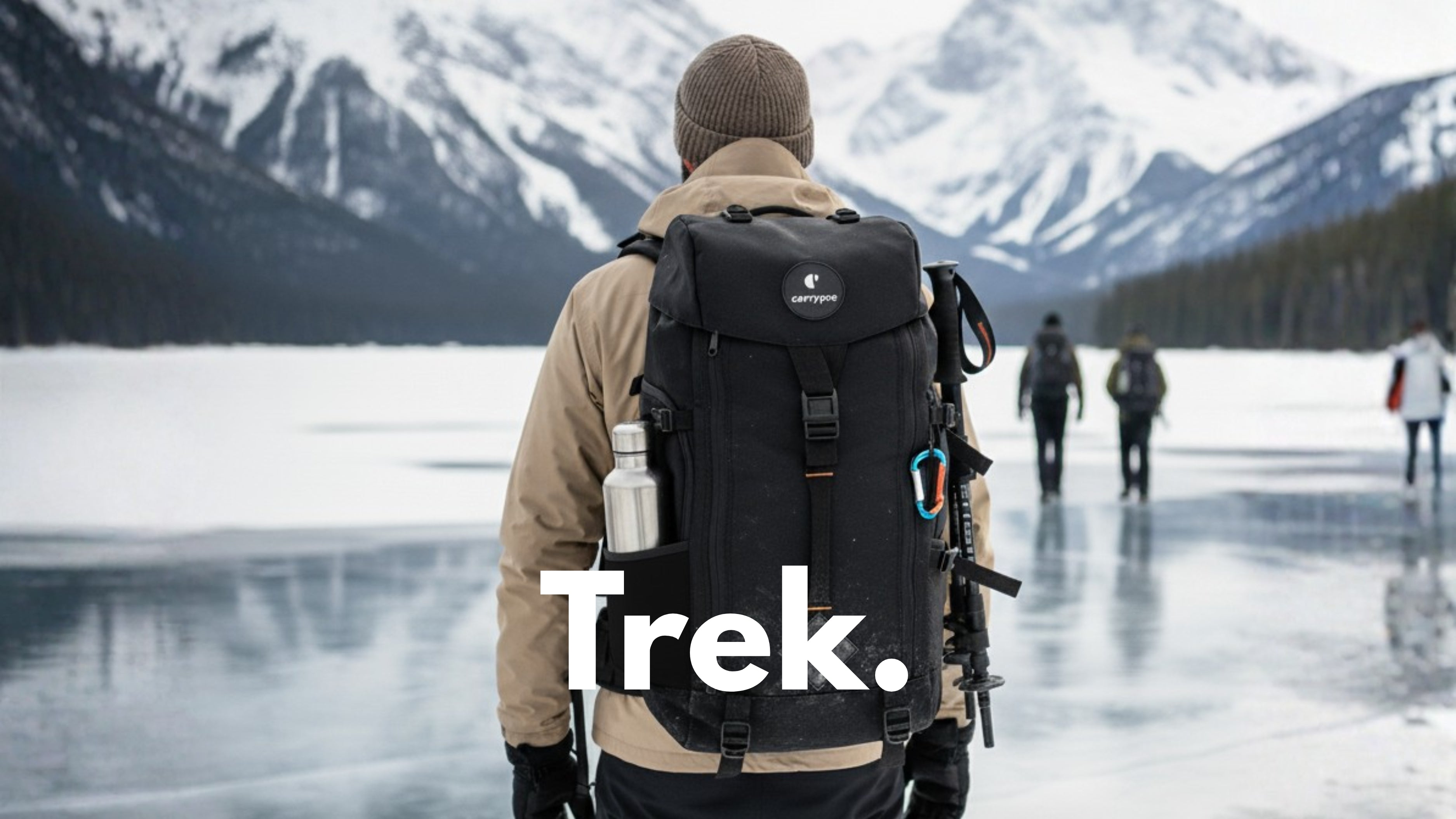
A 65L trekking backpack carries a full multi-day load. A sleeping bag, several days of food and clothes, multi-climate layers, and shared camp gear all fit for treks of four days or more. Sixty-five litres is the expedition-class size.
Long treks across India often span sea-level heat and sub-zero mountain nights, which pushes your kit into this range.
A 65L pack, like the NOMAD 65L, carries:
-
A sleeping bag and sleeping mat
-
Four or more days of clothes and layers for changing altitude
-
Several days of food and a full cook kit
-
A share of tent or group gear on self-supported treks
How do you choose the right trekking backpack size?
Choose by the longest trek you realistically plan to do, then adjust for season. A bigger pack tempts you to overpack, so size for your real trips, not the biggest one you might someday attempt. Season is the other big factor.
Two questions settle most decisions.
Choose by trip length
Count the nights on trail. Zero nights points to 15 to 25L, one or two nights to 30 to 45L, and three or more to 50 to 65L. When you are between sizes, the shorter trip decides.
Adjust for the season
Cold-weather treks need bulkier sleeping bags and more layers, which push you up a size. A monsoon trek needs a rain cover and dry bags, and a guide on keeping your gear dry with a rain cover covers how to protect a loaded pack. For a wider look at capacities, this breakdown of what different backpack litres look like packed helps you visualise the space.
Pick the pack, then go find the trail
The right size turns a trek from a grind into a rhythm, where the bag disappears and the trail takes over. Measure your trip, match the litres, and get a pack that carries like part of you. Sort your size now, so the only thing left to plan is where to go.
Frequently Asked Questions
What size backpack is best for a 2-day trek?
A 30 to 45 litre backpack suits a two-day trek. That range fits clothes, a compact sleeping setup, food, and a rain layer without excess weight. A 40L pack like the HOBO40 V2.0 is the flexible middle choice for weekend treks.
Is a 40L backpack enough for multi-day trekking?
A 40L pack covers light two to four day treks with a compact kit, especially tea-house treks where you do not carry a tent. For longer, self-supported treks with a sleeping bag and several days of food, a 50 to 65 litre pack gives you the room you need.
What is the difference between a 40L and 65L trekking backpack?
A 40L pack suits weekends and light multi-day trips, while a 65L pack carries full multi-day loads with a sleeping bag, more food, and cold-weather layers. The 40L is lighter and easier on shorter routes. The 65L gives you room for long, self-supported treks.
Do trekking backpacks come with a rain cover?
Many trekking backpacks include a rain cover stored in a base pocket, though not all do. A rain cover is essential for Indian treks, so check before you buy and add a separate one if yours does not include it. A wet sleeping bag on night one is a serious problem.
How do I know if a trekking backpack fits me?
A trekking backpack fits when it matches your torso length and sits on your hips, not your shoulders. Load it before you decide, tighten the hip belt, and check that most of the weight rests on your hips. Fit matters as much as the litre size.
Can I use a trekking backpack for travel?
Yes. A 40L trekking backpack with a supportive frame doubles well as a travel bag, and a 65L pack works for long trips where you check luggage. The padded hip belt and durable build that help on trail also help through buses, trains, and airports.