
Staying hydrated is the difference between a strong finish and a slow crawl. The scientific consensus is that losing more than 2% of your body mass to dehydration impairs endurance performance, which is why how you carry water matters as much as how much you carry.
The two main options are a hydration bladder and a water bottle. Both do the same job, but they suit different runs, treks, and conditions. The comparison below covers hydration bladder vs water bottle so you can pick the one that keeps you drinking, not stopping.
Hydration bladder vs water bottle: The short answer
A hydration bladder is a flexible reservoir that sits inside your pack with a tube routed to your shoulder, so you sip hands-free on the move. A water bottle is a simple, refillable container you reach for when you want a drink. Bladder for long, hot, hands-free efforts. Bottle for short outings, cold weather, and easy refills.
The right pick comes down to distance, climate, and how often you want to drink without stopping.
|
Factor |
Hydration bladder |
Water bottle |
|
Drinking |
Hands-free, sip on the move |
Stop or slow to reach it |
|
Capacity |
Larger, 2L and up |
Limited per bottle |
|
Weight in pack |
Even, sits against your back |
Uneven, in a side pocket |
|
Refills |
Slower, remove from pack |
Fast at any tap or stream |
|
See water left |
Hard to judge |
Easy, visible level |
|
Cleaning |
Needs regular care |
Simple, wide opening |
|
Cold weather |
Tube can chill or freeze |
Reliable |
How a hydration bladder works
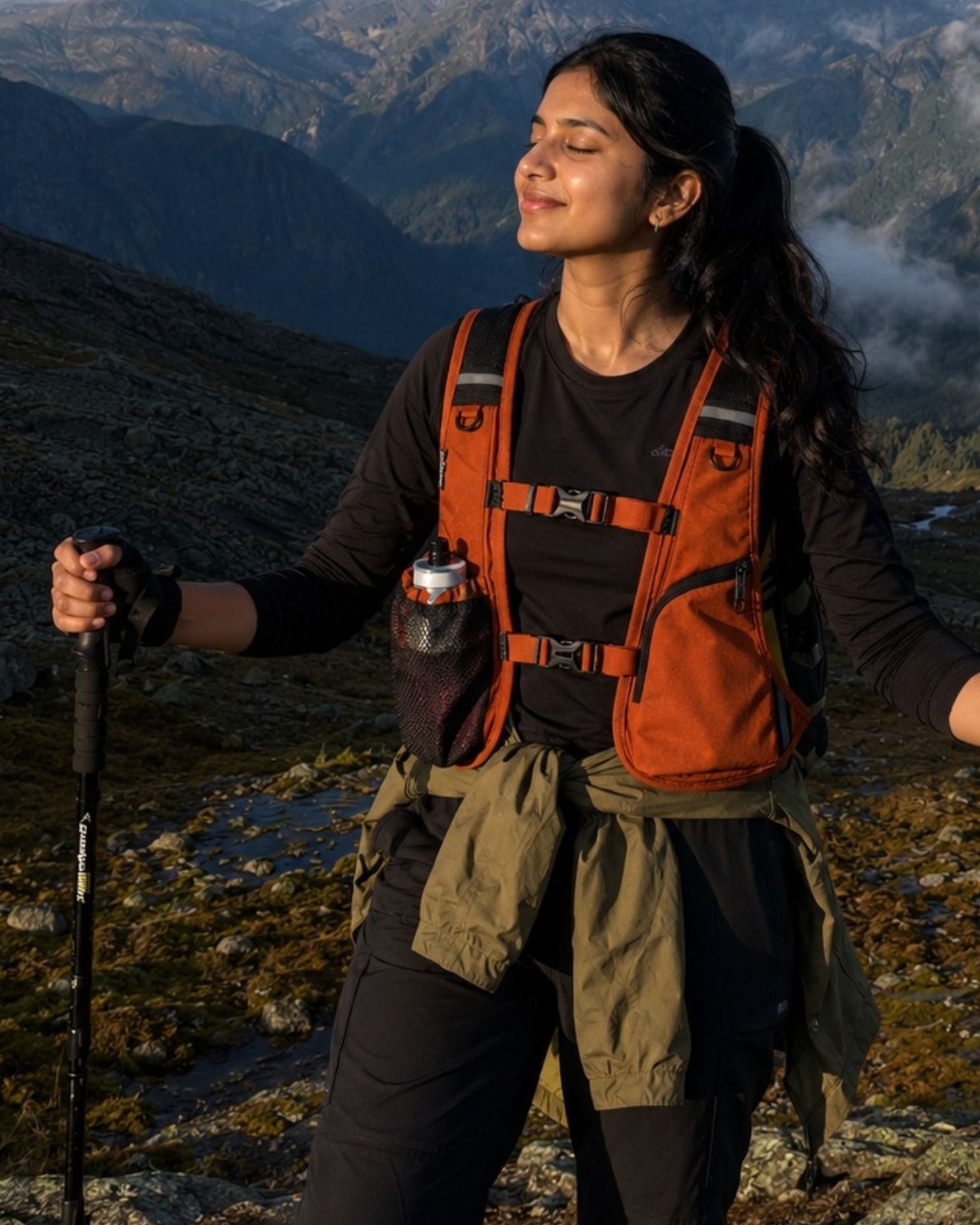
A hydration bladder is a soft reservoir that slides into a sleeve inside your running vest or trekking pack, with a drinking tube clipped to your shoulder strap. You bite the valve and drink without stopping or reaching. Most hold 1.5 to 3 litres.
The design solves one specific problem: drinking often, without breaking your rhythm.
Why runners and trekkers reach for a bladder
-
Hands-free sipping encourages frequent, small drinks, which is how the body absorbs water best
-
Larger capacity covers long stretches between water sources
-
The reservoir sits flat against your back, so the weight stays balanced and does not swing
For a deeper look at the mechanics, this guide on how hydration bladders work walks through the setup. A 2L hydration bladder fits most running vests and trekking packs, so one bladder covers several activities.
The trade-offs of a bladder
A bladder needs regular cleaning and full drying, or it can develop a stale taste over time. You also cannot see how much water is left without pulling it out, and refills mean opening your pack. In cold weather, the tube can chill.
How a water bottle works
A water bottle is the simplest hydration system: fill it, stash it in a side pocket or hold it, and drink when you want. Nothing to route, nothing to maintain beyond a rinse. Capacity is limited to the bottle size.
The bottle wins on reliability and speed, which is why many people still carry one even alongside a bladder.
Why a water bottle still makes sense
-
Refills take seconds at any tap, stream, or aid station
-
You can see exactly how much water you have left
-
Wide openings make cleaning quick and mould unlikely
-
Easy to add electrolyte powder or tablets without staining a bladder
A handheld bottle or a soft flask suits short runs and fast day efforts where a full running hydration vest is more than you need.
The trade-offs of a bottle
A bottle makes you stop or slow down to drink, which means many people sip less often than they should. Capacity is limited, the weight sits unevenly in a side pocket, and a loose pocket can drop it on rough ground.
Which should you choose, a bladder or a bottle?
Choose by distance, climate, and terrain, not by preference alone. A bladder suits long, hot, hands-free efforts, and a bottle suits short outings, cold weather, and quick refills. Many trekkers carry both.
Here is the simple way to decide based on how you move.
Choose a hydration bladder when
-
Your runs or treks pass an hour and cross hot, dry stretches
-
You want to sip steadily without stopping or slowing
-
You need larger capacity between water sources, common on Indian trails
Pair a bladder with a trail hiking backpack for day treks, or slot it into a vest for long runs. The full trekking backpacks range is built with bladder sleeves for exactly this.
Choose a water bottle when
-
Your outing is short, or refills are frequent and easy
-
You run in cold weather where a tube could chill
-
You want to track your intake or mix electrolytes without staining a reservoir
Never let thirst decide your run for you
Thirst is a late signal, not an early one, and the runners who finish strong are the ones who drink before they need to. Set up a hydration system that makes sipping easy, and your legs will thank you in the final kilometres. Sort your water carry now, so your next long effort is decided by your training, not your thirst.
Frequently Asked Questions
Is a hydration bladder better than a water bottle for running?
For long runs, yes, because a bladder lets you sip hands-free and carries more water. For short runs and easy refills, a bottle or soft flask is simpler and lighter. The best choice depends on your distance and the heat.
How much water should a bladder hold for trekking?
A 2L bladder covers most day treks and hot-weather sections in India before a refill. Long, remote treks with few water sources may call for 3L, but that adds weight most day-hikers do not need.
Do hydration bladders leak?
A quality bladder with a sealed cap and a working bite valve does not leak in normal use. Leaks usually come from a loose cap, a worn valve, or a puncture, so close the cap fully and store it away from sharp objects.
How do I clean a hydration bladder?
Rinse with warm water after every use, then dry it fully with the opening propped open so no moisture stays inside. For a deeper clean, use warm water with a little baking soda and a brush for the tube, then air-dry completely to prevent mould.
Can I use one hydration bladder for running, trekking, and cycling?
Yes. A 2L bladder fits most running vests, trekking packs, and cycling bags with a bladder sleeve, so one bladder covers all three. That makes it a better value than buying separate bottles for each activity.
Is a water bottle enough for a long hike?
Only if refills are frequent and easy along the route. For long hikes with few water sources, a bladder carries more and keeps you sipping steadily. Many hikers carry a bladder for the main supply and a bottle for electrolytes or backup.