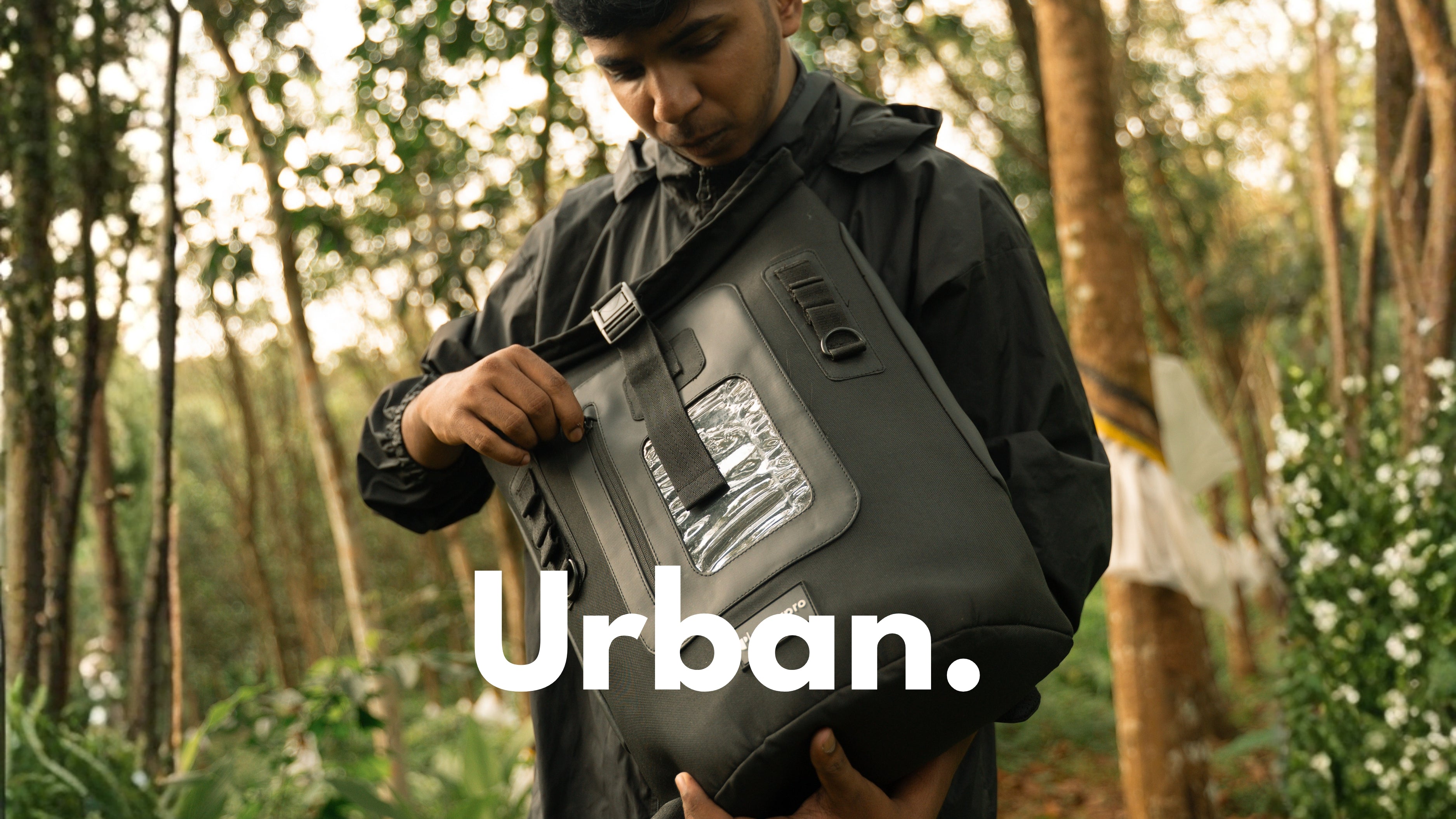
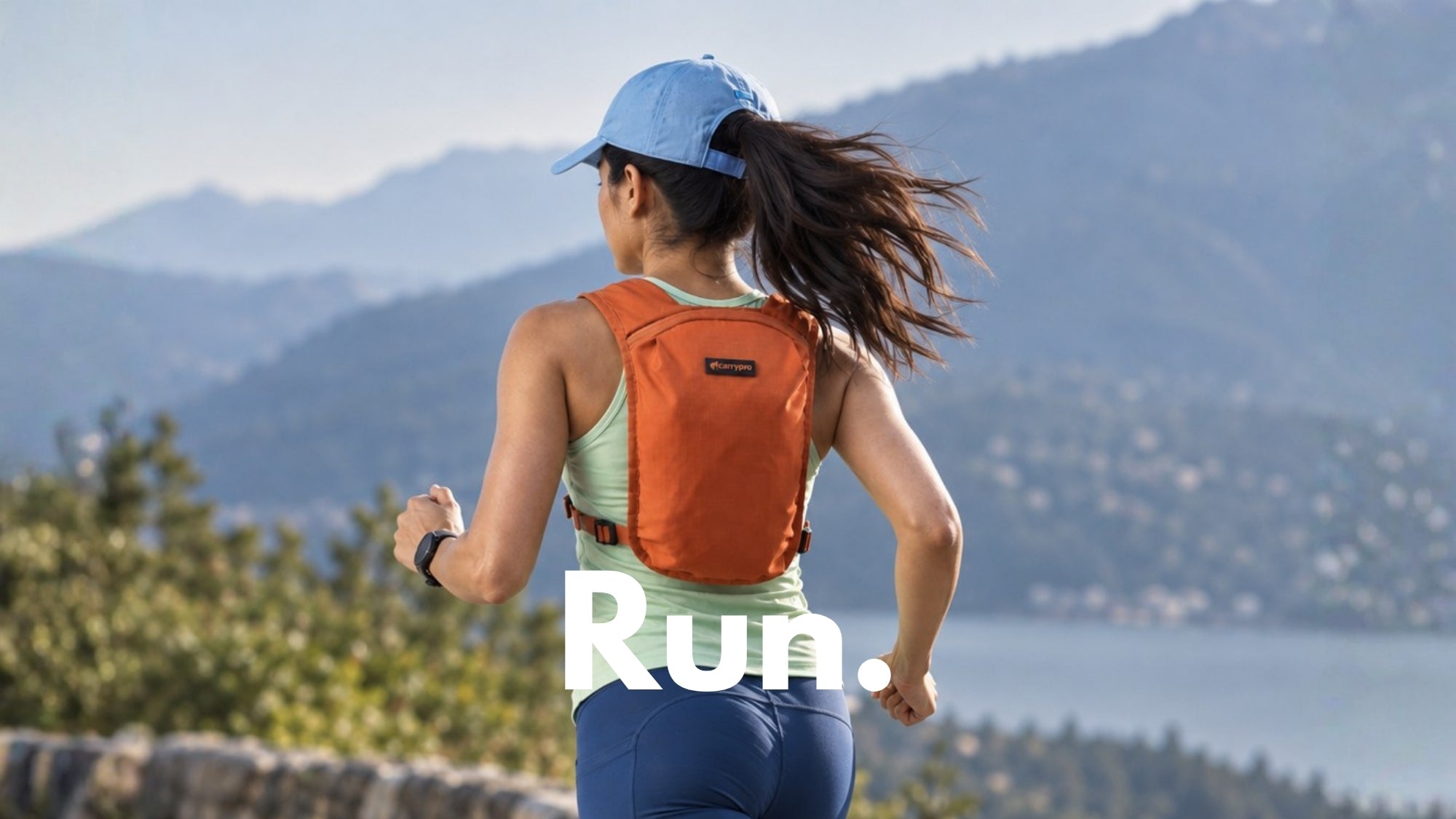

The real question is not which one is better. A sling camera bag and a camera backpack are built for different jobs, and the right pick depends on how you actually shoot. A street photographer with a Fujifilm body and one prime needs a different bag than a wedding shooter carrying two bodies, four lenses, and a flash.
The guide below runs a head-to-head face-off across five rounds, then matches each bag format to four common shooting-style profiles. Across the rounds and profiles, the right pick lands cleanly for your day, your kit, and your conditions.
What a sling camera bag does (and what a camera backpack does)
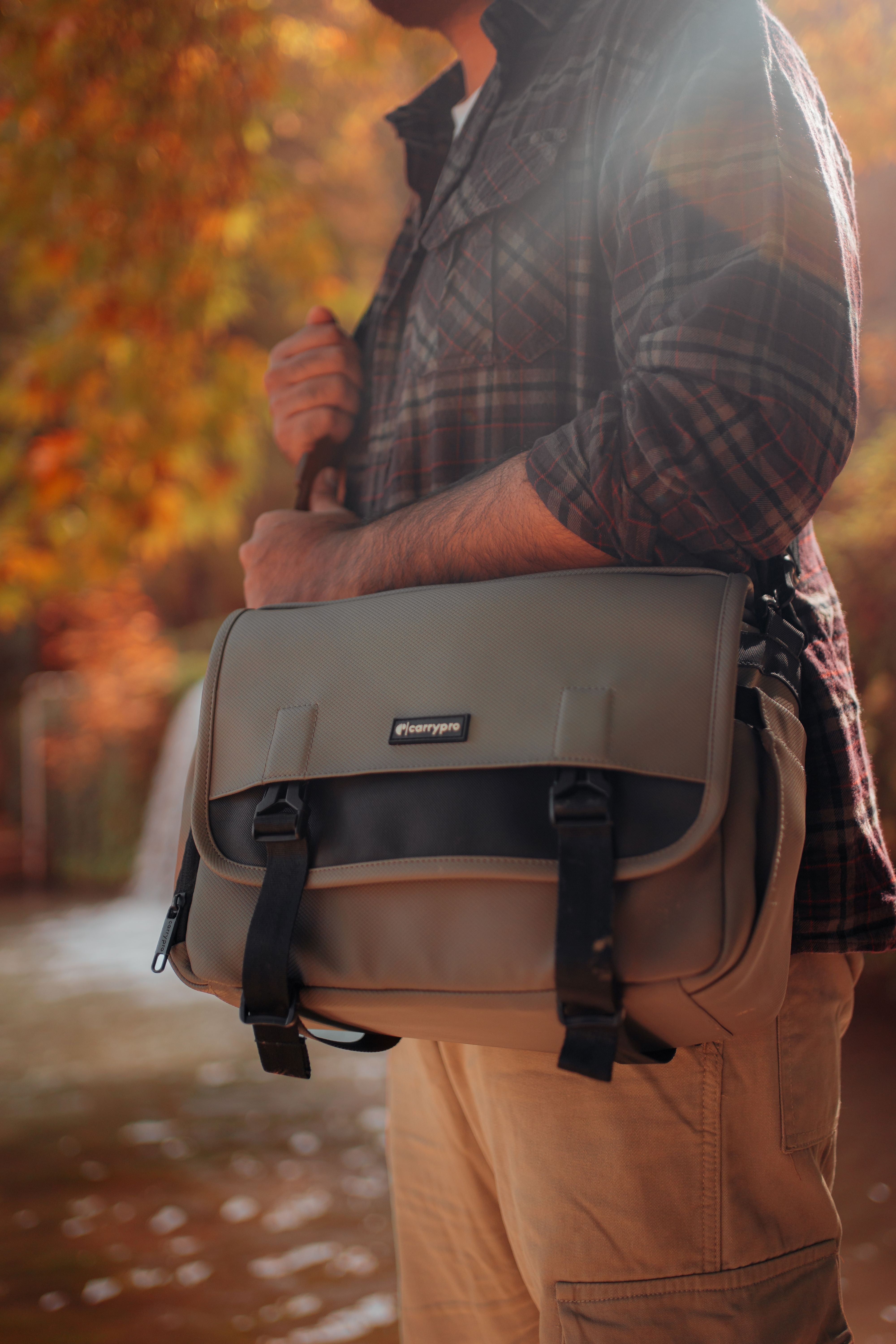
A sling camera bag rides on one shoulder and crosses to the opposite hip. To shoot, you swing the bag to your chest, unzip, and the camera is in your hands inside 3 seconds. Best for kits under 5 kg.
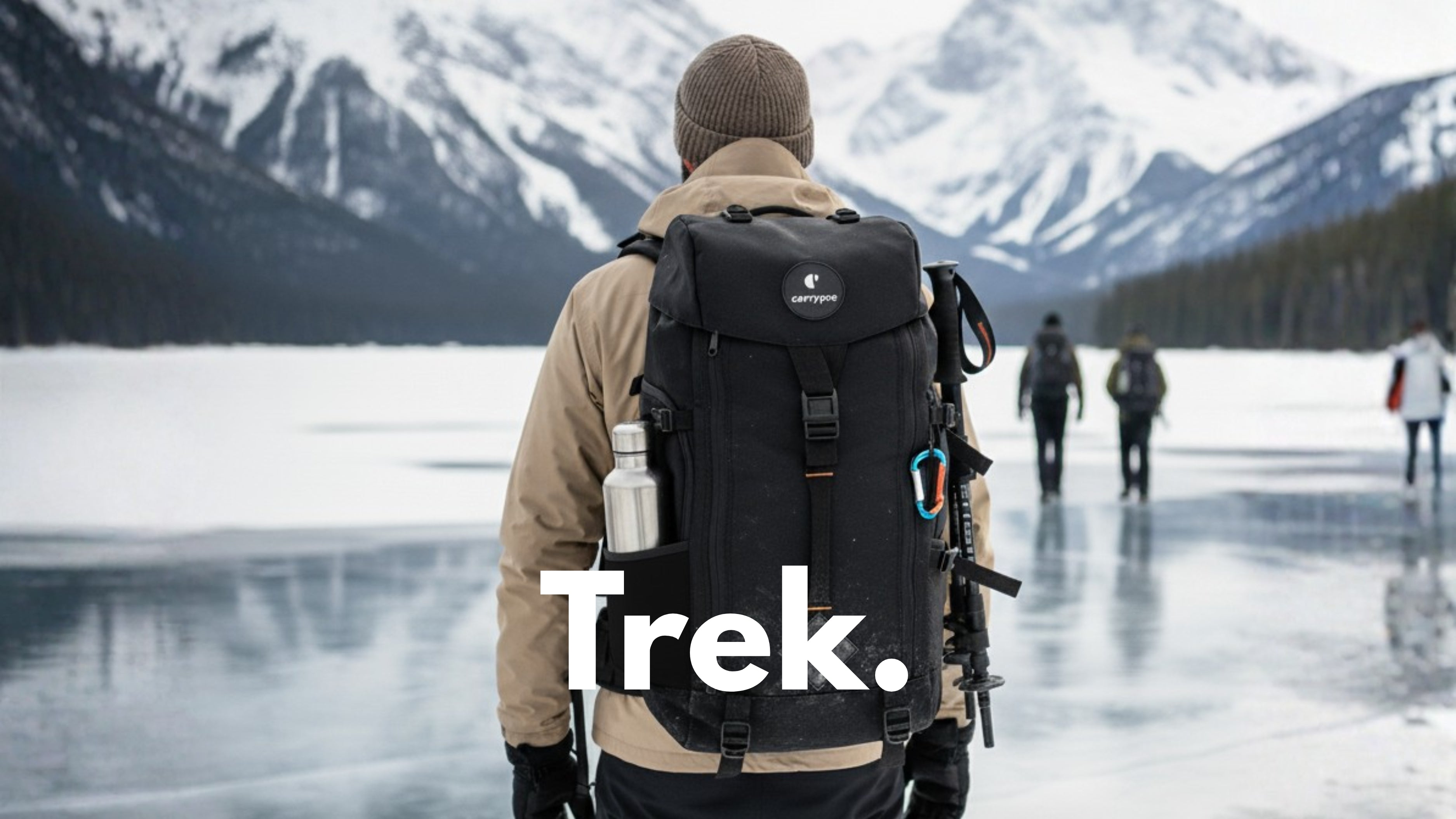
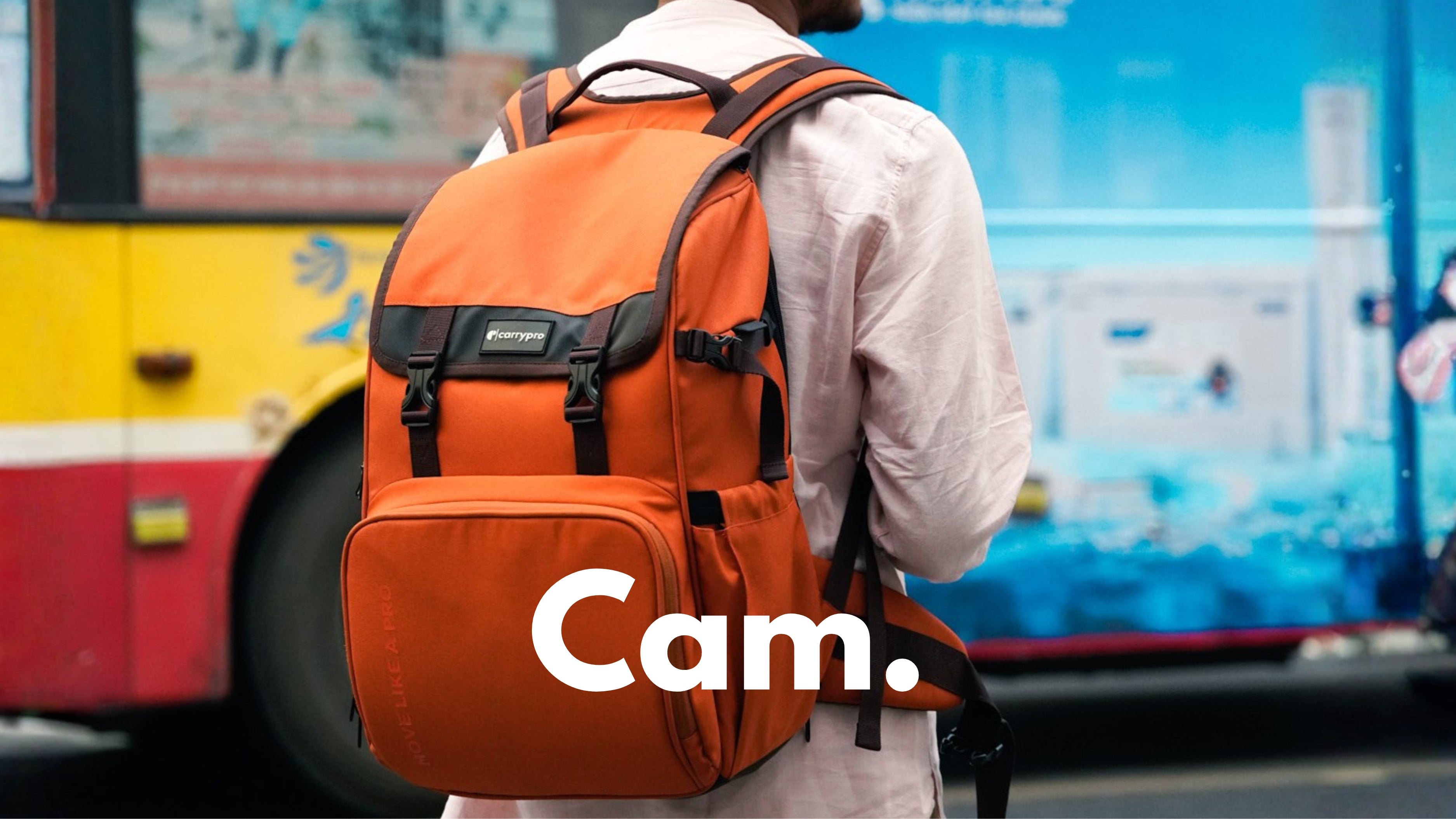
A camera backpack rides on both shoulders, often with a sternum strap and a hip belt for heavier loads. Access is slower (you set the bag down or use a side panel), but the weight is distributed, and you can carry a full kit for 6 to 8 hours without shoulder pain.
For a deeper take on the sling format, read using a camera sling for quick access when a backpack is too slow. For the backpack side, see how to choose a camera backpack that actually protects your gear.
Five face-offs that decide which bag fits you
Each round compares the two formats on a single axis. Some rounds have a clear winner. Others end in a tie that depends on your shoot day.
Round 1: Sling wins on speed of access
A sling delivers the camera in 3 seconds with a single swing. A backpack takes 10 to 15 seconds even with side access. For street, candid, and any moment-driven shoot, that gap is the shot.
Round 2: Backpack wins on all-day comfort
A backpack spreads weight across both shoulders, and with a hip belt, onto your hips. A sling concentrates the load on one shoulder. Anything over 5 kg in a sling turns into neck strain within an hour. A backpack carries 8 to 12 kg for 6+ hours without that problem.
Round 3: Backpack wins on kit capacity, by a wide margin
A 10L camera sling holds one body, two lenses, a 14-inch laptop, and a few accessories. A 30L camera backpack holds two bodies, four lenses, a flash, a 15.6-inch laptop, a tripod, and personal essentials. For event shooting or trips with full kits, the sling does not even compete.
Round 4: Sling wins on cabin baggage and travel
A sling slips inside a 7 kg Indian domestic cabin limit without negotiation. A 30L+ camera backpack often skirts the 55 x 40 x 20 cm rule and risks gate-checking. For frequent domestic flyers, the sling is the safer carry-on.
Round 5: Tie on weather protection in Indian conditions
Both formats are available with built-in rain covers at the sub-₹5,000 price band. The deciding factor is not the bag type but whether the specific model includes a rain cover. For monsoon-heavy use, filter on backpacks with rain cover first.
Match your shooting style: four creator profiles
The face-off above gives you the abstract picture. The four profiles below map it to real shooting days.
Street photographer with a single prime
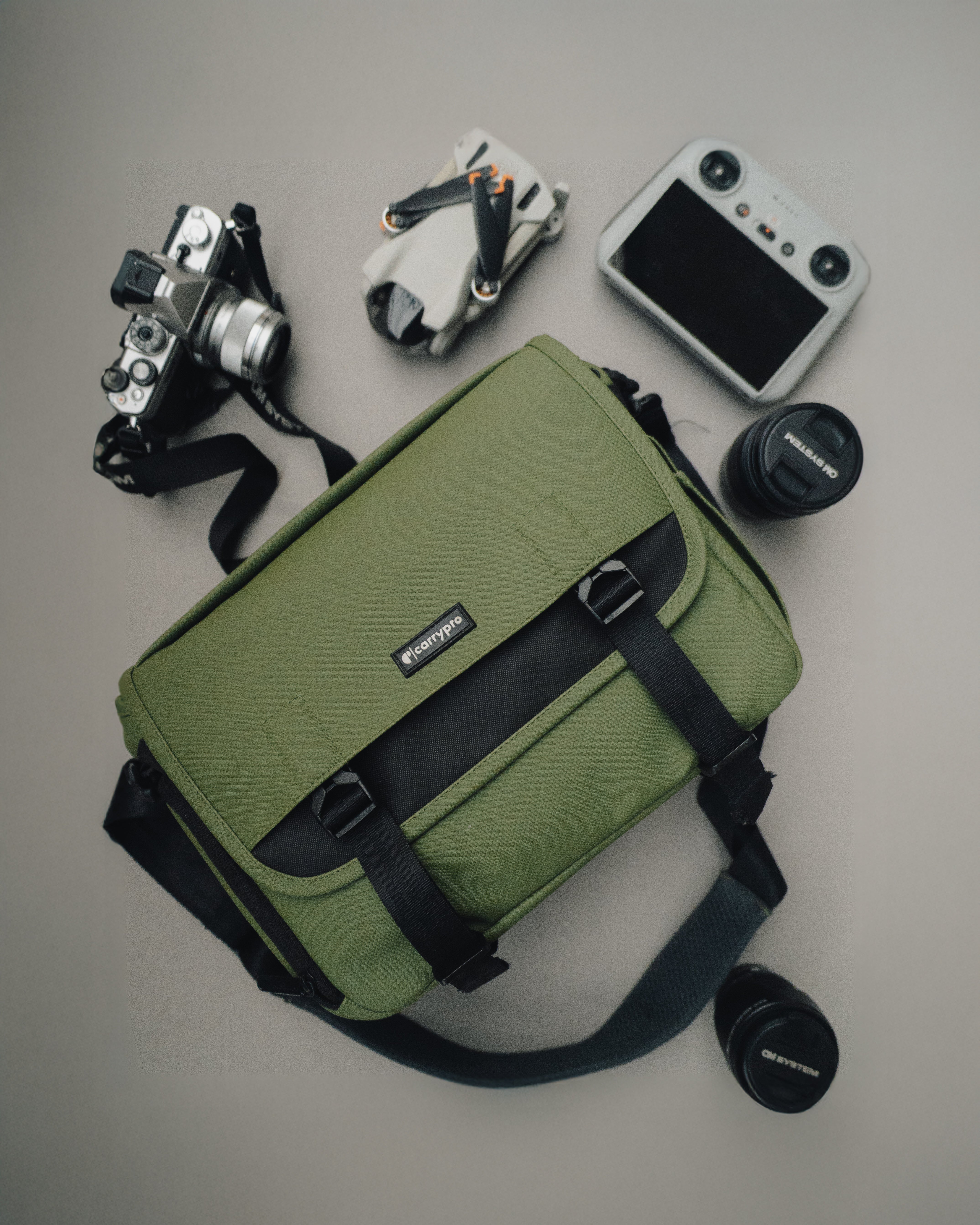
A sling is the clear pick. The Pro Camera and Drone Sling Bag (10L) at ₹3,499 carries a mirrorless body with a 35mm or 50mm prime attached, one spare lens, and a few batteries. Speed of access matters more than capacity at this kit weight.
Travel content creator who edits on the move
Depends on kit weight. For one body and two lenses, a sling stays nimble through airports and old-city walks. For two bodies, a drone, and a 15-inch laptop, a backpack distributes the load better. See camera bags that fit a laptop too and browse laptop backpacks for editing-friendly options.
Event or wedding photographer
A backpack is the only honest answer. Wedding kits run 8 to 12 kg with two bodies, four lenses, flash units, and a laptop. The PANGO V2.0 Camera and Laptop Travel Backpack at ₹6,299 holds the full kit and gives side access for fast lens swaps. Browse camera backpacks and backpacks for photographers for more options.
Hybrid creator who shoots different jobs
Own both. Use the sling for street, café, and one-lens days. Use the backpack for shoots, travel, and full-kit days. For a single-bag compromise, the HOBO25 V3.0 rolltop backpack at ₹3,999 paired with a Pro Camera Cube V2.0 at ₹2,399 converts on demand. Pull the cube out and the backpack is a regular weekend bag. See more options in camera accessories and inserts.
Quick comparison: sling camera bag vs camera backpack at a glance
The 30-second decision matrix below maps the two formats across the five axes that matter most.
|
Axis |
Sling camera bag |
Camera backpack |
|
Speed of access |
3 seconds, no set-down |
10-15 seconds, side access or set-down |
|
Comfort under load |
Good under 5 kg |
Excellent up to 12 kg |
|
Kit capacity |
1 body + 2 lenses + 14" laptop |
2 bodies + 4 lenses + 16" laptop |
|
Cabin baggage friendliness |
Always fits |
25-30L fits, 40L+ risks gate-check |
|
Best for |
Street, day trips, light kits |
Events, travel, full kits |
What changes for Indian shooters: monsoon, flights, weight rules
Three India-specific factors shift the decision past pure preference: monsoon humidity, domestic airline cabin rules, and crowded public-transport routes.
Monsoon (June to September) brings 80%+ humidity and sudden showers. Sling or backpack only matters if the bag has a rain cover. Both formats are available with covers built in.
Domestic flights cap cabin baggage at 7 kg and roughly 55 x 40 x 20 cm. A 10L sling never has this problem. A camera backpack over 30L often does. For Mumbai locals and Delhi metros at peak hours, a sling rides closer to your body and is harder to pickpocket. For long walks (Ladakh trips, Western Ghats treks), lightweight backpacks win.
Ready to pick your bag?
The right bag disappears on your back, and the wrong one stays at home. Walk through the camera sling bags lineup if you shoot light and fast. Match by how you actually shoot, not by what looks good in a product photo.
FAQs about the sling camera bag vs camera backpack debate
Is a sling camera bag better than a camera backpack?
Neither is universally better. A sling wins on speed and cabin-friendliness for kits under 5 kg. A backpack wins on comfort and capacity for full kits. The right choice depends on your shoot day.
What kit fits in a 10L camera sling?
A mirrorless body with a 24-70mm zoom attached, plus two more lenses, batteries, SD cards, and a 14-inch laptop. A DJI Mini or Air drone fits in models with drone-friendly compartments.
Can you carry a sling and a backpack together on a trip?
Yes. Many photographers travel with a 25-30L backpack as the main bag and a small sling for shoot days at the destination. The sling stays in the backpack during transit.
Sling or backpack for street photography?
A sling. The 3-second draw is the entire reason street photographers use slings. A backpack slows down the moment.
Are camera slings safe in Indian monsoon conditions?
Yes, if the sling has a built-in rain cover and water-resistant outer fabric. Without one, treat any sub-₹5,000 sling as shower-resistant for 5-10 minutes, no more.
Do most photographers need both?
Working creators usually do. A sling for one-lens days and a backpack for full-kit shoots. Owning both costs less than one premium camera bag and covers every shoot type.