

Every runner faces the same small problem before heading out: what to bring, and where to put it. Carry too little and you are stuck without water or a way to call home. Carry too much and it bounces, chafes, and slows you down.
The right answer depends on how far you run and where you run. A 20-minute loop needs almost nothing. A two-hour trail run needs water, fuel, and a plan. The guide below breaks down what to carry on a run by distance and terrain, so you take exactly what you need and nothing you do not.
What should you carry on a run?
The core of what to carry on a run is short: a phone, a key, and water for anything longer than half an hour. Everything else depends on distance, weather, and how far you are from home. Start with the essentials, then add only what the run demands.
Most runners over-pack out of habit. A better approach is to build up from the basics as your distance grows.
The essentials for any run
-
A phone, for safety, navigation, and music
-
A house or car key
-
A card or a little cash
-
Water, once you pass 30 minutes or run in the heat
What to add as runs get longer
-
Energy gels or a snack for runs over an hour
-
A light shell for early mornings and changing weather
-
More water than a single bottle can hold
A small running belt covers the basics for short runs, while the rest of your running gear scales with distance.
What to carry on a short run under 30 minutes
For a short run, keep it minimal. A phone and a key are usually all you need, and the goal is to carry them without bounce. No water, no fuel, no bag.
Short runs are where runners most often carry things wrong, holding a phone in a sweaty hand or strapping it to an arm where it slides.
Keep your hands free
A phone in your hand throws off your stride and risks a drop on hard ground. A running belt holds a phone and key flat against your waist so nothing swings. Slide it on, zip your essentials in, and forget it is there for the whole loop.
Skip the water for short efforts
For runs under 30 minutes in mild weather, drink before you leave and again when you get back. Carrying water on a short easy run adds weight you do not need. Save the hydration setup for longer efforts.
What to carry on a long run over an hour
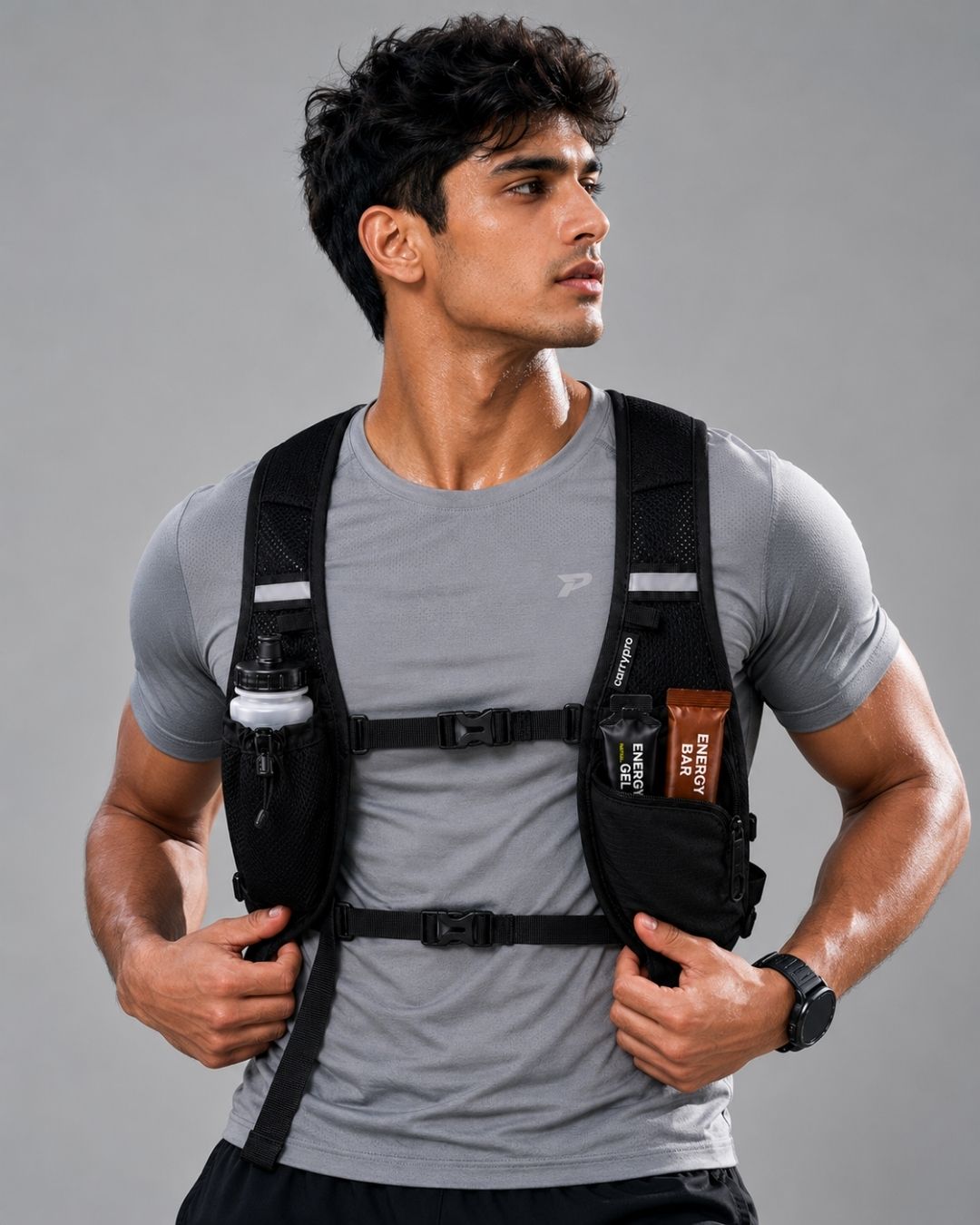
Long runs need water, fuel, and sometimes a layer. Once you pass an hour, a belt is no longer enough, and a vest carries the load without swing. Plan your carry around water first.
The jump from short to long runs is where your carry system has to change, not just what goes in it.
Water is the priority
Dehydration is the fastest way to ruin a long run. A running hydration vest carries soft flasks on your chest for quick sips, and a 2L hydration bladder drops into the back for hot mornings when flasks run dry.
Fuel for the distance
Take an energy gel or a few chews every 40 to 45 minutes on runs over 90 minutes. Fuel keeps your legs turning over in the final stretch when your body has burned through its early stores.
A layer for changing weather
Early starts and hill runs can turn cold fast. A packable shell weighs almost nothing and lives in the back of a vest until you need it.
What to carry on a trail run
Trail runs add distance from help and unpredictable ground, so you carry a little more for safety. Water, fuel, a shell, and a basic first aid kit cover most day trails. Space becomes the deciding factor here.
Trails are not the place to travel too light, since the next road or water source can be an hour away.
Carry more water on the trail
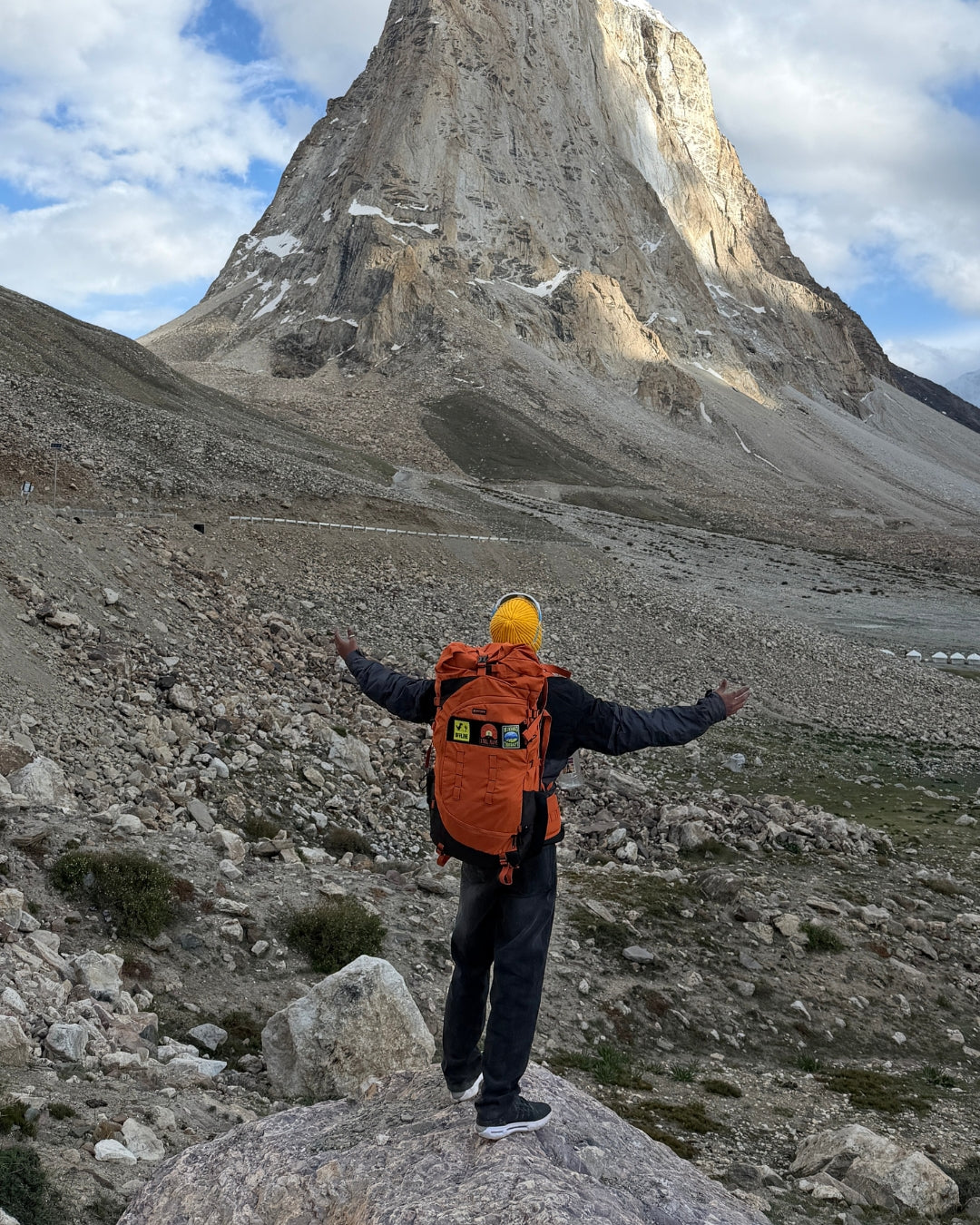
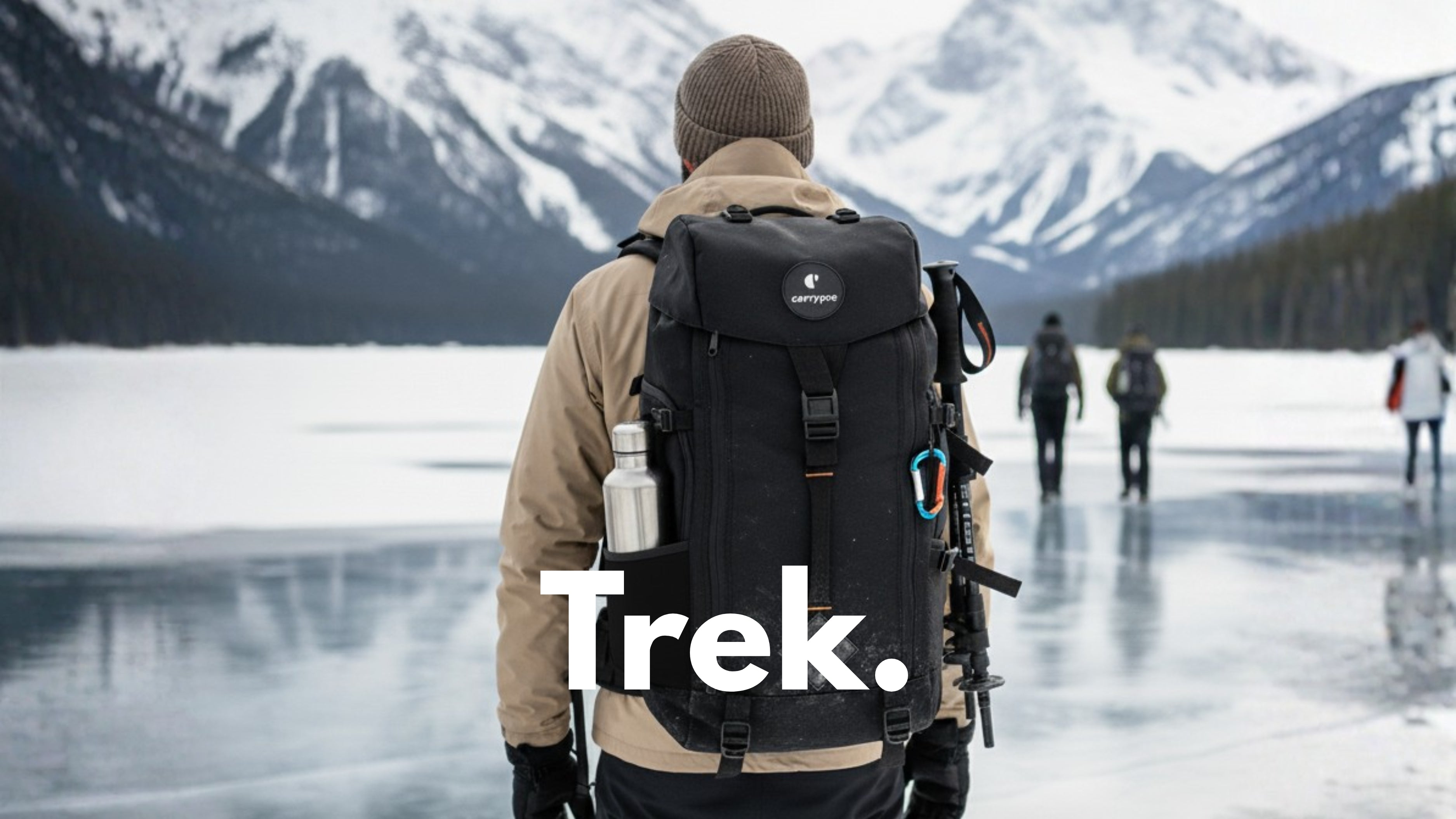
Water sources are unreliable on Indian trails, so plan to carry what you need between refills. For longer routes that need a jacket, snacks, and a kit, a trail hiking backpack gives you the room a vest cannot.
Pack for safety, not just comfort
Add a small first aid kit, a whistle, a charged phone, and a warm layer. A guide on how hydration bladders work explains why hands-free water matters most when you are moving over rough ground.
How do you carry everything on a run without bounce?
The way you carry matters as much as what you carry. Bounce wastes energy and chafes over distance, so match the carry to the load. Snug is always the rule.
Runners tend to blame the gear when the real issue is a loose fit. Cinch everything close before you start.
Small loads: a running belt
For a phone, keys, and a card, a running belt is the whole kit. A belt sits flat at your waist, holds more than an armband, and stays put once adjusted.
Big loads: a running vest
For water, fuel, and a layer on long runs, a vest spreads weight across your chest and back so nothing swings. A close, cinched fit is what stops the bounce.
Your best run starts before you tie your laces
The runners who never think about their gear mid-run are the ones who set their carry up right before they left. Sort it once, and every run after feels lighter and freer. Read the next guide on choosing between a belt, an armband, and a vest, and lock in a setup that lets you just run.
Frequently Asked Questions
What should a beginner carry on a run?
A beginner should carry a phone, a key, and a card, and add water once runs pass 30 minutes. A running belt handles the basics without bounce. Build up to a vest only when your runs stretch past an hour and need water and fuel.
Do I need to carry water on every run?
No. For runs under 30 minutes in mild weather, drink before and after instead. Carry water once you pass half an hour, run in heat, or head onto a trail where refills are unreliable.
How do I carry my phone while running?
A running belt is the most stable way to carry a phone, since it sits flat at your waist and does not slide like an armband. For long runs, a vest with a chest pocket keeps the phone secure and easy to reach.
What should I carry on a run in the heat?
Carry more water than usual, plus electrolytes for long efforts, and start well hydrated. A hydration vest or a 2L bladder lets you sip steadily, which matters more in heat than drinking a lot at once.
Is a running belt or vest better for carrying essentials?
A belt is better for short runs and small loads, and a vest is better for long runs that need water, fuel, and a layer. The deciding factor is run length: belt for everyday runs, vest once you pass an hour.
What should I carry on a long run?
Carry water in a vest or bladder, energy gels every 40 to 45 minutes, a card, a phone, and a packable layer for changing weather. Plan the carry around water first, then fuel, then everything else.