
The Sony ZV-1 II and the Canon G7X Mark III are the two compact vlogging cameras Indian creators most commonly shortlist in 2026. Both run 20MP 1-inch sensors, both shoot 4K, both fit a jacket pocket. The differences live in three places: lens range, audio handling, and India warranty service. One of those three is the actual differentiator, and most reviews get it wrong.
The head-to-head breakdown below comes from a field test in Delhi and Goa across two weeks of vlog production. Verdicts on sensor, lens, audio, ergonomics, India availability, and which compact wins for which creator profile.
Sony ZV-1 II vs Canon G7X Mark III specs at a glance
The matrix below summarises the core specs that matter for vlog buying decisions in India.
|
Spec |
Sony ZV-1 II |
Canon G7X Mark III |
|
Sensor |
20.1 MP 1-inch BSI-CMOS |
20.1 MP 1-inch BSI-CMOS |
|
Lens |
18-50mm equiv. f/1.8-4.0 |
24-100mm equiv. f/1.8-2.8 |
|
Max video |
4K/30fps |
4K/30fps (with crop) |
|
LCD |
Side-flip articulating |
Tilting (up only) |
|
Audio in |
Bluetooth wireless mic |
3.5mm external mic jack |
|
Battery life |
290 shots / ~75 mins video |
235 shots / ~55 mins video |
|
Weight |
294g |
304g |
|
Live streaming |
Via app |
Direct to YouTube |
|
India price |
Approx. ₹75,000-₹85,000 |
Approx. ₹62,995-₹75,000 |
Sensor and image quality: nearly identical results
Both cameras use 20.1 MP 1-inch BSI-CMOS sensors. Real-world image quality in good light is functionally identical. The ZV-1 II's newer sensor revision (3 years younger than the G7X III) shows slightly cleaner ISO 1600-3200 noise performance in low-light test scenes (Delhi market street shots at dusk), but the difference is marginal.
Both deliver clean 4K footage with usable dynamic range. Neither matches the latitude of a modern mirrorless camera. For most YouTube and Instagram delivery resolutions, neither sensor is the bottleneck.
Winner: Sony ZV-1 II by a hair, mostly down to newer signal processing.
Lens range: where the cameras actually diverge
The lens range is the first real choice point. The ZV-1 II ships with an 18-50mm equivalent f/1.8-4.0 zoom. The G7X III ships with a 24-100mm equivalent f/1.8-2.8.
The ZV-1 II goes wider at 18mm, which matters for arm-extended self-vlogging. The Canon stops at 24mm equivalent, meaning extended-arm selfie shots cut more aggressively into the frame. For walking-and-talking vlog work, 18mm wins.
The G7X III stretches to 100mm equivalent at the long end with a brighter f/2.8 maximum aperture. Sony stops at 50mm equivalent and drops to f/4.0. For product close-ups, b-roll compression, and any zoom-based composition, Canon wins decisively.
Winner: depends on shooting style. Self-vlog dominant: ZV-1 II. Mixed b-roll plus interview style: G7X III.
Audio: the real differentiator
The user calendar called audio "the differentiator" and the field test confirms it.
The ZV-1 II's directional 3-capsule built-in mic is the best internal microphone in any compact camera at this price point in India. Out-of-the-box voice capture for walking vlogs is broadcast-acceptable. No external mic needed for most casual content. Bluetooth wireless mic support pairs with Sony's ECM-W2BT and similar accessories for premium audio.
The G7X Mark III has a 3.5mm external microphone jack. The 3.5mm port is the single feature that puts Canon ahead for serious vlog workflows. Plug in a Rode Wireless Go II receiver or a wired lavalier mic, and you get broadcast-grade audio without Bluetooth latency, codec issues, or pairing failures. Built-in audio is mediocre by comparison.
For Indian creators starting out: ZV-1 II audio is better. For Indian creators who already own (or plan to buy) a wireless mic system: G7X III wins, because the 3.5mm jack delivers cleaner, more reliable audio than any Bluetooth chain. For a deeper audio comparison and the wireless mic decision, see the DJI Mic 2 vs Rode Wireless Go II comparison at /blogs/news/dji-mic-2-vs-rode-wireless-go-ii-india-2026.
For organizing the wireless mic transmitters, ND filters, and small accessories, the Pro Kit Tech Organiser at ₹1,299 keeps a compact-vlog kit travel-ready. Browse tech organizers.
Winner: G7X III for serious workflows, ZV-1 II for plug-and-play simplicity.
Video features and stabilization
Both cameras shoot 4K/30fps. The G7X III applies a moderate crop in 4K mode (roughly 1.45x), reducing the effective wide-angle range. The ZV-1 II shoots 4K with less crop, preserving more of the wide field of view for self-vlogging.
Both offer Full HD up to 120fps for slow motion. Neither has in-body image stabilization (electronic stabilization only, which crops the frame further). The ZV-1 II has Active SteadyShot, more aggressive than the G7X III's Movie Digital IS but with similar crop penalty.
Canon's direct YouTube streaming is a useful feature for live creators on the move. Sony requires app-mediated streaming.
Winner: Sony ZV-1 II for cropless 4K wide shots, Canon for live streaming convenience.
Ergonomics, weight, and battery
Both cameras land in the 290-310g range. The ZV-1 II's side-flip articulating LCD is purpose-built for self-vlogging (visible during recording without obstruction). The G7X III's tilting LCD flips up but is blocked by external mic, hot-shoe accessories, or tripod mounts in front.
The Sony's 290-shot battery life translates to roughly 75 minutes of 4K video before swap. The Canon's 235 shots translates to ~55 minutes. For full-day shooting, plan 3 spare batteries minimum for either camera. For the bag selection that keeps spare batteries organised through travel, read how to choose a camera backpack that actually protects your gear.
Winner: Sony ZV-1 II for vlog ergonomics, both tied on weight.
India availability and warranty
The Canon G7X Mark III has wider India warranty service through Canon India authorised service centers in 15+ cities. Sony ZV-1 II warranty routes through Sony India service centers, present in fewer cities but generally well-rated.
Pricing in May 2026: Canon G7X Mark III ranges from ₹62,995 (Flipkart) to ₹75,000 at premium retailers. Sony ZV-1 II ranges from ₹75,000 to ₹85,000. The Canon is roughly ₹10,000-₹15,000 cheaper for largely comparable specs.
Stock availability fluctuates. Both cameras are subject to occasional import shortages.
Winner: Canon G7X Mark III on price and service network breadth.
Which one fits which Indian creator?
For self-vlog YouTubers with one-camera kits and no plans for external mics, pick the Sony ZV-1 II. Wider lens, better built-in audio, side-flip screen, longer battery.
For mixed-content creators who already own wireless mic gear (or plan to), pick the Canon G7X Mark III. The 3.5mm jack and longer zoom reach win for hybrid vlog-plus-product workflows.
For budget-priority creators wanting "good enough" 4K with India warranty in tier-2 cities, pick the Canon. ₹10,000-₹15,000 savings plus broader service network.
For creators picking between this category and the DJI Osmo Pocket 3 at ₹40,990, the Pocket 3 wins on stabilization and form factor for travel vlogging. The compacts win on sensor quality and lens flexibility.
For the full creator-tier framework that places these compacts in context, read the vlogging gear checklist for Indian creators.
What to carry it in
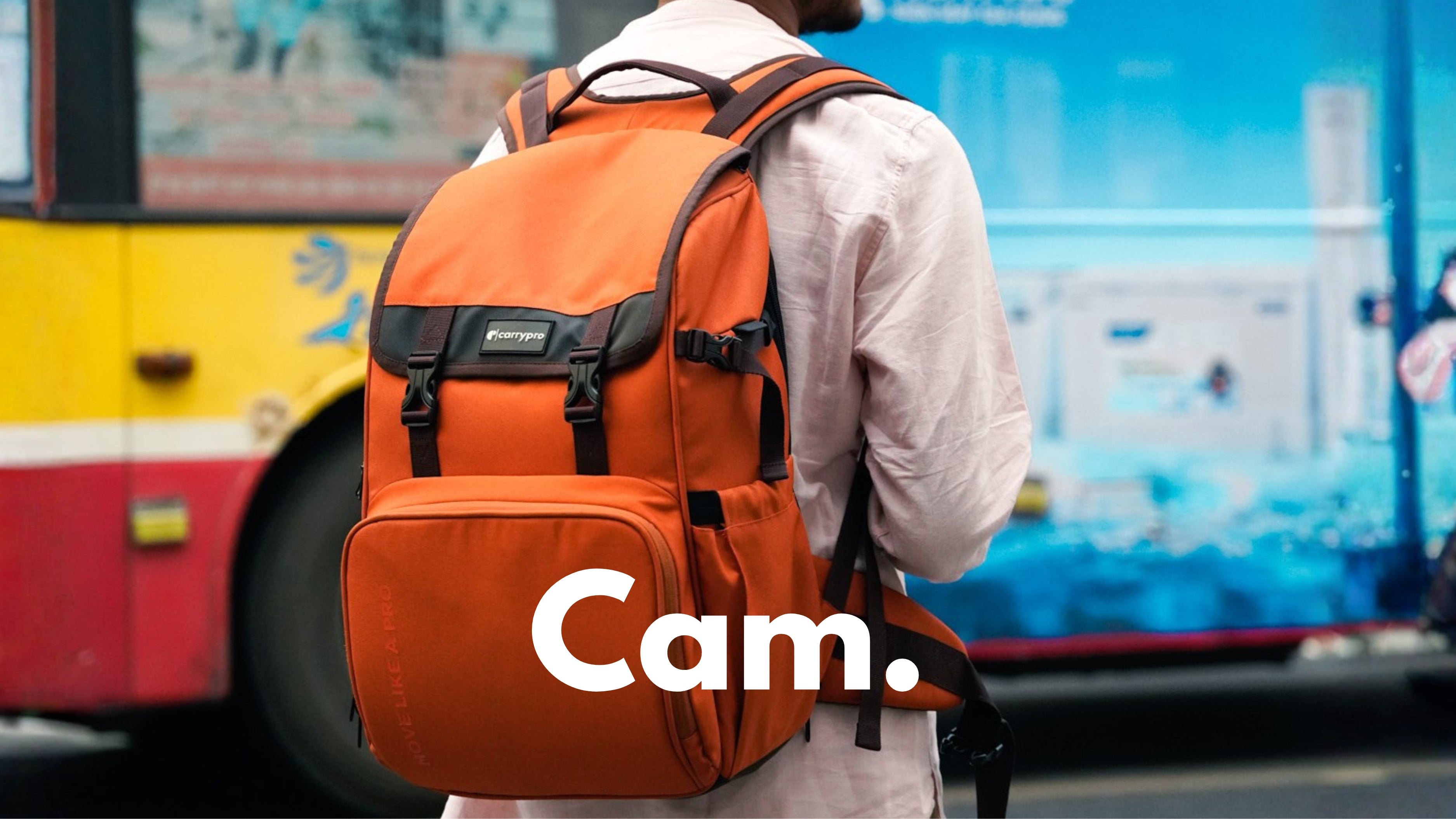
Both cameras fit comfortably in a sling-format bag with room for spare batteries, ND filters, and a wireless mic kit. The Pro Camera and Drone Sling Bag (10L) at ₹3,499 covers either camera plus accessories plus a 14-inch laptop. Browse camera sling bags for variants.
For travel vloggers carrying a compact camera plus laptop plus mic kit, the PANGO V2.0 Camera and Laptop Travel Backpack at ₹6,299 holds the full kit with room for a 15.6-inch laptop. Browse camera backpacks and laptop backpacks. For modular protection inside any existing backpack, the Pro Camera Cube V2.0 at ₹2,399 fits either compact camera plus two lenses or accessories.
For travel-ready bag selection, see carry-on backpacks, lightweight backpacks, and camera accessories and inserts.
Ready to pick your compact vlogging camera?
The right compact is the one that matches your audio workflow first, your lens range second. Pick the ZV-1 II for plug-and-play self-vlogging. Pick the G7X Mark III for serious audio chains and zoom flexibility. Pair either with the right bag and the kit becomes travel-ready in minutes.
FAQs about compact vlogging cameras in India
Which is better for vlogging in India: Sony ZV-1 II or Canon G7X Mark III?
For self-vloggers who do not use external mics, the ZV-1 II wins on wider lens, side-flip screen, and better built-in audio. For creators who use wireless mic systems, the G7X Mark III wins on the 3.5mm external mic jack and longer zoom reach.
How much does the Sony ZV-1 II cost in India in 2026?
Approximately ₹75,000 to ₹85,000 depending on retailer in May 2026. Sony India authorised dealers price slightly higher than Amazon and Flipkart third-party sellers.
Is the Canon G7X Mark III still worth buying in 2026?
Yes, for vloggers who want a longer zoom range, an external mic input, and broader India warranty service. At ₹62,995 to ₹75,000 the G7X III is roughly ₹10,000-₹15,000 cheaper than the newer ZV-1 II for largely comparable image quality.
Can I use a Rode Wireless Go II with the Sony ZV-1 II?
The ZV-1 II does not have a 3.5mm external mic jack. Wireless mic support routes through Bluetooth (Sony ECM-W2BT and compatible accessories) or via the multi-interface shoe with appropriate adapter cables. The G7X Mark III's 3.5mm jack accepts the Rode Wireless Go II receiver directly.
Does the Canon G7X Mark III shoot 4K?
Yes, at 30fps with a moderate crop (approximately 1.45x). The crop reduces effective wide-angle range. For uncropped 4K with wider field of view, the Sony ZV-1 II is the better pick.
What is the best bag for a Sony ZV-1 II or Canon G7X Mark III kit in India?
For sling-format quick-deploy creators, the Pro Camera and Drone Sling Bag at ₹3,499. For travel kits with a laptop, the PANGO V2.0 at ₹6,299. For accessory and wireless mic storage, the Pro Kit Tech Organiser at ₹1,299.