
A studio microphone, an audio interface, a monitor, and an acoustic panel do not fit inside a backpack. That is the problem every podcaster faces the moment they leave home. The content does not stop because you are travelling. Guests are available for one afternoon in a cafe in Jaipur. A story happens on a train to Varanasi. An idea hits at a hostel in Rishikesh and fades by the time you return to your desk.
A mobile podcast kit solves this by reducing a studio to its essentials and fitting them inside a bag you already carry. The goal is not perfection. The goal is broadcast-quality audio captured in three minutes of setup, anywhere you happen to be.
What belongs in a mobile podcast kit
A travel podcast setup needs four things. A microphone, a way to record, a way to monitor, and a way to carry it all without adding a second bag to your loadout.
The microphone
A USB-C lavalier microphone is the lightest and most versatile option for solo episodes. Clip it to your collar, plug it into your phone, and you are recording. The RODE Wireless GO II or the DJI Mic 2 both weigh under 60 grams per unit and deliver clean audio in cafes, hotel rooms, and quiet outdoor spots.
For two-person interviews on the road, a compact handheld recorder like the Zoom H1essential handles dual input without a laptop. It records to a microSD card and runs on a single charge for over 10 hours.
The recording device
Your phone is the recording device. Apps like Riverside or Spotify for Podcasters capture separate audio tracks directly on the phone, which makes remote interviews clean even on spotty hotel Wi-Fi. A dedicated recorder adds redundancy, but for most mobile podcast setups, the phone in your pocket is already enough.
The monitoring headphones
Wired, closed-back, over-ear headphones prevent audio bleed during recording and let you catch background noise before it ruins a take. The Audio-Technica ATH-M20x folds flat and weighs 190 grams. Skip Bluetooth headphones for recording. The latency makes real-time monitoring unreliable.
The carry solution
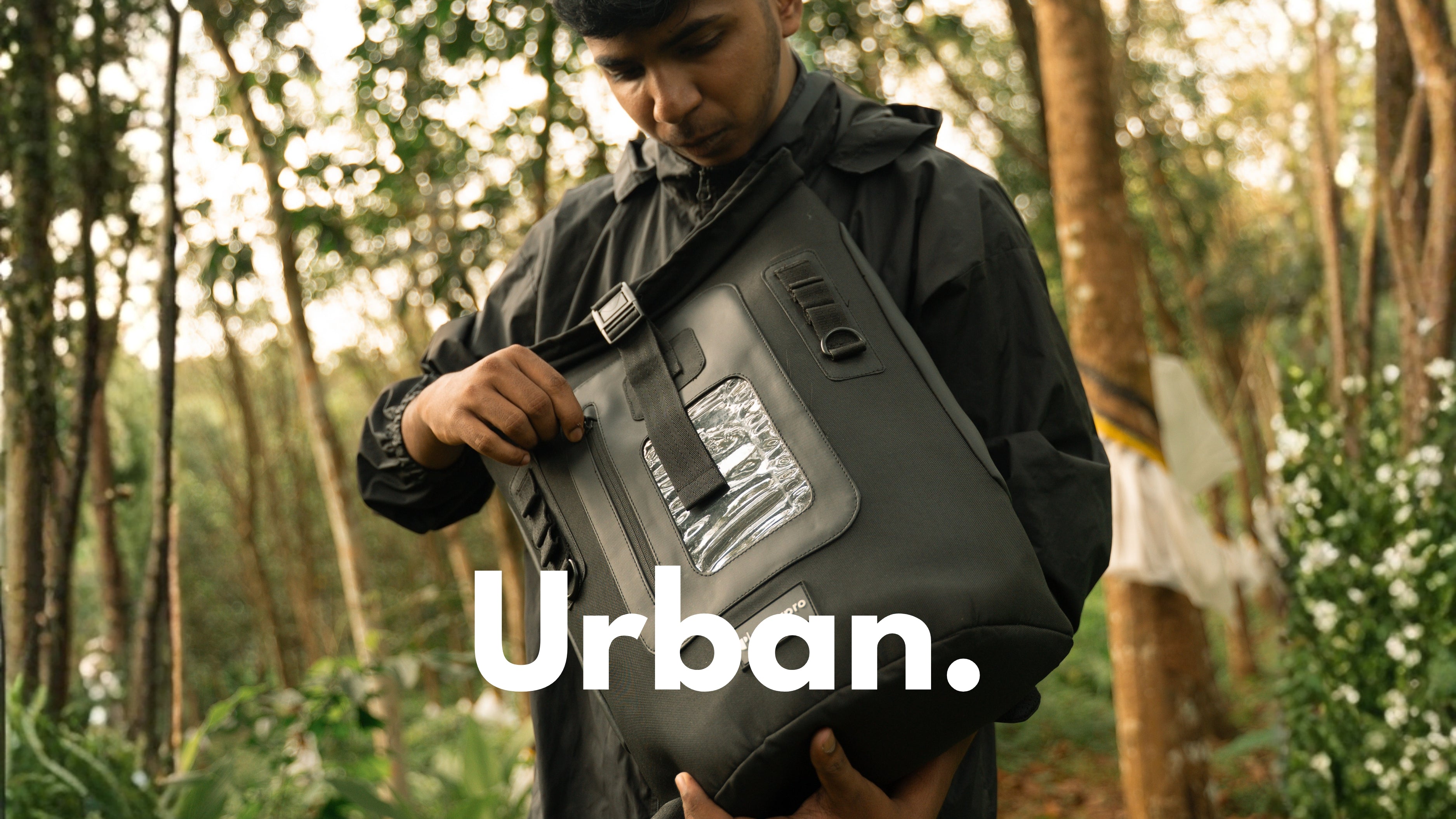
Every piece of this kit fits inside a tech organiser. Mic, cables, recorder, headphones, and a microSD card in one pouch. That pouch slides into the front pocket of a Pango V2.0 camera backpack or clips to the inside of a sling bag. Pair it with packing cubes to keep podcast gear separated from clothing. Total kit weight: under 700 grams.
How to set up and record in under three minutes
Speed matters because the best mobile podcast moments are spontaneous. A 30-minute setup kills the energy. A three-minute setup captures it.
Step 1: find your quiet corner
Airport lounges, hotel lobbies, and cafe corners near walls absorb more sound than open-air spots. Avoid hard tile floors and glass walls. Soft furnishings around you reduce echo without any acoustic treatment. In Indian cafes, the back corner away from the kitchen door is usually the quietest seat.
Step 2: clip and connect
Clip the lavalier mic to your collar, six inches below your chin. Plug it into your phone or recorder. Put your headphones on and do a five-second test. Listen for hum, fan noise, or background music. If the background is too loud, move before you start recording. Adjusting in post takes longer than finding a better seat.
Step 3: hit record and talk
Frame the episode before you press record. One topic, one structure, one clear takeaway for the listener. Solo episodes that run 10 to 15 minutes perform best because they match the attention span of a commuter or a morning routine.
Save the file to your phone and to a microSD card if using a handheld recorder. Two copies of the raw audio means one failed device does not erase the episode.
Where this kit fits inside a travel bag
The point of a mobile podcast kit is that it does not require its own bag. It lives inside whatever bag you already travel with.
Inside a camera backpack
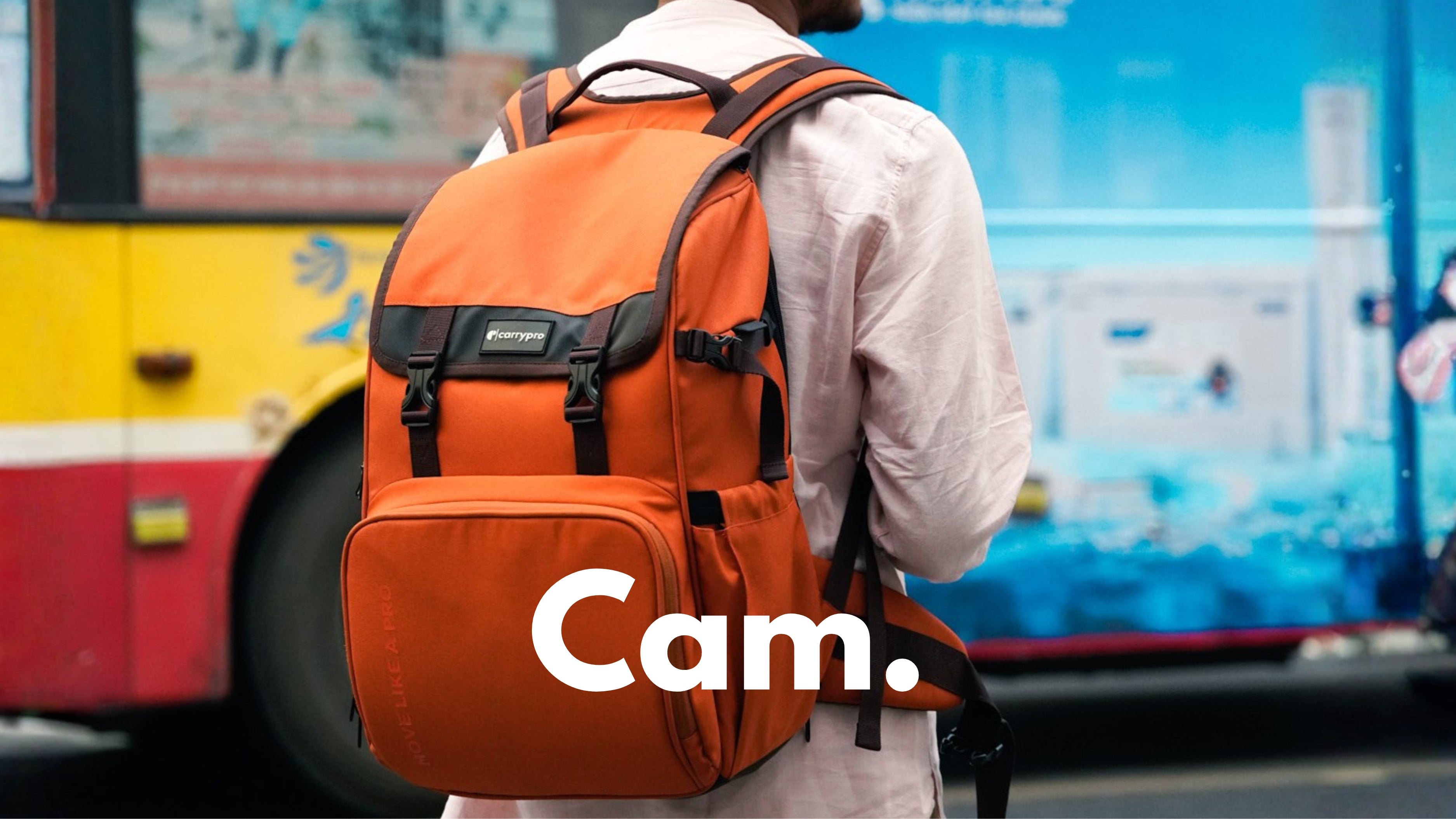
The Pango V2.0 has a front organiser pocket and a top quick-access compartment. The mic and cables go in the organiser alongside camera batteries and memory cards. The headphones sit in the top pocket. The recorder stays in a side pocket or clips to the internal loop.
This setup means a creator carrying a camera, a laptop, and a podcast kit travels with one bag.
Inside a sling bag for day recording
On days when the main backpack stays at the hostel, the entire podcast kit transfers to a sling bag. Mic, phone, headphones, and a small recorder fit comfortably in the sling's main compartment. You walk into a cafe, sit down, and record without having hauled a full backpack through the city.
Inside a travel backpack
For podcasters who do not carry camera gear, the kit fits inside the front pocket of a HOBO40 V2.0 alongside cables, chargers, and adapters. The organiser pouch keeps podcast gear separated from travel tech so nothing tangles.
Common mistakes that ruin mobile recordings
Even with good gear, a few avoidable mistakes turn a clean episode into an unusable file.
Recording without headphones
You will not hear the air conditioner hum, the fan rattle, or the fridge buzz until you listen back. Always monitor with wired headphones during recording, not after.
Skipping the test recording
A five-second test catches mic placement issues, gain problems, and unexpected background noise before you commit to a 20-minute episode. Five seconds of testing saves 20 minutes of re-recording.
Relying on Bluetooth in the field
Bluetooth microphones introduce 150 to 300 milliseconds of latency. That delay makes conversation feel unnatural and makes editing two-person episodes frustrating. Wired connections eliminate the problem entirely.
For more on how to organise tech gear inside a travel bag, the digital nomad backpack setup guide covers the full workflow.
Record where the stories are
The best podcast episodes are not recorded in studios. They are recorded where the stories happen. A mobile podcast kit removes the barrier between an idea and a published episode. The gear is small. The setup is fast. The only thing left is pressing record.
If your travel bag already has a front pocket, you already have room for a podcast studio.
Frequently asked questions
How much does a mobile podcast kit cost?
A starter mobile podcast kit costs Rs 5,000 to Rs 15,000. A lavalier mic (Rs 2,000 to Rs 8,000), wired headphones (Rs 2,000 to Rs 4,000), and a recording app (free to Rs 1,500 per month) cover the essentials. A handheld recorder adds Rs 6,000 to Rs 12,000 for redundancy.
Can I record a podcast on my phone?
Yes. Modern smartphones record broadcast-quality audio when paired with an external microphone. Apps like Riverside, Anchor, and Spotify for Podcasters handle recording, editing, and publishing directly from the phone.
What is the best microphone for podcast recording while travelling?
A USB-C lavalier microphone like the RODE Wireless GO II or DJI Mic 2. They are lightweight, wireless, and deliver clean audio in varied environments. For two-person interviews, a compact XLR recorder like the Zoom H1essential adds a second input.
How do I reduce background noise in a mobile recording?
Choose a location with soft furnishings and minimal foot traffic. Position yourself near a wall or corner. Use a directional microphone that rejects sound from behind. Record a 10-second room tone sample for noise reduction in post-production.
Can I fit a podcast kit and camera gear in one bag?
Yes. The Pango V2.0 camera backpack holds a mirrorless camera, two lenses, a laptop, and a full podcast kit in the front organiser pocket. Total weight sits between 6 and 8 kg depending on the camera body.
Do I need a laptop to edit podcast episodes while travelling?
Not necessarily. Phone-based editors like Descript and Riverside handle cuts, noise reduction, and export. A laptop adds flexibility for multi-track editing and video podcasts, but solo audio episodes publish cleanly from a phone alone.