
A 65L travel backpack is the bag you reach for when a carry-on will not do. It holds 10 to 14 days of clothes, a sleeping bag liner, trekking shoes, and enough layers to handle both Delhi heat and Ladakh cold in the same trip.
Most Indian travellers start with a 40L and hit a wall the moment a trek gets longer than five days. That is where the 65-litre size earns its place. It is not a cabin bag. It is the full-size answer for Himalayan circuits, Southeast Asia backpacking, and multi-climate hostel runs across India.
Our guide covers what to look for, how to match the right pack to your trip, and what actually fits inside.
What makes a 65L backpack different from smaller travel bags
The jump from 40L to 65L is not just about extra litres. It changes how the bag is built, how weight sits on your body, and what trips become possible without checked luggage stress.
Load distribution changes at this size
A 40L bag can get away with shoulder straps alone. A 65L bag cannot. At 10 to 15 kg of packed weight, you need a padded hip belt that transfers 70 to 80 percent of the load to your hips. The NOMAD 65L+ uses load-lifter straps and a contoured hip belt to keep the pack stable on steep ascents and long bus rides alike.
Without proper hip support, a loaded pack will strain your shoulders within the first hour of a Hampta Pass descent or a walk through a crowded Manali bus stand.
Access style matters more at this volume
Most affordable rucksacks in this size range are top-loaders. You stuff gear in from the top and dig through layers to find anything at the bottom. A better design adds a separate bottom compartment with its own zip, so dirty shoes or a sleeping bag stay isolated.
The NOMAD combines top-loading with a front-panel access option. Open it like a suitcase at your hostel, then cinch it down from the top when you are on the move.
How to choose the right 65L travel backpack for Indian trips
Not every 65-litre bag suits every kind of Indian travel. A Himalayan trek demands different features than a six-week hostel circuit across Rajasthan and Kerala.
Match the frame to the terrain
For Himalayan treks above 4,000 metres, an internal frame with aluminium stays is not optional. It keeps the bag rigid under load and prevents sagging on hours-long switchback ascents. The NOMAD 65L+ includes a reinforced internal frame that holds shape at full capacity.
For flatland hostel travel and train journeys, frame rigidity matters less. But even on a Rajdhani sleeper, a structured bag fits the luggage rack without collapsing into the aisle.
Check rain readiness before monsoon season
Indian travel from June through September means monsoon. A large pack without a rain cover is a liability in Himachal, Kerala, or the Northeast. Every bag in the CarryPro travel backpack range ships with a fitted rain cover that stows in a bottom pocket.
Water-resistant fabric handles drizzle. A proper rain cover handles the downpour that catches you between Kaza and Manali when the bus roof is leaking.
Think in systems, not single bags
The smartest backpackers do not rely on one bag alone. A 65L pack handles the main load. A smaller sling bag carries your passport, phone, and wallet during transit. Packing cubes turn a single cavernous compartment into an organised system where every item has a fixed home.
This modular approach means you can pull the sling bag for a day trip in Kasol without unpacking or disturbing your main loadout.
What fits inside a 65-litre pack
The capacity holds more than most people expect when packed with intention. Here is a realistic loadout for a 12-day trip across two climate zones.
Clothing for mixed weather
Five t-shirts, two trek pants, a fleece jacket, a down layer, a rain shell, thermals, seven sets of undergarments, and three pairs of socks. Rolled inside packing cubes, this clothing block occupies roughly 60 percent of the main compartment.
Gear and accessories
Trekking shoes in the bottom compartment. A headlamp, sunscreen, first-aid kit, and toiletry pouch in the lid pocket. A hydration bladder in the internal sleeve for trail days. Power bank and cables in a tech pouch. Passport and documents in the hip-belt pocket for checkpoint access.
What stays outside the bag
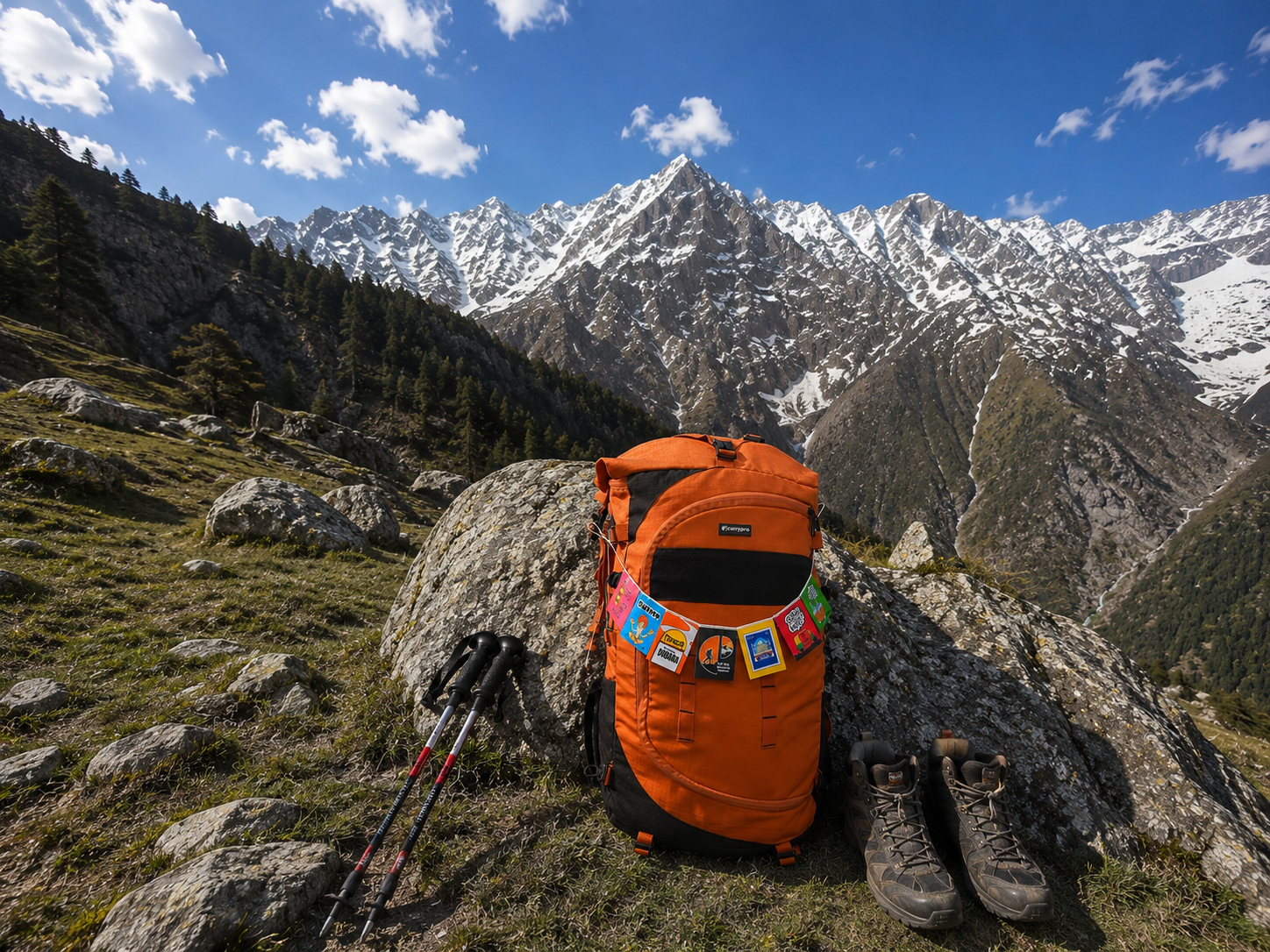
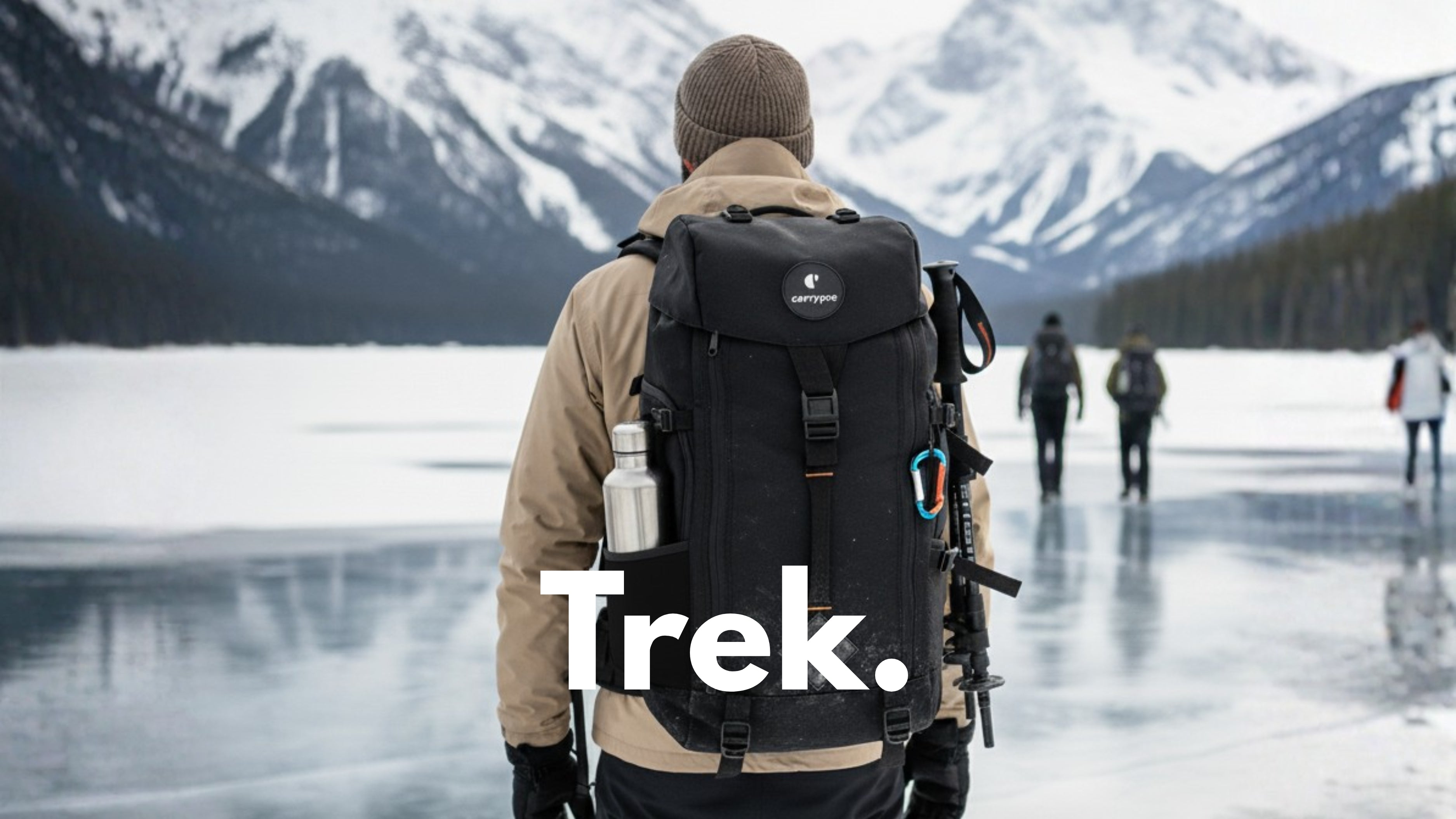
Trekking poles strap to the compression loops. A water bottle sits in the side mesh pocket. The rain cover stays in its dedicated bottom pocket until the sky turns grey.
For a visual breakdown of what each size actually holds, the backpack size guide walks through 15L to 65L with real packing examples.
When 65 litres is the right call and when it is not
This size is right for trips longer than seven days, multi-climate itineraries, and situations where checked luggage is not an option. Himalayan treks, backpacking across India by train, and extended Southeast Asia circuits all fall here.
It is not the right size for weekend getaways, cabin-only domestic flights, or city trips between cafes and coworking spaces. For those, a 40L like the HOBO40 V2.0 or a 30L Overnighter is the smarter pick.
The detailed comparison in 45L vs 65L covers the exact scenarios where each size wins.
The right 65L pack changes the trips you are willing to take
A Spiti circuit, a Northeast India loop, a two-week Western Ghats trek — these become practical when your bag handles the load without punishing your back. The difference between a forgettable trip and one you talk about for years often comes down to whether your gear worked with you or against you.
If your next trip runs longer than a week or crosses more than one climate zone, a 65L travel backpack earns its place on your back. Start with the NOMAD 65L+ and see what kind of trips become possible.
Frequently asked questions
Is a 65L backpack allowed as cabin luggage on Indian flights?
No. A 65L backpack exceeds the 55 x 40 x 20 cm cabin limit on all Indian airlines. It goes as checked baggage, typically under the 15 kg limit on IndiGo, SpiceJet, and Akasa. For cabin-only travel, a 40L bag is the practical ceiling.
How heavy is a 65L backpack when fully packed?
A fully packed 65L travel backpack typically weighs between 10 and 15 kg, depending on the season and destination. Summer clothing keeps you closer to 10 kg. Winter layers and trekking gear push toward 15 kg. A padded hip belt becomes essential at any weight above 8 kg.
Can I use a 65L backpack for Himalayan treks?
Yes. A 65L pack with an internal frame, hip belt, and rain cover handles most Himalayan treks from Hampta Pass to Roopkund. The bottom compartment separates a sleeping bag or dirty gear from clean layers. Compression straps cinch down the load for steep terrain.
What is the difference between a 65L rucksack and a 65L travel backpack?
A rucksack is usually top-loading only, built for trails. A travel backpack adds front-panel access, a laptop sleeve, and organisation pockets suited to airports, trains, and hostels. The best 65L travel backpacks in India combine both — trail-grade frames with travel-friendly access.
How do I pack a 65L backpack to avoid back pain?
Place heavy items like shoes and water close to your back and centred between your shoulders and hips. Light items go at the top and outer edges. Tighten the hip belt first, then adjust shoulder straps, and finally pull the load-lifter straps to bring the top of the bag closer to your body.
Is 65L too big for a solo female traveller?
Not if the trip demands it. Bag size should match trip length and climate, not gender. The key is adjustable straps that fit a shorter torso. The NOMAD 65L+ uses a fully adjustable strap system that accommodates torso lengths from 38 cm upward, making it functional for most body types.