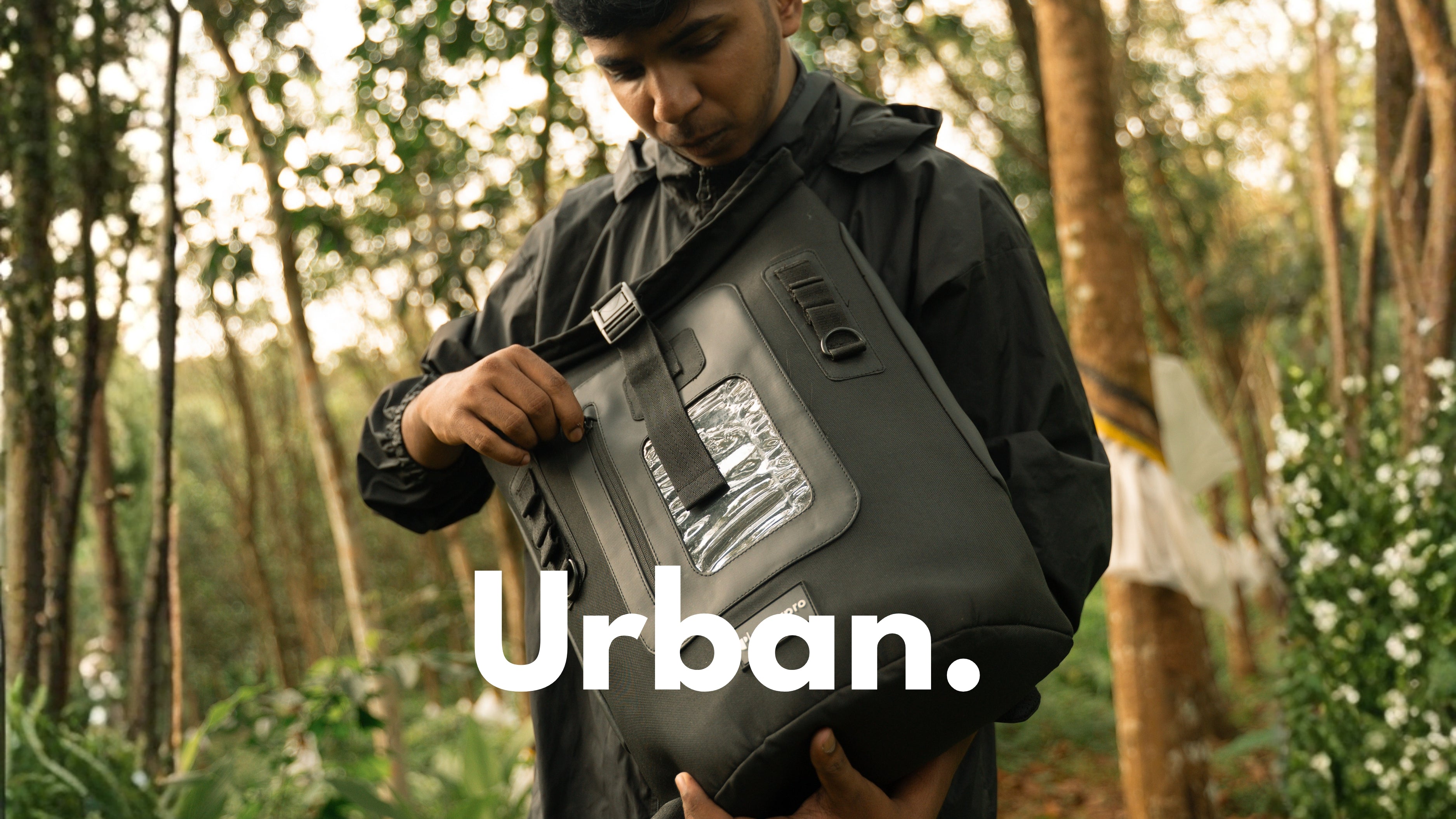


India does not treat luggage gently. Crowded metro platforms, narrow auto rickshaw footwells, unpaved hill station roads, and overhead racks on sleeper trains all put bags through conditions that most travel gear was never designed for. Choosing between a backpack and a suitcase before an Indian trip is not a style preference. How you get around on the ground decides which bag survives the trip and which one slows you down.
How Indian Travel Conditions Affect Your Luggage
Most international travel advice assumes smooth airport floors, hotel lobbies, and taxi trunks. Indian travel adds variables that change the equation entirely.
Auto rickshaws have a footwell roughly 40 cm wide. A standard cabin suitcase (55 x 40 x 20 cm) barely fits when placed sideways, and a larger checked suitcase will not fit at all without occupying the seat next to you. A backpack sits on your lap or between your feet without issue.
Metro trains in Delhi, Mumbai, Bengaluru, and Hyderabad get packed during rush hours. Rolling a suitcase through a crowded metro car while holding a handrail is difficult. A backpack worn on your front or placed between your feet keeps both hands free and takes up less floor space.
Sleeper trains have overhead luggage racks designed for soft, flexible bags. Rigid suitcases often do not fit in the upper racks and end up blocking the aisle or sitting on the berth beside you.
Hill stations like Manali, Shimla, Munnar, and Darjeeling have steep inclines, broken sidewalks, and unpaved paths between bus stops and hotels. Suitcase wheels jam on gravel and uneven stairs. A backpack distributes weight across both shoulders and handles any terrain.
Backpack vs Suitcase: A Side-by-Side Comparison
Here is how each bag type performs across the conditions you will actually encounter during Indian travel.
| Scenario | Backpack | Suitcase |
|---|---|---|
| Auto rickshaw | Fits on lap or floor easily | Barely fits, blocks seat |
| Crowded metro | Hands free, compact footprint | Needs one hand, blocks aisle |
| Sleeper train rack | Fits overhead racks on most trains | Rigid cases often do not fit |
| Hill station roads | Handles gravel, stairs, inclines | Wheels jam on uneven surfaces |
| Airport terminal | Comfortable, no floor needed | Easier on smooth floors |
| Hotel room storage | Stands upright or hangs from hooks | Needs flat floor space to open |
| Domestic flight cabin | Fits overhead bin, compresses | Fixed shape, fits or does not |
For trips that stay entirely within airports and hotels with smooth floors, a suitcase works fine. For trips that involve any ground transport beyond taxis, a backpack handles Indian conditions better.
When a Backpack Is the Better Choice
Ground transport variety is the biggest factor. If your trip involves even one auto rickshaw ride, one metro transfer, or one bus to a hill station, a backpack makes that segment significantly easier.
Multi-City Trips
Moving between cities on trains, buses, and budget flights means your bag gets loaded, unloaded, and carried multiple times per day. According to IRCTC data, Indian Railways handles over 13 million passengers daily, most of whom carry their own luggage onto trains. A bag you can carry on your back, throw into an overhead rack, and pull down in 30 seconds works better than a suitcase you have to drag, lift, and store flat.
Solo Travel
Travelling alone means no one helps you carry bags up stairs, lift them onto train racks, or watch them while you buy tickets. A backpack keeps everything on your body and both hands free. A detailed guide on solo travel packing covers what to pack and how to stay organized on solo trips.
Backpacking and Budget Travel
Hostels, guesthouses, and dharamshalas often have narrow staircases and no elevators. Dragging a suitcase up three flights of stairs in a Varanasi guesthouse is exhausting. Carrying a 40L backpack on your back up those same stairs is manageable. Budget travellers who want to maximise gear without checking in luggage benefit from understanding what size backpack fits their trip length.
When a Suitcase Still Works
Not every Indian trip demands a backpack. Some travel patterns favour a suitcase.
Business Travel Between Metro Cities
Flying Delhi to Mumbai, taking a cab to a hotel, and attending meetings in air-conditioned offices never requires ground-level portability. A suitcase rolls smoothly in airports, hotel lobbies, and conference centres.
Family Vacations With Hotel Transfers
Pre-booked hotel transfers with dedicated car service eliminate the need to carry bags through public transport. A family with children and multiple bags will find suitcases easier to organise and unpack at the hotel.
Extended Stays at a Single Location
Staying at one resort or hotel for 7 to 14 days means the bag only moves twice, at arrival and departure. Suitcases offer more structured packing and easier access to clothes when living out of a bag for a longer stretch.
How to Pick the Right Backpack for Indian Travel
A good travel backpack for India needs a few specific features that matter more here than in other countries.
Clamshell or Panel-Loading Opening
Top-loading backpacks bury bottom items under everything else. A backpack that opens like a suitcase gives full visibility to every item inside, combining the organisation benefit of a suitcase with the portability of a backpack.
Water-Resistant Fabric
Monsoon showers, splashes from passing vehicles, and dusty roads are daily realities during Indian travel. Water-resistant fabric with a rain cover keeps gear dry without needing a waterproof bag cover. The HOBO40 includes a rain cover in the box.
Built for the way you carry.
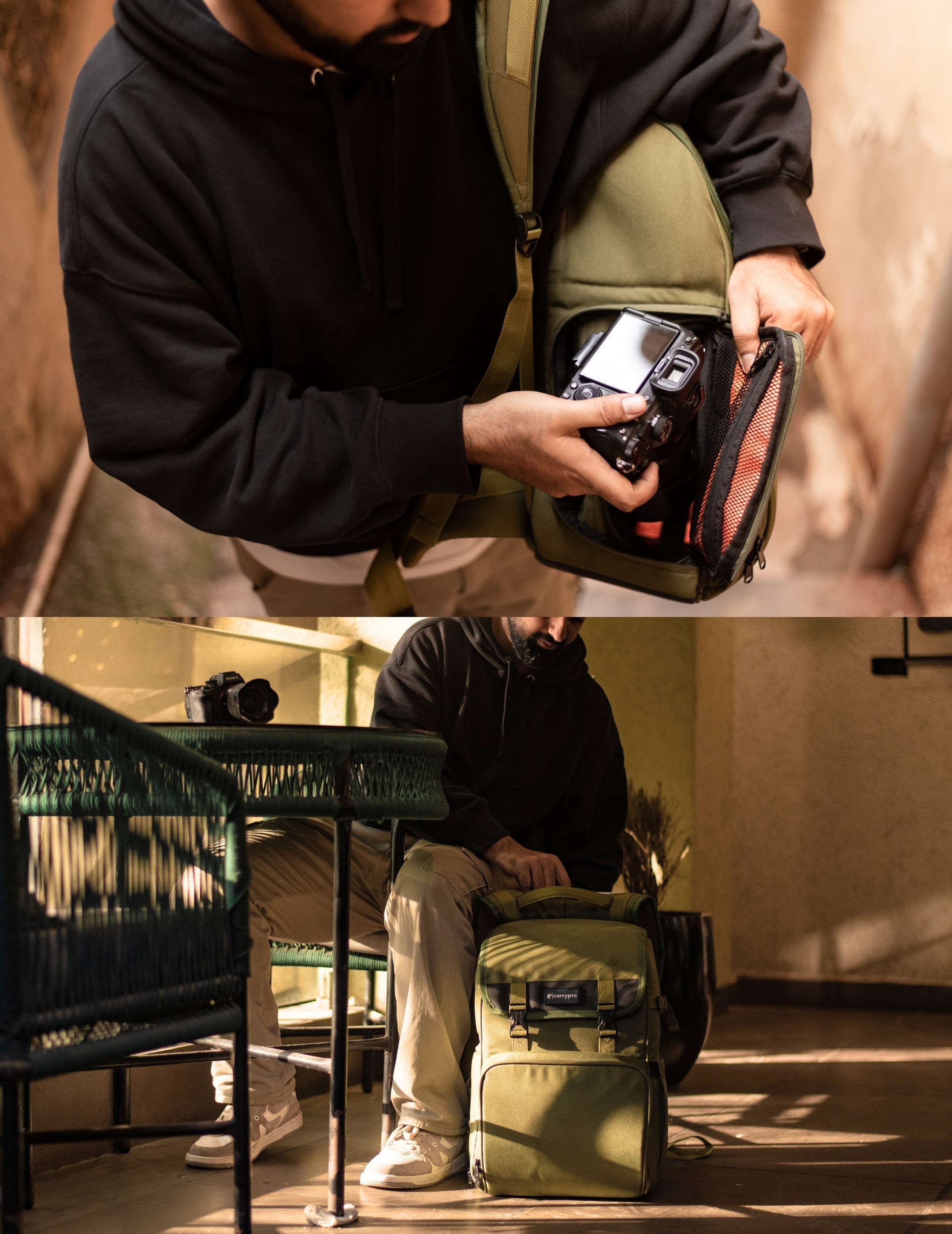
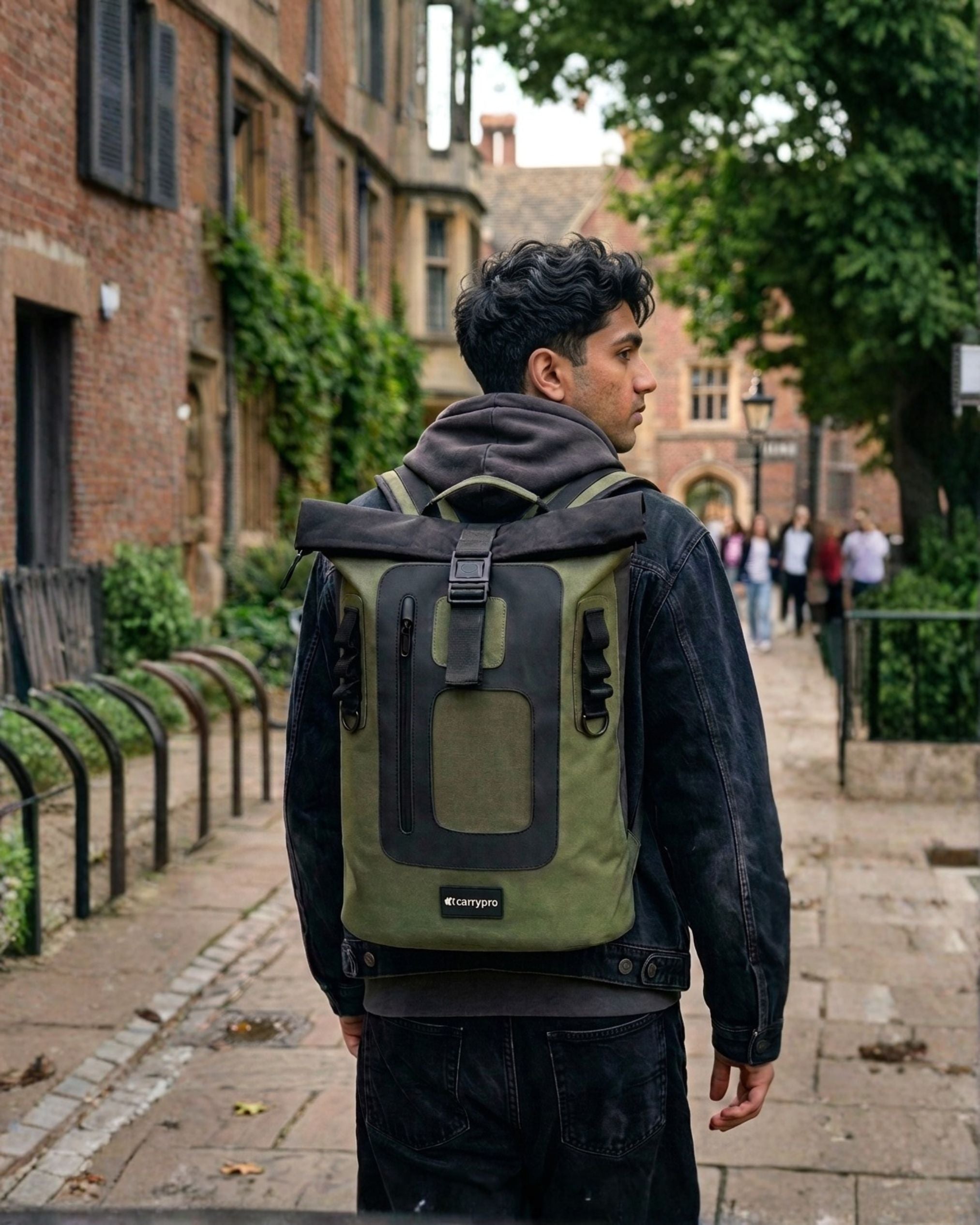
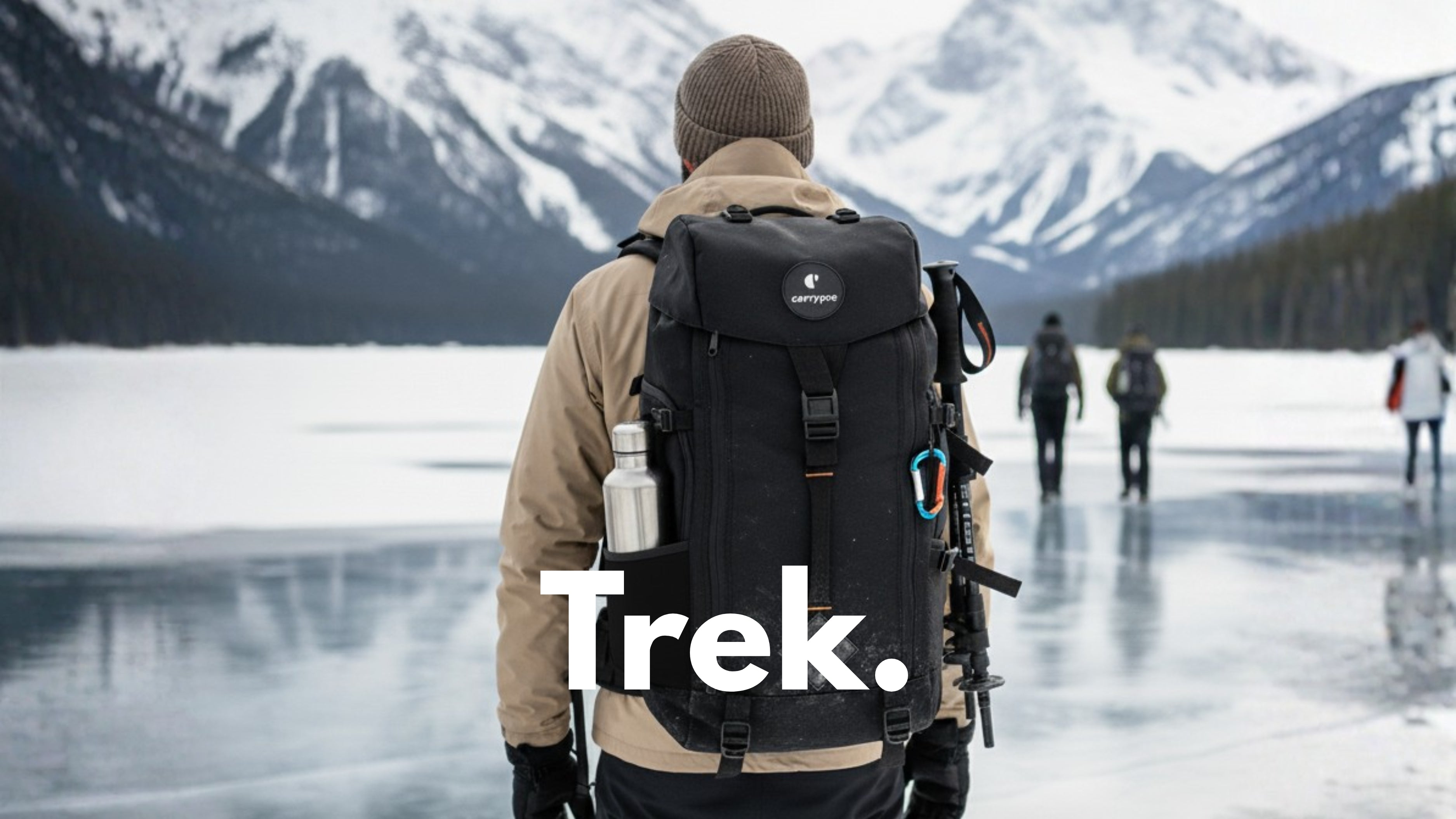
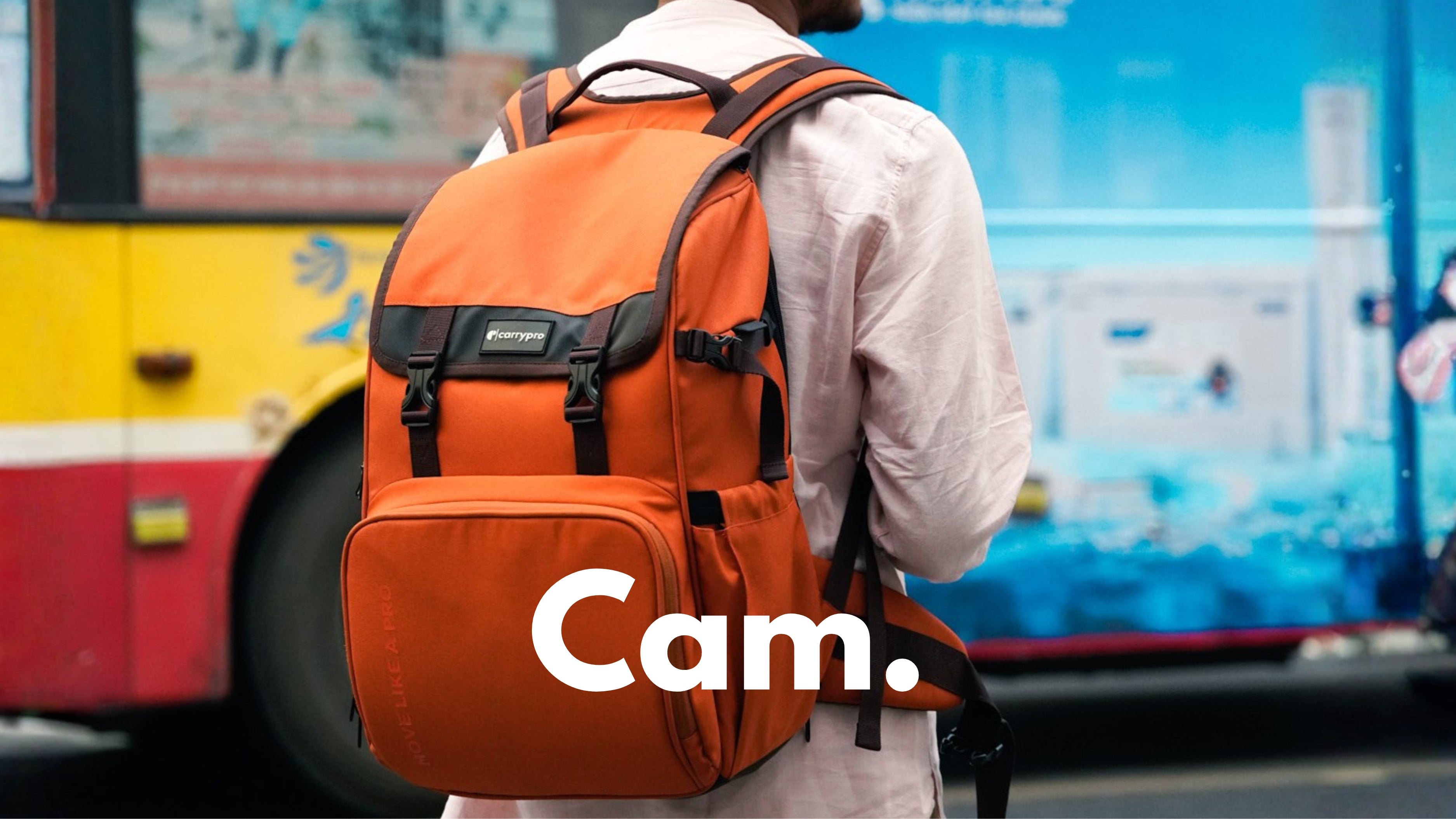
Whether you need a camera backpack for a shoot, a 40L travel backpack for the airport, an everyday backpack for the commute, or a carry-on backpack for a quick trip — there's a CarryPro for it.
Hip Belt and Sternum Strap
Walking 2 to 3 km between a bus stop and a hotel with 7 kg on your back needs proper weight distribution. A hip belt transfers load from the shoulders to the hips. A sternum strap prevents the shoulder straps from sliding outward.
Lockable Zippers
Crowded trains and bus stations are where valuables are most at risk. Zippers that accept a small padlock add a basic layer of security during transit.
Your Trip Decides Your Bag
Airports and hotels favour suitcases. Everything else in India favours a backpack. Pick the bag that matches your actual travel conditions, not the one that looks better in a flat lay photo. Check the travel backpack collection for bags designed to handle Indian travel from metro platforms to mountain roads.
For photographers, travelers, and everyone in between
Photographers swear by our backpacks for photographers and professional camera bags. Travelers reach for our travel backpacks and 40L carry-on bags. Daily commuters trust our everyday backpacks and laptop backpacks.
Frequently Asked Questions
Is a backpack better than a suitcase for travel in India?
For trips involving trains, auto rickshaws, metros, or hill stations, a backpack handles Indian ground transport better. For airport-to-hotel business trips, a suitcase works fine.
Can I use a backpack as a carry-on on Indian domestic flights?
Yes. Most travel backpacks under 40L fit within the 55 x 35 x 25 cm cabin size limit on IndiGo, SpiceJet, and Akasa Air. Air India allows slightly larger dimensions.
What backpack size is best for a week-long trip in India?
A 35 to 40 litre backpack holds a full week of clothing, toiletries, and electronics. One laundry cycle mid-trip extends the clothing supply comfortably.
Do suitcase wheels work on Indian roads?
Smooth airport floors and hotel lobbies, yes. Broken sidewalks, gravel, cobblestone, and steep hill station inclines, no. Wheels jam on uneven surfaces commonly found outside metro cities.
How do I carry a backpack on crowded Indian trains?
Wear it on your front when boarding. Once inside, place it on the overhead rack or under the lower berth. Keeping the bag on your body during boarding prevents it from getting separated in the crowd.
What features should a travel backpack for India have?
Clamshell opening for easy access, water-resistant fabric with rain cover, hip belt for weight distribution, lockable zippers for security, and a padded laptop compartment for electronics.