
Solo travel is the most rewarding way to see a new place, but it demands more from you than group travel does. You are the planner, navigator, decision-maker, and problem-solver all at once. That is exactly what makes it worth doing.
This guide is for first-time solo travellers, especially those planning their first solo trip within India or Southeast Asia. We cover the 10 things that actually matter: how to pack, what to carry, how to stay safe, how to meet people, and how to handle the moments when things do not go according to plan.
If you get these 10 things right, your solo trip will be smoother, lighter, safer, and more enjoyable than you expect.
Solo Travel Packing Checklist
Print this or screenshot it before your next trip.
Bag:
- One main backpack (25 to 40L depending on trip length)
- One crossbody sling or fanny pack for daily carry
Clothing:
- 3 tops
- 1 trousers/jeans
- 1 shorts
- 1 light jacket
- 4 sets of underwear and socks
- 1 walking shoes (worn, not packed)
- 1 sandals or flip-flops
Toiletries and Health:
- Toothbrush, toothpaste, face wash, sunscreen (travel size)
- First aid: paracetamol, ORS, anti-diarrheal, bandaids, antiseptic
- Prescription meds + prescription copy
- Hand sanitizer, insect repellent
Tech:
- Phone + charger + short cable
- Power bank (10,000 mAh+)
- Earphones
- Universal adapter (international trips)
Documents:
- ID (original + photocopy stored separately)
- Travel tickets (digital + one print backup)
- Insurance details
- Emergency contacts on paper
Organization:
- Toiletry pouch
- Utility pouch for tech
- Coin pouch for daily cash
- Reusable water bottle
Before You Leave:
- Offline maps downloaded
- Screenshots of all bookings
- Accommodation and transport for first night confirmed
- One trusted person has your itinerary
1. Start With a Packing List and Stick to It
Every experienced solo traveller will tell you the same thing: the biggest mistake on a first solo trip is overpacking. When you travel with friends, someone else carries the extra charger, the first aid kit, the snacks. When you travel solo, every gram is on your back.
How to Build Your Solo Travel Packing List
Write down everything you think you need. Then remove a third of it. Seriously.
Clothing (for a 5 to 7 day trip):
- 3 t-shirts or tops (quick-dry fabric if possible)
- 1 pair of jeans or trousers
- 1 pair of shorts or a skirt
- 1 light jacket or hoodie
- 4 sets of underwear and socks
- 1 pair of walking shoes (the ones you wear)
- 1 pair of flip-flops or sandals
That is it. You can wash clothes at any hostel or hotel for ₹50 to ₹100 per load. You do not need a fresh outfit for every day.
Toiletries: Travel-sized only. Decant shampoo and face wash into 100ml bottles. Most destinations have pharmacies and shops if you run out.
Documents: Passport or Aadhar (original + photocopy stored separately), travel tickets (digital + one printed backup), insurance details, and emergency contact numbers written on paper (not just saved on your phone).
Tech: Phone, charger, power bank, earphones, and one universal adapter if travelling internationally. That is the full list. You do not need a tablet, laptop, and Kindle unless you are working remotely.
Print this list, check items off as you pack, and resist the urge to add "just in case" items. If you did not write it on the list, you do not need it.
2. Choose One Bag and Make It Your Only Bag
Targets: solo travel backpack, solo travel luggage
The single biggest quality-of-life upgrade for a solo traveller is going from two bags to one. One bag means both hands free, faster boarding, no checked luggage fees, no waiting at baggage carousels, and the ability to walk from the bus stand to your hostel without needing an auto.
What Size Backpack for Solo Travel?
- Weekend trips (2 to 3 days): 22 to 25 litres is enough. The CarryPro Zostel 22L Bag is built for exactly this: hostel-hopping with minimal gear
- Week-long trips (5 to 7 days): 25 to 35 litres. The CarryPro Hobo25 V3 Rolltop Backpack expands when you need more room and compresses on light days
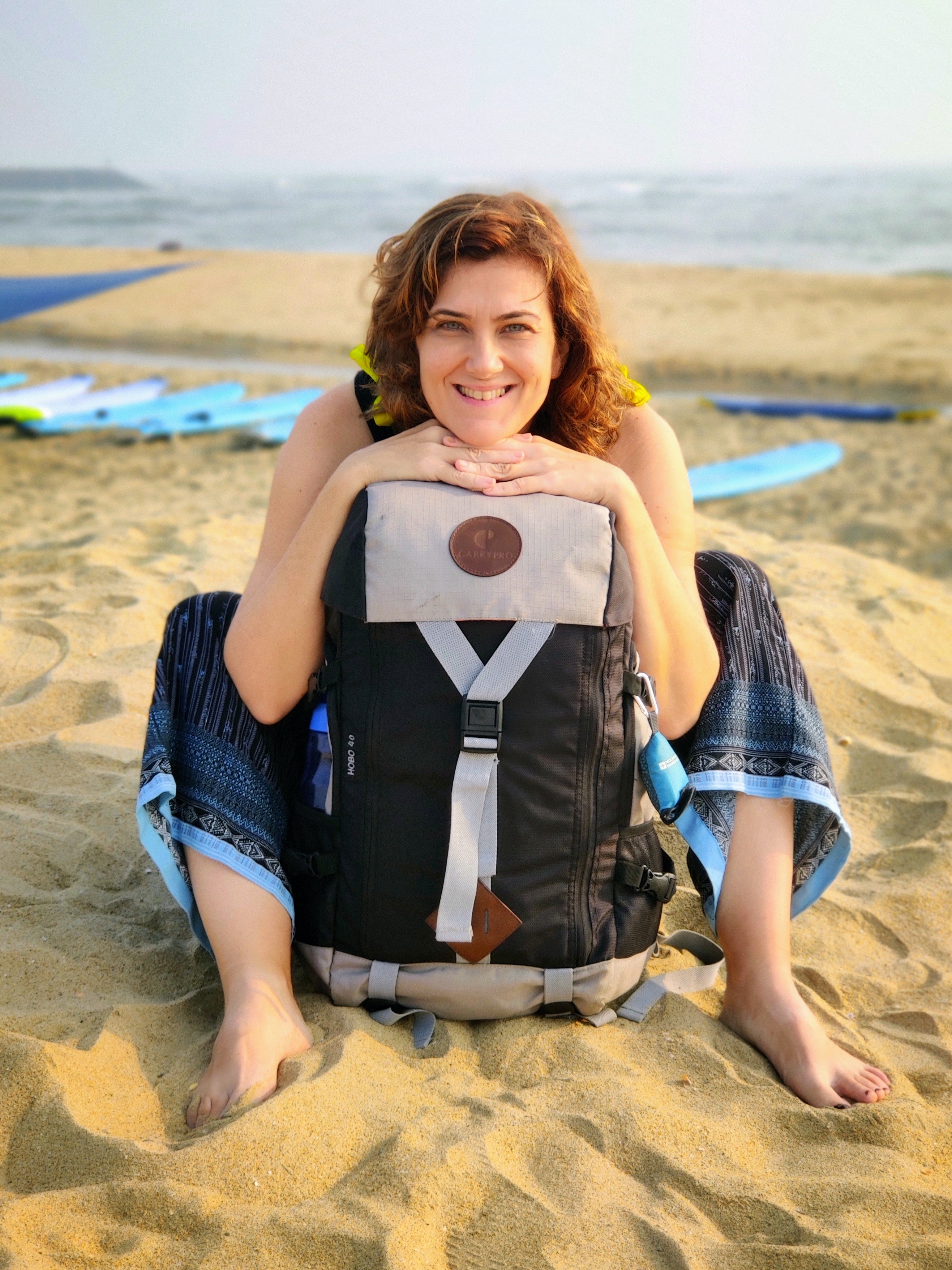
- Extended trips (7+ days): 35 to 40 litres. The CarryPro Hobo40 V2 Travel Backpack fits within carry-on limits for most domestic airlines and opens like a suitcase so you pack flat instead of stuffing from the top
Why a Backpack, Not a Suitcase?
Suitcases require smooth surfaces. Indian train platforms, cobblestone streets, hostel staircases, and unpaved roads are not smooth surfaces. A backpack goes where you go without drama. When you are solo, mobility is safety.

3. Pack Clothes That Work Together, Not Statement Pieces
Every item of clothing you pack should pair with at least two other items. If a shirt only works with one specific pair of trousers, leave it at home.
The Colour Rule
Stick to a neutral base: black, grey, navy, olive, or white. Then add one or two accent pieces if you want personality. Neutral bases mean any top works with any bottom, cutting your required wardrobe in half.
Fabric Matters More Than Style
Quick-dry polyester and merino wool can be washed in a sink at night and worn the next morning. Cotton takes 12+ hours to dry in humid conditions. For solo travellers who are washing clothes in hostels, fabric choice directly affects how many items you need to carry.
Dress for the Culture, Not Just the Weather
If you are visiting temples, mosques, or conservative regions, pack at least one outfit that covers shoulders and knees. Research this before you leave so you do not end up buying an overpriced scarf at the entrance gate.

4. Keep Valuables on Your Body, Not in Your Bag
When you travel with others, someone can watch the bags while you use the restroom or grab food. Solo, your bag is unattended every time you step away from it.
The Three-Layer Security System
Layer 1: On your body. Phone, cash for the day, one card, and your room key go in a crossbody sling or a money belt that sits under your shirt. This stays on you at all times when you are outside.
Layer 2: In your daypack or small pouch. Backup cash, a photocopy of your ID, earphones, power bank, and any medication go in a small pouch like the CarryPro Pro Kit. This stays in the quick-access pocket of your main bag or transfers into the sling when you go out for the day.
Layer 3: In your main bag at your accommodation. Passport (original), extra cards, extra cash, and electronics you do not need for the day stay locked in your hostel locker or hotel safe. Never carry all your money and all your cards in one place.
The "What If I Get Robbed" Test
If someone grabs your sling bag and runs, you lose one day's cash and your phone. Your passport, backup cards, and main funds are safe at your accommodation. If your main bag goes missing from a bus, your phone, cash, and documents are on your body. No single loss wipes you out. That is the point of layers.
5. Get Comfortable With Alone Time (It Is the Point)
The competing blogs all emphasize this, and for good reason. The number one anxiety first-time solo travellers have is not safety or logistics. It is eating alone in a restaurant.
How to Handle Solo Meals
Sit at the bar or counter if the restaurant has one. You face the kitchen or the bartender, not an empty chair. It feels completely natural.
Bring a book, kindle, journal, or just your phone. Having something in your hands removes the self-consciousness. Within 10 minutes, you will forget anyone else is in the room.
Eat at busy, casual spots rather than formal sit-down restaurants for your first few solo meals. Street food stalls, dhabas, and cafe counters are inherently solo-friendly because everyone is doing their own thing.
Solo Downtime Is Not Wasted Time
Some of the best moments of solo travel happen when you are doing nothing: sitting in a cafe watching a street, reading on a train, journaling at a hostel rooftop. Do not feel pressured to fill every hour with an activity. The freedom to do nothing is a luxury you only get when you travel alone.

6. Carry a Basic First Aid and Hygiene Kit
You cannot call a friend to bring you Crocin at 11 PM in a new city. Pack a small kit and you will never need to hunt for a pharmacy at an inconvenient hour.
What to Include
- Paracetamol and ibuprofen (for fever, headache, body pain)
- ORS packets (for dehydration from heat or food issues)
- Anti-diarrheal tablets (essential for Indian travel)
- Bandaids and antiseptic wipes
- Any prescription medication you take regularly (carry the prescription too)
- Sunscreen and lip balm with SPF
- Hand sanitizer
- Insect repellent (if visiting hills, forests, or coastal areas)
All of this fits inside a single zip pouch. Keep it in your toiletry organizer or a separate small pouch within your main bag.
The Rule
If a health issue can be fixed with a ₹10 tablet you already have, it is a minor inconvenience. If you have to spend an hour finding a pharmacy in an unfamiliar town while feeling sick, it becomes a significant disruption. The kit prevents the second scenario.

7. Keep Your Phone Alive: It Is Your Lifeline.
When you travel solo, your phone is your map, translator, ticket wallet, camera, emergency contact list, and payment method. A dead phone while solo in an unfamiliar place is a genuine problem, not just an inconvenience.
Non-Negotiable Tech for Solo Travel
- Power bank (10,000 mAh minimum). This gives you 2 to 3 full charges. Keep it charged the night before every travel day
- A short charging cable that lives in your sling or day pouch, not buried in your main bag
- Offline maps downloaded for every destination before you leave. Google Maps lets you download regions for offline use. Do this on wifi before departure
- Screenshots of all bookings: Hotel confirmations, bus tickets, train PNR, emergency numbers. Screenshots work without internet
Where to Store It
Your power bank and cable go in your Pro Kit utility pouch or the quick-access pocket of your bag. Not at the bottom of your main compartment. You will need it on buses, trains, and at airports where outlets are scarce.
8. Stay Hydrated Without Spending ₹40 Per Bottle
A solo traveller walking 10,000+ steps per day in Indian heat needs 2.5 to 3 litres of water. At ₹20 to ₹40 per bottle, that is ₹60 to ₹120 per day just on water. Over a 10-day trip, that is ₹600 to ₹1,200 on plastic bottles.
The Fix
Carry one reusable bottle (750ml to 1 litre) and refill at:
- Hostel and hotel water dispensers (most have RO water)
- Railway station water vending machines (₹5 per litre)
- Restaurants where you eat (ask for filtered water)
- Airport water bottle refill stations (available at most Indian airports post-security)
You save money, reduce plastic waste, and always have water on hand. A bottle with a clip or loop attaches to the outside of your backpack so it does not take up space inside.

9. Research Your Destination Like You Are Planning, Not Just Dreaming
Every top-ranking solo travel blog emphasizes this: research is not optional, it is the foundation of a safe, affordable, and enjoyable solo trip.
What to Research Before You Leave
Weather: Check the 10-day forecast for your destination. Pack layers if temperatures swing. Carry a light rain jacket if there is any chance of rain.
Safety: Read recent solo travel experiences for your specific destination. Reddit, Tripadvisor forums, and Instagram location tags are better sources than generic travel articles. Look for recent posts, not ones from 3 years ago.
Transport: Know how to get from the airport or station to your accommodation before you land. Pre-book if possible. Arriving solo in a new city at night without a plan is the one scenario every experienced solo traveller warns against.
Culture and dress codes: Some destinations have specific expectations around clothing, behaviour in religious sites, or local customs. Knowing this in advance prevents awkward or uncomfortable situations.
Scams: Every popular tourist destination has a few common scams. A 5-minute search for "[destination] tourist scams" will tell you what to watch for. Forewarned is forearmed.
The Planning Tool That Works
Create a Google Map with your accommodation, key sights, restaurants you want to try, and transport hubs pinned. Download it for offline use. When you are standing in a new city wondering what to do, open the map and see what is nearby. This is faster and more reliable than searching on the spot.
10. Plans Will Change. That Is the Best Part.
You will miss a bus. A hostel will not match its photos. Rain will cancel your trekking day. A stranger at breakfast will tell you about a place you have never heard of that sounds incredible.
All of this is solo travel working exactly as it should.
How to Stay Flexible
- Book accommodation for the first and last night of your trip. Keep the middle days loosely planned so you can extend a stay or change course
- Do not pre-book every activity. Book transport and accommodation, but leave activities for the day-of based on how you feel, who you meet, and what you discover
- Carry your Pro Sling Crossbody as your day bag. It holds your phone, wallet, water, and one small pouch. When plans change, you grab your sling and go, leaving your main bag at your accommodation
The Mindset Shift
Group travel is about consensus. Solo travel is about impulse. If you want to spend an entire afternoon in a bookshop cafe instead of sightseeing, you can. If you meet someone at your hostel who is heading to a different town tomorrow and invites you along, you can say yes. That freedom is the entire reason people travel solo. Use it.
Frequently Asked Questions
What is the best backpack for solo travel?
For weekend solo trips, 22 to 25 litres is enough. For week-long trips, 25 to 35 litres. For extended travel, 35 to 40 litres. The CarryPro Hobo40 V2 covers most solo travel needs with airline-compliant dimensions and a suitcase-style opening.
Is solo travel safe in India?
Yes, with basic precautions. Research your destination, keep valuables layered across your body and accommodation, share your itinerary with someone at home, and trust your instincts about people and situations. Millions of people travel solo across India every year without incident.
What should I pack for a solo trip?
Use the checklist above. The key principle is: one bag, three pouches (toiletries, tech, daily cash), three days of clothing regardless of trip length, and all documents backed up in multiple places.
How do I meet people while travelling solo?
Stay in hostels with common areas, join walking tours on your first day in a new city, eat at communal tables, and say yes to invitations from other travellers. Most people at hostels and on tours are also looking for company.
How do I handle loneliness on a solo trip?
Loneliness usually hits in the evenings. Book a hostel with a social atmosphere for at least a few nights, call someone from home, write in a journal, or simply go to a busy cafe. It passes, and the independence you build in those moments is the most valuable part of solo travel.