



Starting to run feels harder than it is. The first week is the wall most people never get past, not because running is difficult, but because they start too fast and burn out. The fix is a slow, structured start.
The proven way to go from the couch to a 5K is the run-walk method: short bursts of running between walking breaks, building up week by week. How to start running in India comes down to a handful of simple steps that keep you injury-free and coming back.
How to start running in India, step by step
Starting to run is a process of small, repeatable steps: get the right shoes, use the run-walk method, run three times a week, and build up slowly. Consistency matters more than speed or distance. Follow the steps below in order and you will reach a 5K in about 9 to 12 weeks.
Each step builds on the one before it, so resist the urge to skip ahead.
Step 1: Get a proper pair of running shoes
A good pair of running shoes is the one piece of gear worth buying first. Shoes suited to your feet cushion the impact and cut your injury risk. Visit a running store if you can, where staff can check your gait and fit.
Step 2: Start with the run-walk method
The run-walk method is how beginners build endurance safely. Alternate short running intervals with walking breaks, such as running one minute and walking two, repeated for 20 minutes. Walking is not failure, it is the method.
Step 3: Run three times a week with rest days
Aim for three runs a week with rest days in between. Rest days are when your body adapts and gets stronger, so skipping them leads to overuse injuries. Three sessions a week is enough to progress without burning out.
Step 4: Carry only your essentials
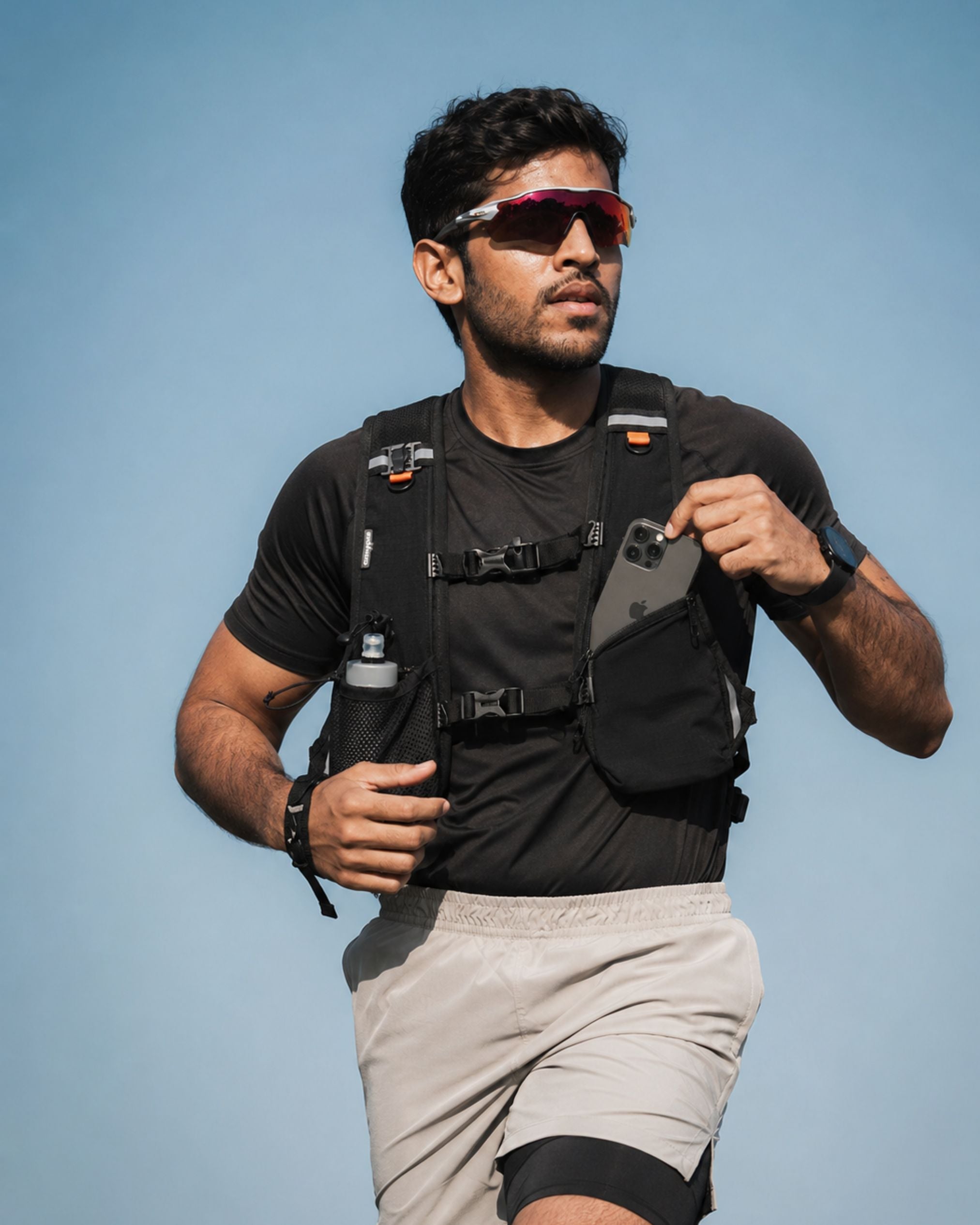
Keep your carry light so nothing distracts you. A phone and a key are all you need on a short run, held flat with a running belt so they do not bounce. For a full breakdown, this guide on what to carry on a run covers each distance.
Step 5: Hydrate as your runs get longer
Water becomes essential once runs pass half an hour or the weather turns hot, which is often in India. A running hydration vest or a 2L hydration bladder lets you sip on the move once you build up to longer efforts.
Step 6: Build distance slowly
Increase your running intervals gradually, week by week, until the walking breaks disappear. A jump of too much, too soon is the fastest route to a shin or knee injury. Small, steady gains win.
Step 7: Stay consistent and find your people
Consistency beats intensity every time. Showing up three times a week, even for a short run, builds the habit that carries you to 5K. A local running group or a run buddy adds accountability and makes the early weeks more fun.
What gear do you need to start running?
Beginners need very little to start: running shoes, breathable clothing, and a simple way to carry a phone and keys. Everything else is optional until your runs get longer. Keep the kit minimal at the start.
The gear that matters early is the gear that keeps you comfortable and injury-free.
-
Running shoes fitted to your feet and stride
-
Light, sweat-wicking clothing, not heavy cotton
-
A running belt or vest to carry essentials hands-free
-
A simple running app or watch to track your intervals
Once your runs stretch past an hour, a lightweight daypack or a vest handles water and a layer.
Your first run is the only hard one
The runners you admire all started exactly where you are, on a nervous first jog that felt impossible. Take the first step this week, keep it slow, and let the habit build itself run by run. Lace up, pick a short route, and just begin.
Frequently Asked Questions
How do I start running as a complete beginner?
Start with the run-walk method: alternate short running intervals with walking breaks, three times a week. Begin with something like one minute running and two minutes walking, then gradually extend the running as you get fitter. Most beginners reach a 5K in 9 to 12 weeks this way.
How many days a week should a beginner run?
Three days a week is ideal for beginners, with rest days in between. Rest days let your body recover and adapt, which prevents overuse injuries. Three sessions is enough to build endurance steadily without burning out or risking injury.
Do I need special gear to start running?
No, you need very little. A properly fitted pair of running shoes matters most, along with breathable clothing and a simple way to carry your phone and keys. Add hydration gear only once your runs pass half an hour or the weather is hot.
Is walking during a run okay for beginners?
Yes. Walking is a core part of the run-walk method, not a sign of failure. Alternating running and walking is how beginners build endurance safely, and even experienced runners walk on hills. Progress comes from consistency, not from running every step.
How long does it take to run a 5K from scratch?
Most beginners reach a continuous 5K in about 9 to 12 weeks using the run-walk method with three runs a week. The exact time depends on your starting fitness and consistency. Focus on showing up regularly rather than rushing the timeline.
How do I stay motivated to keep running?
Set small, realistic goals, celebrate early wins like your first non-stop kilometre, and stay consistent rather than intense. A running group, a run buddy, or a tracking app adds accountability. Consistency in the first few weeks is what turns running into a lasting habit.