


There's a reason more men in Indian cities are ditching overstuffed pockets for a crossbody bag. Your phone, wallet, keys, earbuds, and sunglasses don't fit comfortably in jeans pockets. They create bulges, fall out when you sit down, and you spend half your day patting yourself down to check if everything's still there.
A crossbody bag for men solves this in one move. Everything stays in one place, your hands stay free, and you stop looking like you're smuggling rectangles in your trousers.
Our guide covers how to actually wear one without it looking awkward, what to carry (and what not to carry), and how to pick the right one based on your daily routine.
How Should a Man Wear a Crossbody Bag?
Most men buy a crossbody bag and then wear it wrong, which makes it uncomfortable, unstable, or just odd-looking. There are three positions that work, and the right one depends on where you are and what you're doing.
Across the chest (the default)
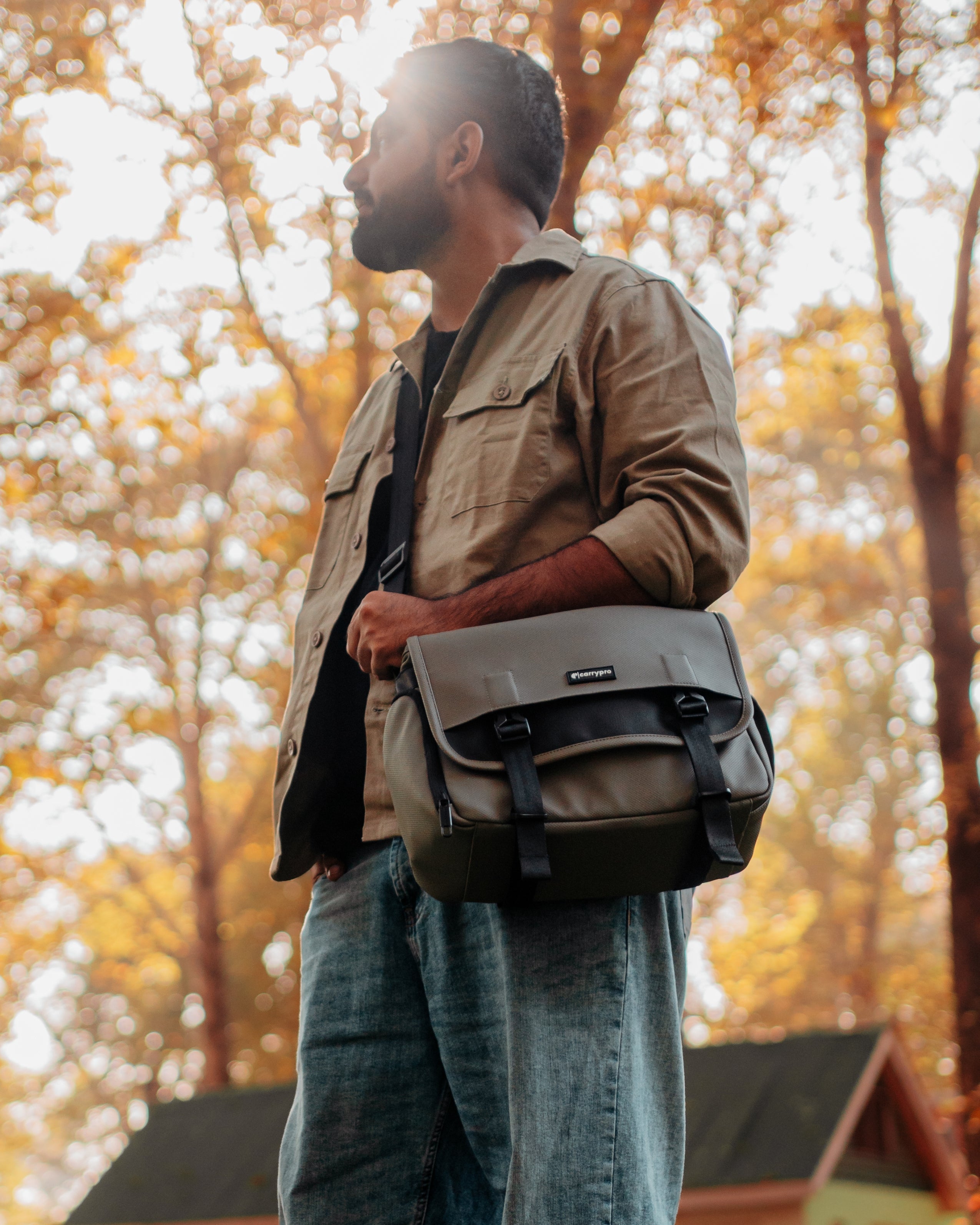
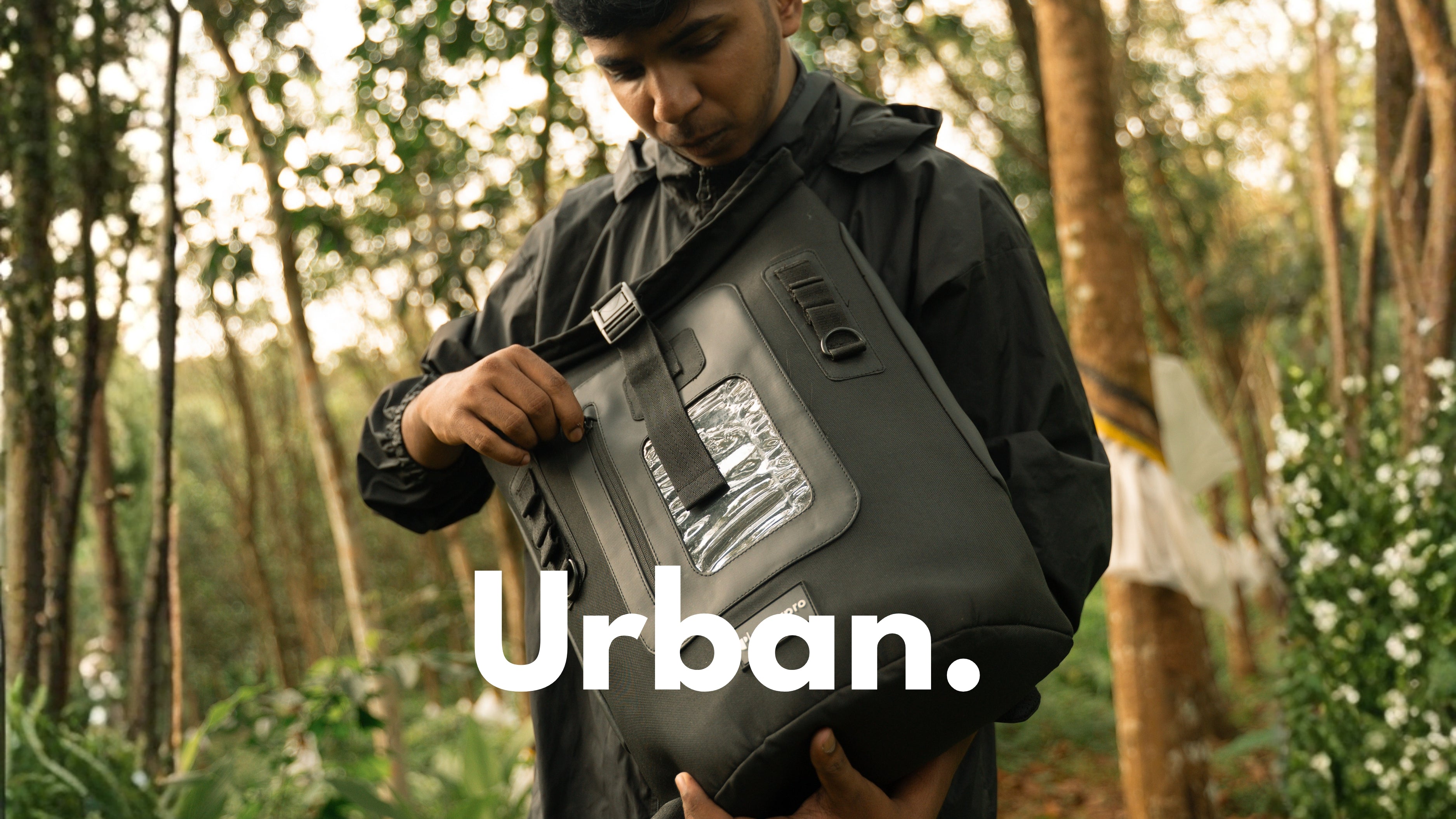
The strap goes over one shoulder and crosses diagonally to the opposite hip. The bag sits against your front, roughly at stomach or lower chest height. This is the most practical position for daily use.
It keeps the bag visible, accessible, and secure. You can reach into it with one hand without stopping. In crowded places like metro stations or markets, it's the safest position because no one can access the zippers without you noticing.
On the back (for walking and commuting)
Swing the bag behind you so it rests against your lower back. This frees up your entire front and works well when you're walking long distances or cycling. The tradeoff: you can't access the bag without swinging it forward, and it's less secure in crowded spaces.
At the waist (fanny pack style)
Shorten the strap and wear the bag around your waist at hip level. This works for active situations: running errands, working out, or walking through a festival. It keeps the bag tight against your body with zero bounce. A slim, dark-coloured bag at hip height reads as intentional and clean, not dated.
What Should You Carry in a Crossbody Bag?
The golden rule: if it fits in your pockets but shouldn't live there, it belongs in the crossbody bag. If it needs its own dedicated bag (like a laptop or camera), you need a backpack, not a sling.
The daily essentials
Phone, wallet, keys, earbuds. These four items are the reason most men buy a crossbody bag in the first place. A well-organised 2L sling has room for all four without any of them touching or scratching each other.
The extras that actually fit
Sunglasses (in a soft case or a dedicated pocket), a small power bank, a few cards or cash, lip balm, hand sanitizer, a pen. These are the items that either don't fit in your pockets or fall out of them. A crossbody bag absorbs all of them without getting bulky.
What to leave out
If you're tempted to stuff a water bottle, a notebook, a jacket, and lunch into a crossbody bag, you're using the wrong bag. A crossbody sling is for essentials. For heavier loads, pair it with a backpack and keep the sling for quick-access items only.
Which Way Should You Wear a Crossbody Bag with Different Outfits?
A crossbody bag is one of the few accessories that works across casual, streetwear, and semi-formal contexts without looking forced. The key is matching the bag's position and colour to what you're wearing.
Casual (t-shirt, jeans, sneakers)
Wear the bag across your chest or at the waist. Bright colourways like orange, yellow, or neon green work here because the outfit is relaxed enough to handle a pop of colour. The bag becomes part of the look rather than just a utility item.
Streetwear (hoodie, joggers, high-tops)
Chest position, always. A black or grey bag blends into layered fits. If you're wearing an oversized hoodie, tighten the strap slightly so the bag doesn't get lost under the fabric.
Smart casual (polo, chinos, clean sneakers)
Waist position or back position. Keep the bag slim and dark coloured. Black, olive green, or space grey won't clash with a collared shirt. The goal is for the bag to look like a deliberate choice, not an afterthought.
How Do You Choose the Right Crossbody Bag for Men?
Size matters more than you think
A crossbody bag that's too big looks like a messenger bag worn wrong. One that's too small can't hold your phone. For most men, 1.5 to 3 litres is the sweet spot. This fits daily essentials without the bag dominating your frame or bouncing around when you walk.
Adjustable strap with enough range
The strap needs to work across chest, back, and waist positions. That means enough length to go around your torso at different angles, and a reliable slider buckle that holds its position once adjusted.
Multiple compartments (not just one pouch)
A single-compartment bag forces everything into one space. Your keys scratch your phone. Your earbuds get buried under your wallet. Look for at least two compartments: one main section and one quick-access front pocket. Internal mesh pockets for cards or earbuds are a bonus.
Water-resistant fabric
Your crossbody bag sits exposed on the outside of your body. It catches rain, splashes, and dust that your backpack or jacket might otherwise shield. Water-resistant fabric ensures a light drizzle doesn't soak through to your phone or wallet.
Can You Wear a Crossbody Bag with a Backpack?
Yes. This is actually one of the most practical two-bag setups you can use.
How it works
The backpack goes on your back with both shoulder straps. The crossbody bag goes across your front with its single strap. The two don't interfere with each other because they occupy different zones on your body.
Why it works
Your backpack carries the bulk: laptop, water bottle, lunch, books, gym clothes. Your crossbody bag carries quick-access items: phone, wallet, keys, earbuds, transit card. You never have to take off or open your backpack for the things you grab ten times a day.
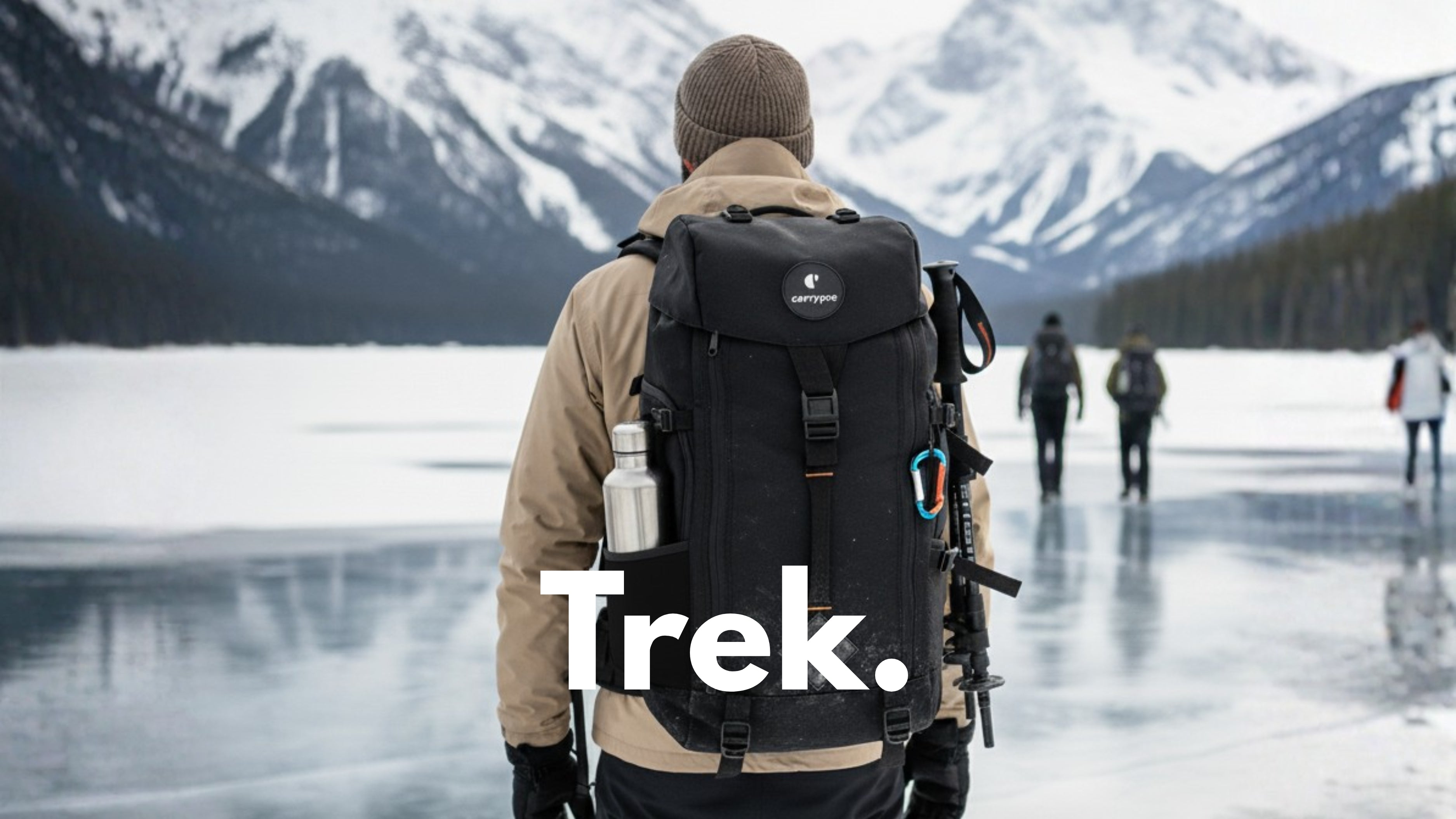
This setup is common among students, commuters, and travellers. It's the reason many people pair a rolltop backpack like the HOBO25 with a compact sling for daily carry.
The CarryPro Pro Sling Crossbody Bag
The CarryPro Pro Sling Crossbody Bag is a 2L sling built for the essentials-only carry that most men actually need.
3-way carry
Wear it as a front crossbody (chest sling), a back crossbody (shoulder sling), or a waist pack. The adjustable strap handles all three positions without needing to be re-threaded or re-buckled.
What fits inside
Phone, wallet, keys, earbuds, a small power bank, cards, and sunglasses. Enough room for daily essentials without the bag getting bulky or heavy. Multiple compartments keep everything separated.
Built to last outside your jacket
Water-resistant fabric that handles rain and splashes. Durable zippers that don't jam. Compact enough that it disappears into your outfit instead of dominating it.
Eight colourways: Hot Orange, Purple, Olive Green, Hot Yellow, Black, Space Grey, Mist Grey, Neon Green. Rs. 750.
If you need a crossbody with more structure for camera gear, the Pro Camera Sling Bag at 10L carries a DSLR body and lens. For a bag that handles both sling-level essentials and a full day's carry, the HOBO25 plus this sling is the two-bag setup that covers everything.
Browse all accessories or explore the full range.
FAQs
Is a crossbody bag the same as a sling bag?
They overlap but aren't identical. A crossbody bag is any bag worn diagonally across the body. A sling bag specifically refers to a compact, single-strap design. All sling bags are crossbody bags, but not all crossbody bags are slings (messenger bags and some shoulder bags are also crossbody).
What size crossbody bag should a man get?
For daily essentials (phone, wallet, keys, earbuds), 1.5 to 3 litres is enough. Anything larger starts to look and feel like a messenger bag. If you need to carry more, pair the sling with a backpack rather than sizing up.
Can you wear a crossbody bag to the office?
Yes, if the bag is slim, dark-coloured, and minimal in design. Black, grey, or olive green in a clean silhouette works in most business-casual environments. Avoid bright neon colourways or sporty designs in formal settings.
How tight should the strap be?
Tight enough that the bag doesn't swing when you walk, loose enough that you can reach into it with one hand. For chest carry, the bag should sit at stomach height. For waist carry, it should sit at hip level. Adjust once and leave it.