
A weekend trip sits in an awkward spot between a daypack and a full travel backpack. A 20L bag can't fit a change of clothes alongside a laptop without sacrificing one for the other. A 40L bag is half-empty for a 2-day trip and overkill for a quick getaway.
The answer for most travellers is 30 litres. It's the smallest size that comfortably holds everything for 2 to 3 nights while still working as a daily carry when the trip is over. This guide covers what fits inside a 30L overnighter, how it differs from larger travel backpacks, and what features matter when the bag needs to work for both transit and destination.
Is 30L Enough for an Overnight or Weekend Trip?
Yes, 30 litres holds a full weekend's worth of clothes, toiletries, a laptop, and personal items without needing compression tricks or leaving things behind.
What fits inside 30 litres
2 to 3 tops. 1 to 2 bottoms. 3 sets of underwear and socks. A light jacket or hoodie. A toiletry kit in travel bottles. A laptop up to 15.6 inches. A charger, cables, earbuds. A pair of sandals or flip-flops (wear heavier shoes). A book or tablet. A water bottle in a side pocket.
That's roughly 22 to 24 litres of gear, leaving 6 to 8 litres of buffer for snacks, a rain jacket picked up on the way, or a souvenir.
When 30L stops being enough
If the trip requires heavy winter layers (thick jacket, boots, thermals), 30L gets tight. If the trip is 4 days or longer without laundry access, clothing volume pushes past what 30L can hold. For week-long travel, a 40L travel backpack is the right step up.
What Makes an Overnighter Backpack Different from a Regular Backpack?
An overnighter is built for packing clothes and unpacking at a destination. A regular everyday backpack is built for carrying a laptop and daily items. The internal layout is where they diverge.
Clamshell or 180-degree opening
A regular backpack opens from the top, burying bottom items. An overnighter opens flat like a suitcase, giving full visibility and access to every item at once. At airport security, pull out the laptop and toiletry bag without dismantling the rest. At the hotel, lay the bag open on the bed and grab what you need.
Dedicated compartments for different item types
A regular backpack has one main compartment and maybe a front pocket. An overnighter separates clothes from tech from daily essentials. Laptop sleeve behind the back panel. Organiser section for cables. Main compartment for clothes. This separation means pulling out a tech kit at a café without exposing the rest of the bag.
Carry versatility
A good overnighter gives at least two carry options: backpack straps for walking and a side handle for lifting in and out of overhead bins. Some add a trolley sleeve for sliding the bag onto a rolling suitcase handle.
What Should You Look for in a 30L Overnighter Backpack?
Full-panel or clamshell access
Top-loading bags work for daypacks. For a bag that holds clothes and needs to be unpacked and repacked repeatedly, front-panel or 180-degree access is non-negotiable. It's the feature that makes a 30L bag function like a carry-on instead of a hiking pack.
Separate laptop compartment
The laptop should have its own padded zone with independent access. During a weekend, the laptop comes out at cafés, on trains, and at the hotel. Pulling it through the main compartment (past clothes, toiletries, shoes) every time is unsustainable.
Rain cover (included or compatible)
Water-repellent fabric handles light rain. A dedicated rain cover protects against sustained downpours, dusty transport, and wet airport floors. If the rain cover comes bundled, the manufacturer is being realistic about how the bag gets used.
Enough structure to stand upright
A semi-structured base that keeps the bag upright when set down means you can open it, grab what you need, and move on. Floppy bags that collapse on a bench or airport floor are frustrating by the second use.
Can a 30L Backpack Work as Carry-On Luggage?
Yes. A 30L backpack fits comfortably within the 55 x 40 x 20 cm carry-on limits of most airlines, including budget carriers that are strict on dimensions. It also fits under the seat in front of you on most domestic flights, which means you can use it as a personal item on airlines that charge for overhead bin access.
When it works best
Short flights where quick boarding matters. Weekend trips where skipping the baggage carousel is the goal. Business trips needing a laptop, a change of clothes, and toiletries in one bag. Any trip involving multiple stops (train, bus, auto, metro) where one bag on the back beats dragging a suitcase.
When to size up
If the trip is longer than 3 nights, or requires bulky seasonal clothing, a 40L travel backpack gives the extra room without jumping to checked-bag territory. The 30L and 40L work well as a pair: 30L for weekends, 40L for full weeks, same brand and system.
What's the Difference Between a 30L and a 40L Travel Backpack?
This is the most common sizing question for travellers who own one bag and want it to cover everything.
Capacity
30L holds 2 to 3 days of clothes plus a laptop and toiletries. 40L holds 5 to 7 days with one mid-trip laundry wash. The extra 10 litres is roughly one additional outfit, a pair of shoes, and the buffer space that makes longer trips comfortable.
Weight when packed
A fully loaded 30L bag weighs 5 to 7 kg. A fully loaded 40L bag weighs 8 to 10 kg. For short trips, the lighter 30L makes walking and commuting more pleasant. For longer trips, the extra 2 to 3 kg is a worthwhile trade for not running out of clean clothes by day four.
Daily usability
A 30L bag compresses down for daily exploring. Drop the clothes at the hotel, carry just laptop and essentials, and it doesn't look oversized. A 40L can do this too, but it's noticeably bigger when half-empty.
The decision
Trips of 1 to 3 nights, or trips where you'll do laundry: 30L. Trips of 4 to 7 nights, or trips where laundry isn't guaranteed: 40L. Both sizes are carry-on compatible with most airlines. Neither requires checking a bag.
How to Pack a 30L Overnighter for Maximum Efficiency
Roll, don't fold. Rolling compresses clothes into cylinders that stack without air gaps. In a 30L bag where every litre counts, rolling saves 15 to 20% of clothing volume.
Use packing cubes. Even in a 30L bag, one cube for clothes and one for underwear keeps the interior organised. A set of smaller cubes works better than one large cube at this size.
Wear the bulkiest items. Jeans and heavy shoes go on the body, not in the bag. This frees 3 to 5 litres of interior space.
Keep transit essentials in top and front pockets. Phone, wallet, boarding pass, earbuds, charger, and a snack. The fewer times the main compartment opens in transit, the fewer chances for things to shift.
Who Is a 30L Overnighter Backpack For?
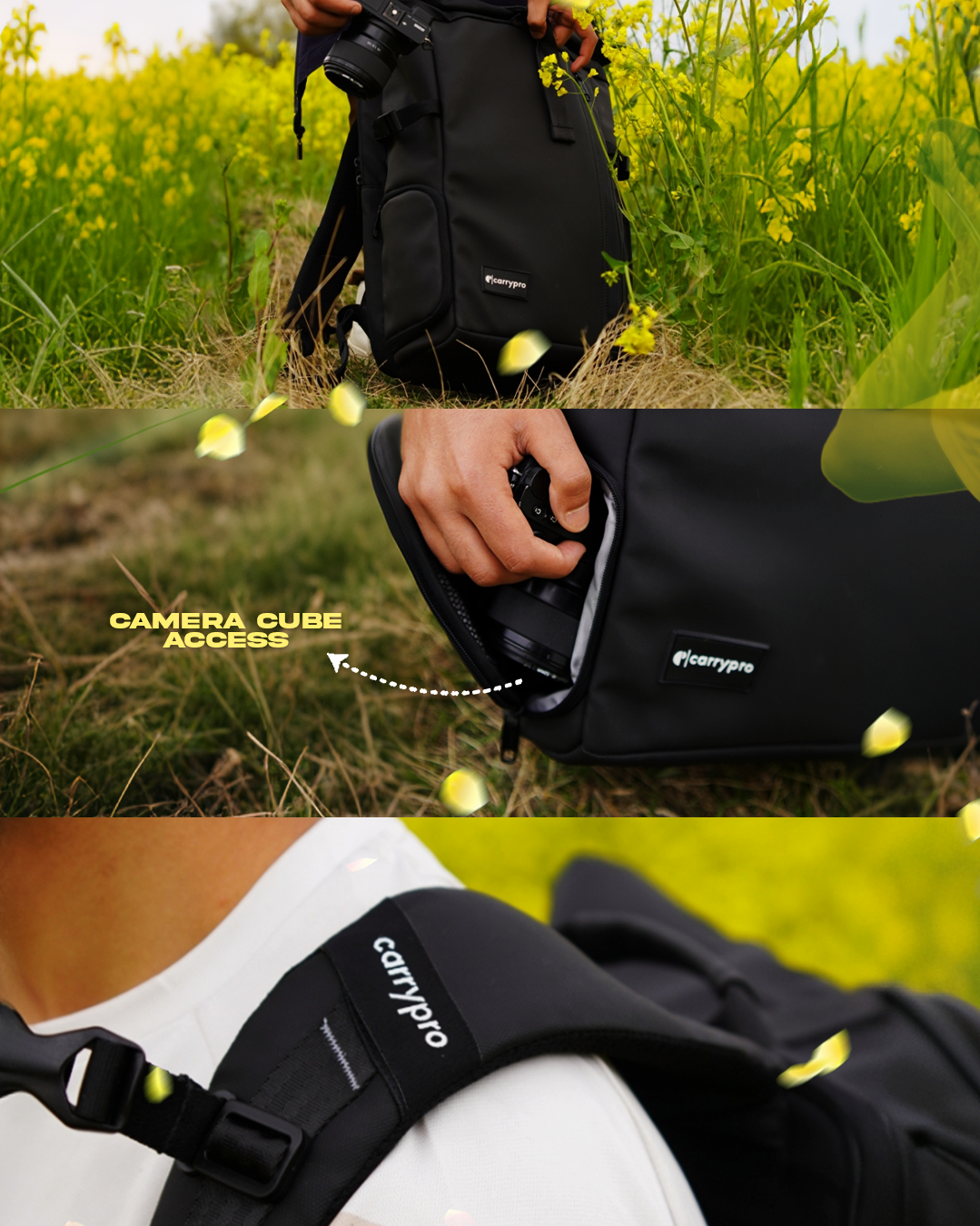
Weekend travellers taking 1 to 3 night trips by train, bus, or short flight. Business travellers who need a laptop and a change of clothes in one carry-on. Students who want one bag for weekday commute and Saturday getaways. Photographers who carry a camera body, one lens, a laptop, and a change of clothes in a camera-capable backpack. Minimalists who pack light enough to stretch 30L to 5 days with laundry.
For daily commute only, a 20 to 25L everyday backpack is a better fit. For trips longer than a week, a 40L travel backpack picks up where 30L stops. Browse all backpacks or check travel bundles that pair a backpack with accessories.
Frequently Asked Questions
Is a 30L backpack too big for everyday use?
It can feel large if half-empty during a daily commute. For daily use, 20 to 25L is the sweet spot. 30L works best on days that combine daily carry with light travel.
Can a 30L backpack fit a 15.6-inch laptop?
Most 30L overnighter backpacks include padded sleeves for laptops up to 15.6 inches (Windows) or 16 inches (MacBook).
What's the difference between a duffle and an overnighter backpack?
A duffle carries volume but has no organisation, no laptop compartment, and only shoulder-strap carry. An overnighter backpack has structured compartments, a laptop sleeve, backpack straps, and clamshell access.
Is the 30L carry-on compatible?
Yes. A 30L backpack fits within 55 x 40 x 20 cm carry-on limits on virtually all airlines, including budget carriers.