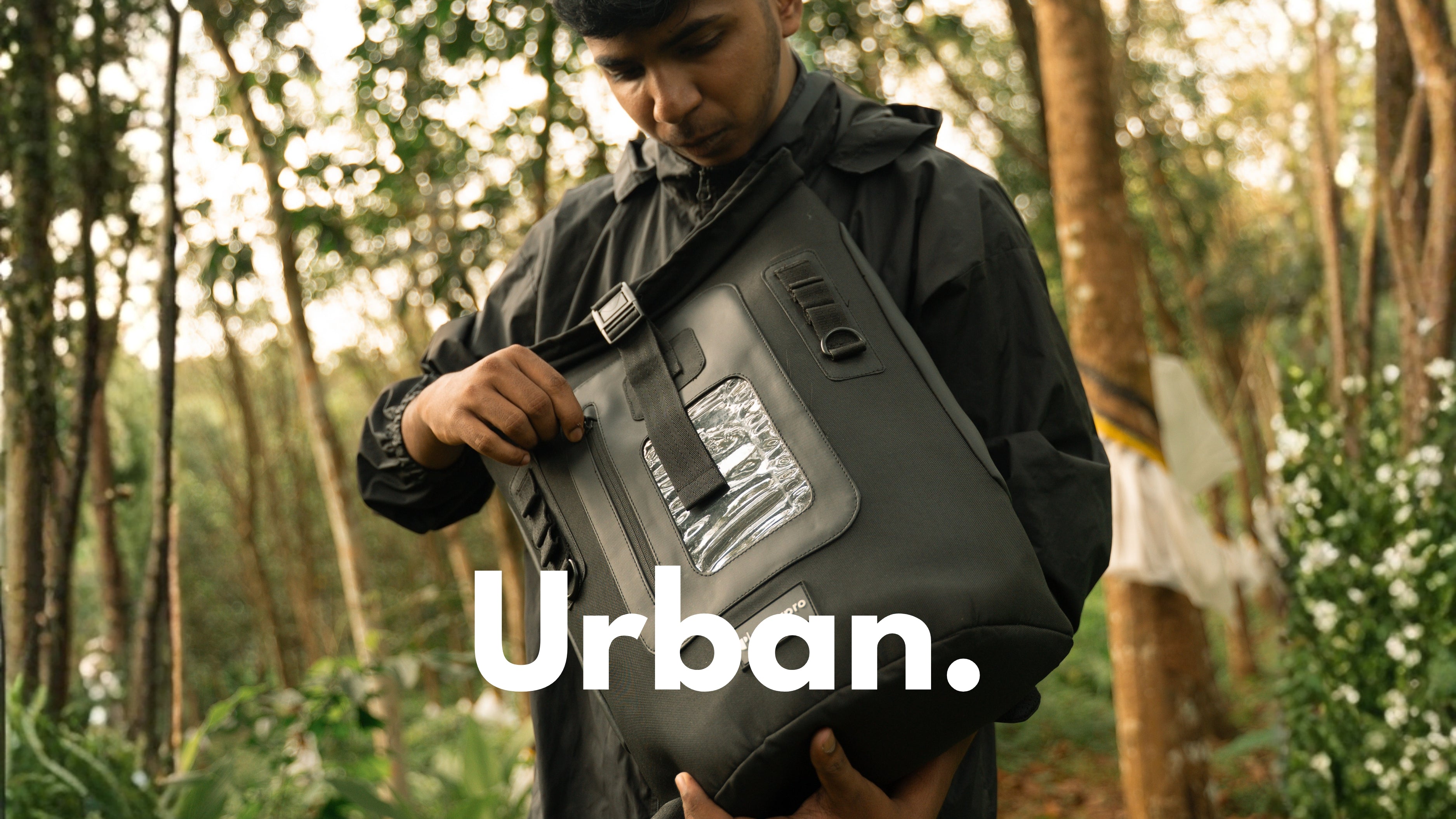


A tote bag is one of those accessories that seems too simple to need a guide. Two handles, one open compartment, done. But the moment you start shopping for one, the options split into categories that look similar but work very differently: structured vs slouchy, open-top vs zippered, canvas vs leather, small vs oversized.
The right tote fits your daily routine without you thinking about it. The wrong one either can't hold what you need or holds too much and becomes a black hole where your keys disappear. This guide covers the types that exist, what each size actually holds, and how to match a tote to the way you carry things every day.
What Exactly Is a Tote Bag?
A tote is a large, open-top bag with two parallel handles designed for shoulder carry. Unlike a handbag (smaller, usually with a single strap and a clasp), a tote prioritises internal volume over structure. Unlike a backpack (two straps, sits on the back), a tote sits at the side of the body and is accessed with one hand.
The word "tote" literally means "to carry." The bag's purpose is exactly that: carry a lot, carry it comfortably, and access everything quickly from the top.
What Are the Different Types of Tote Bags?
Open-top tote
No zipper, no closure. The bag stays open at the top for instant access to everything inside. This is the most common tote design and the fastest to use. The tradeoff: items are exposed and can fall out if the bag tips, and pickpocketing is easier in crowded spaces. Best for daily errands, office commutes, and markets.
Zippered tote
A zip closure across the top keeps everything secure and hidden. Better for travel, public transport, and any situation where the bag might tip or get jostled. Slightly slower to access than an open-top, but the security is worth it for commuting and transit.
Structured tote
Rigid material and a flat base that keeps the bag standing upright when set down. Internal pockets for a laptop, phone, and wallet. Looks professional and works well in office or business-casual environments. Holds its shape even when half-empty.
Slouchy tote
Soft, unstructured material that moulds to whatever is inside. Collapses flat when empty (great for packing in a suitcase as a secondary bag). Lighter than structured totes, more casual in appearance. Best for everyday use, shopping, and beach trips.
Canvas tote
Made from heavy-duty cotton canvas. Durable, washable, and gets softer with use. The most affordable and versatile material. Works for groceries, books, gym clothes, and casual daily carry.
Work tote
Built specifically for office and laptop carry. Includes a padded laptop sleeve (usually 13 to 15 inches), internal pockets for phone and cards, and a professional silhouette. Replaces a briefcase for people who want a softer, more modern look.
What Size Tote Bag Do You Need?
Tote bags are measured by width, height, and depth (gusset). The size determines what fits and what doesn't.
Small tote (under 12 inches wide)
Holds a phone, wallet, keys, sunglasses, and a lip balm. Essentially a handbag with tote handles. Works for evenings, light errands, and minimalist daily carry. Not enough room for a book, water bottle, or laptop.
Medium tote (13 to 16 inches wide)
The most popular size. Holds a water bottle, a small laptop or tablet, a book, a wallet, a phone, and a snack. This is the daily driver size: enough for a commute, a work day, or a short trip without feeling oversized.
Large tote (17 to 20 inches wide)
Holds everything a medium tote holds, plus a change of clothes, a large laptop, or groceries for the week. Works for travel days, gym-to-office transitions, or parents carrying items for kids. Can feel unwieldy if underpacked, so this size works best when consistently filled.
Oversized tote (20+ inches wide)
Beach bags, weekend haulers, and market bags. Holds towels, shoes, and bulky items. Not practical for daily carry unless the load justifies the size. A tote this large is a specialty bag, not an everyday one.
How to Choose a Tote Bag That Works for Your Routine
Start with what you carry every day
Before choosing a size, empty your current bag onto a table. Count the items. Measure the biggest one (usually a laptop or water bottle). That's the minimum capacity your tote needs.
If the biggest item is a phone and wallet, a small tote works. If it's a 14-inch laptop and a water bottle, you need a medium. If it's a laptop plus a lunch box plus gym shoes, look at a large tote or consider a backpack instead.
Match the closure to your commute
If you walk or take public transport, a zippered tote protects your items from rain, theft, and accidental spills. If you drive or work from home, an open-top tote gives faster access without the hassle of zipping and unzipping.
Check the handle length
Handles that are too short can't go over the shoulder. Handles that are too long drag the bag too low, making it swing and feel unstable. The ideal handle drop for shoulder carry is 9 to 11 inches. Test this before buying, if possible.
Consider internal organisation
A tote with zero pockets becomes a single deep well where everything mixes. At minimum, look for one internal zip pocket (for wallet and phone) and one slip pocket (for keys or cards). A padded laptop sleeve is a bonus for work totes.
Tote Bag vs Backpack: When Does Each Make Sense?
Choose a tote when
You need one-hand access while walking or standing. Your load is light to medium (under 4 kg). You want a professional or casual look that doesn't involve shoulder straps. You're going from office to lunch to errands in one day. A work tote handles this without looking like you're headed on a hike.
Choose a backpack when
Your load is heavy (laptop plus books plus water bottle plus jacket). You're walking long distances or commuting on foot. You need both hands free to carry other things. You want the weight distributed across both shoulders instead of one. An everyday backpack or a travel backpack handles these situations better than any tote.
Use both
A tote works as a secondary bag when travelling. Pack a collapsible canvas tote inside a travel backpack and pull it out at the destination for daily errands, market visits, and beach runs. This two-bag setup covers everything without overpacking.
How to Take Care of a Tote Bag
Canvas totes
Spot clean with mild soap and a damp cloth. For deep cleaning, hand wash in lukewarm water with a gentle detergent. Air dry flat or hanging, never in a dryer. Canvas gets softer and more comfortable with each wash.
Structured and leather totes
Wipe with a damp cloth regularly. Condition leather every 2 to 3 months with a leather-specific conditioner. Store with tissue paper or a towel inside to maintain shape. Keep away from direct sunlight to prevent fading.
Nylon totes
Wipe down with a damp cloth after use. Machine washable on a gentle cycle in a pillowcase or mesh bag if the care label allows. Air dry completely before storing.
Frequently Asked Questions
Is a tote bag better than a handbag?
For carrying more than the absolute basics, yes. A tote holds a water bottle, a book, a laptop, and daily essentials simultaneously. A handbag is better for evenings and occasions where carrying less is the goal.
Can a tote bag be used for work?
Yes. A structured tote with a padded laptop sleeve, internal pockets, and a professional silhouette works in most office environments. Look for a zippered closure and a flat base so the bag stands upright under a desk.
What's the best tote bag material for daily use?
Canvas for durability and washability. Nylon for lightweight water resistance. Leather for a professional look that ages well. The best material depends on how hard the bag gets used and how formal the setting is.
How big should a tote bag be for everyday use?
Medium: 13 to 16 inches wide, 13 to 15 inches tall. This holds a water bottle, wallet, phone, a book or tablet, and a light jacket without the bag feeling oversized.
Browse totes. Browse everyday backpacks. Browse accessories. Explore the full range.