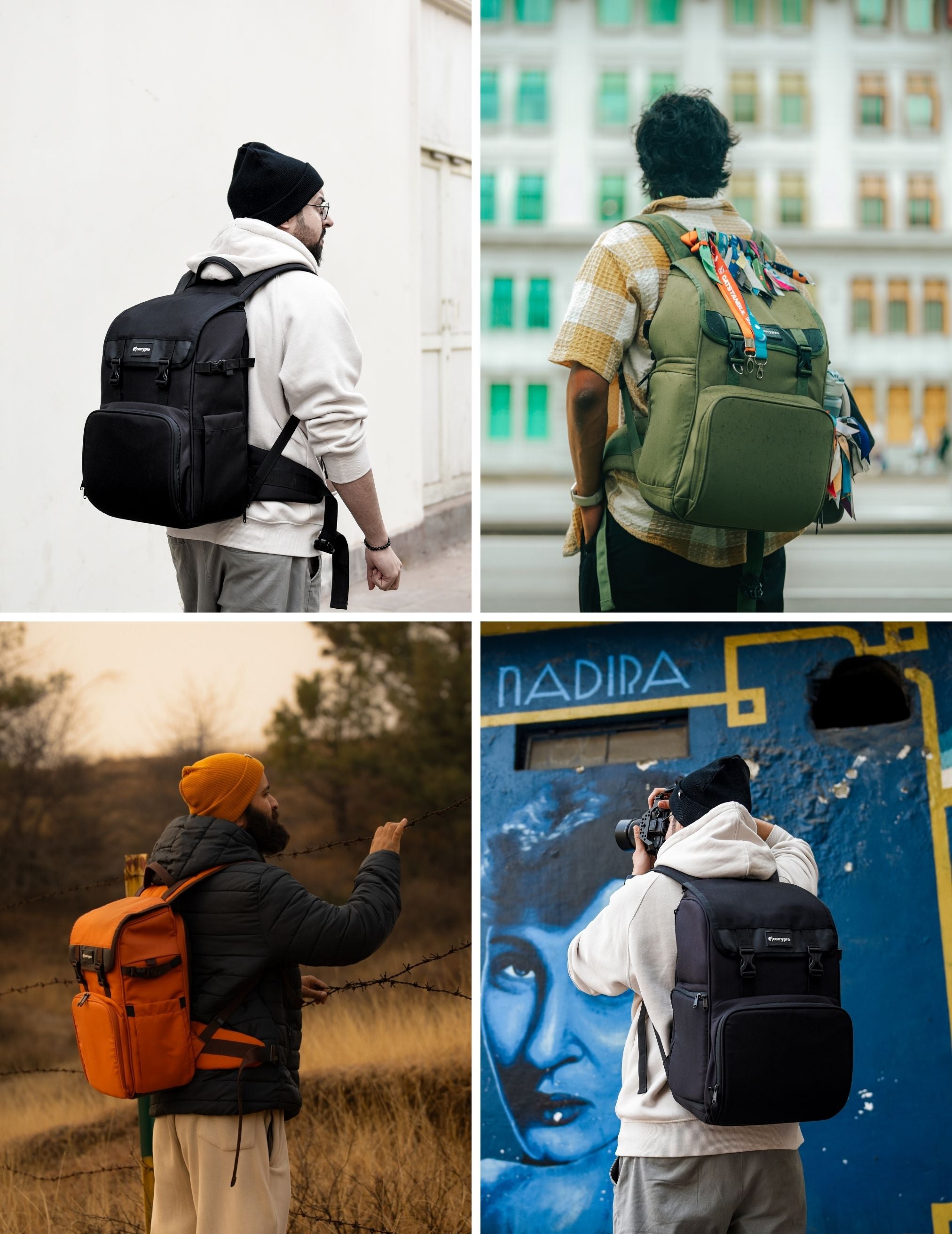

Most travellers have packed a backpack wrong at least once. Overstuffed bags that wouldn't zip. Heavy items at the top that made shoulders burn after 20 minutes. And the classic: bringing 12 tops for a 7-day trip and wearing the same 4 on rotation.
These mistakes are fixable. This guide covers a packing system that works every time. What goes in, what stays home, where each item sits, and the packing rules that hold up when you're standing at check-in with a scale staring back at you.
What Is the Best Way to Pack Everything in a Backpack for Travel?
Most people pack by category: all clothes together, all toiletries together. Then they shove it in and hope for the best. The better approach is to pack by access frequency and weight.
Bottom layer: light items you won't touch until you arrive
Your sleeping clothes, an extra pair of shoes (packed in a bag so they don't dirty your clothes), and any clothing you won't need during transit. These go at the very bottom of your travel backpack. You won't open this layer until you reach your hotel or hostel, so burying it is fine.
Middle layer: heavy and dense items against the back panel
Your laptop, power bank, heaviest clothing, and toiletry kit should sit in the middle, pressed against the back panel. This keeps the bag's centre of gravity close to your spine. When heavy items sit far from your back, the weight pulls you backward and forces you to lean forward. That's how shoulders and lower back start aching after an hour of walking.
Top layer: things you grab during the day
Snacks, a light jacket, headphones, sunscreen, a book. Anything you might pull out during a bus ride, a layover, or a long walk. These sit on top so you can reach them without unpacking everything underneath.
Front and top pockets: things you grab every 30 minutes
Phone, wallet, boarding pass, earbuds, keys, lip balm. These live in the front organiser pocket or top zip section. If your bag doesn't have these pockets, a small sling or crossbody worn on your front handles this beautifully. You never open the main bag for items you need constantly.
What Is the 5-4-3-2-1 Packing Rule?
This is the most popular capsule packing formula, and it works because it forces limits.
The formula
5 tops. 4 bottoms. 3 accessories (sunglasses, hat, belt or scarf). 2 pairs of shoes. 1 jacket or layering piece.
Why it works
It caps every category at a number that's enough but not excessive. Most people overpack tops because they're light. "One more won't hurt" turns into 12 t-shirts. This rule stops that impulse.
When to break it
Warm destinations: drop to 2 bottoms (shorts are thin and you'll repeat them) and add a swimsuit. Cold destinations: swap 2 of the 4 bottoms for thermal layers you wear under your remaining pants. The formula flexes, but the total count stays roughly the same.
What Is the 3-5-7 Rule in Packing?
This is a simpler version built specifically for week-long trips.
The formula
3 bottoms. 5 tops. 7 sets of underwear and socks.
Why it's practical
You wear bottoms multiple times before washing (jeans, shorts, trousers are all repeat-wear items). Tops show dirt and sweat faster, so you want more of them. Underwear and socks are non-negotiable: one fresh set per day, no exceptions.
How it fits a backpack
3 bottoms take 6 to 8 litres. 5 tops take about 5 litres rolled. 7 underwear and socks take 2 to 3 litres. That's 13 to 16 litres of clothing, leaving half a 40L bag for shoes, toiletries, tech, and personal items.
How Should You Organise Clothes Inside a Travel Backpack?
Loose clothes in a single compartment is where every packing plan falls apart. By day two, everything is tangled, wrinkled, and you can't find your socks without emptying the bag on a hostel bed.
Roll, don't fold
Rolling compresses clothes into tight cylinders that stack without air gaps. Folding creates flat layers that shift and crease. Rolling also lets you see every item at a glance instead of peeling through a stack.
Use packing cubes to create compartments
Packing cubes are lightweight fabric organisers that turn one big bag into structured sections. One cube for tops, one for bottoms, one for underwear and socks. Pull out what you need, grab the item, put it back. Cubes also compress clothes by squeezing out trapped air. A set of 6 fits a travel backpack perfectly. If one accessory changes how packing feels, this is it.
Separate dirty from clean
By day three, you need somewhere for worn clothes. A dedicated "dirty" cube or a plastic bag keeps them apart from clean items. Sounds minor until you're repacking on a transit day and everything smells like yesterday.
What Is the 3-3-3 Rule for Travel Packing?
This is the most minimal formula and works best for short trips (3 to 5 days) or ultralight packers.
The formula
3 tops. 3 bottoms. 3 accessories or extras.
Who it's for
Weekend travellers, people with access to laundry, or anyone who values a light bag over outfit variety. It works in a 20 to 25L everyday backpack without touching the capacity limit.
The honest tradeoff
You'll repeat outfits. If that bothers you, this rule isn't for you. If you'd rather carry less and move faster, it's the lightest way to travel.
What Should You Never Pack at the Bottom of a Travel Backpack?
Some items ruin a trip if they're hard to reach. Never bury these.
Your charger and cables
You'll need these at the airport, on the bus, and at the hotel. If they're under three layers of clothes, you'll dig them out (messing up your packing) or go without (messing up your day). Keep tech in a front pocket or top section.
Your rain jacket
Weather changes fast in Indian hill stations, coastal cities, and Southeast Asian islands. A rain jacket buried at the bottom is useless when the sky opens. Keep it in the top layer or strapped outside.
Your travel documents
Passport, boarding pass, hotel confirmation. These need to be in a pocket you can reach while the bag is on your back. Top zip or front organiser. Never the main compartment.
The 20% Rule: The One Rule That Prevents Every Packing Mistake
Leave 20% of your bag empty when you pack at home. For a 40L backpack, that's 8 litres. For a 25L bag, it's 5 litres.
This buffer absorbs things you pick up during travel: a water bottle, a hoodie from a night market, snacks for an overnight train, a gift for home. Pack to 100% before leaving and the bag won't close by day three.
Putting It All Together: A Packing Walkthrough
Step 1: Lay everything out on the bed.
Step 2: Apply the 5-4-3-2-1 or 3-5-7 rule. Remove anything that exceeds the count.
Step 3: Roll all clothing and sort into packing cubes by category.
Step 4: Pack bottom layer (light items for arrival). Middle layer (heavy items against back). Top layer (day-access items).
Step 5: Fill front and top pockets with quick-access essentials.
Step 6: Check the 20% rule. If the bag is full, remove 2 to 3 items.
Step 7: Lift the bag. Uncomfortable after 30 seconds? It's too heavy. Remove more.
Twenty minutes. Saves you from repacking on every transit day of the trip.
Gear That Makes This System Work
The right travel backpack has the zones this system needs: a main compartment with front-panel access, a separate laptop section, a front organiser pocket, and a top zip for quick-grab items. Packing cubes are the other half: a set of 6 sorts your clothing into structured blocks that stay organised from day one to day seven.
Browse travel backpacks. Browse everyday backpacks for shorter trips. Browse accessories for packing cubes, tech organisers, and slings. Or explore the full range.
Frequently Asked Questions
How many days can I pack in a 40L backpack?
5 to 7 days comfortably using the 3-5-7 rule and one mid-trip laundry wash. Lighter packers can stretch it to 10 days.
Should I roll or fold clothes for a backpack?
Roll. It compresses clothes, eliminates air gaps, and lets you see every item without lifting layers. Folding wastes space and creates more wrinkles.
Do packing cubes actually save space?
They save about 15 to 20% of volume compared to loose packing by eliminating air gaps and compressing fabric. More importantly, they keep the bag organised so you never have to unpack and repack on the road.